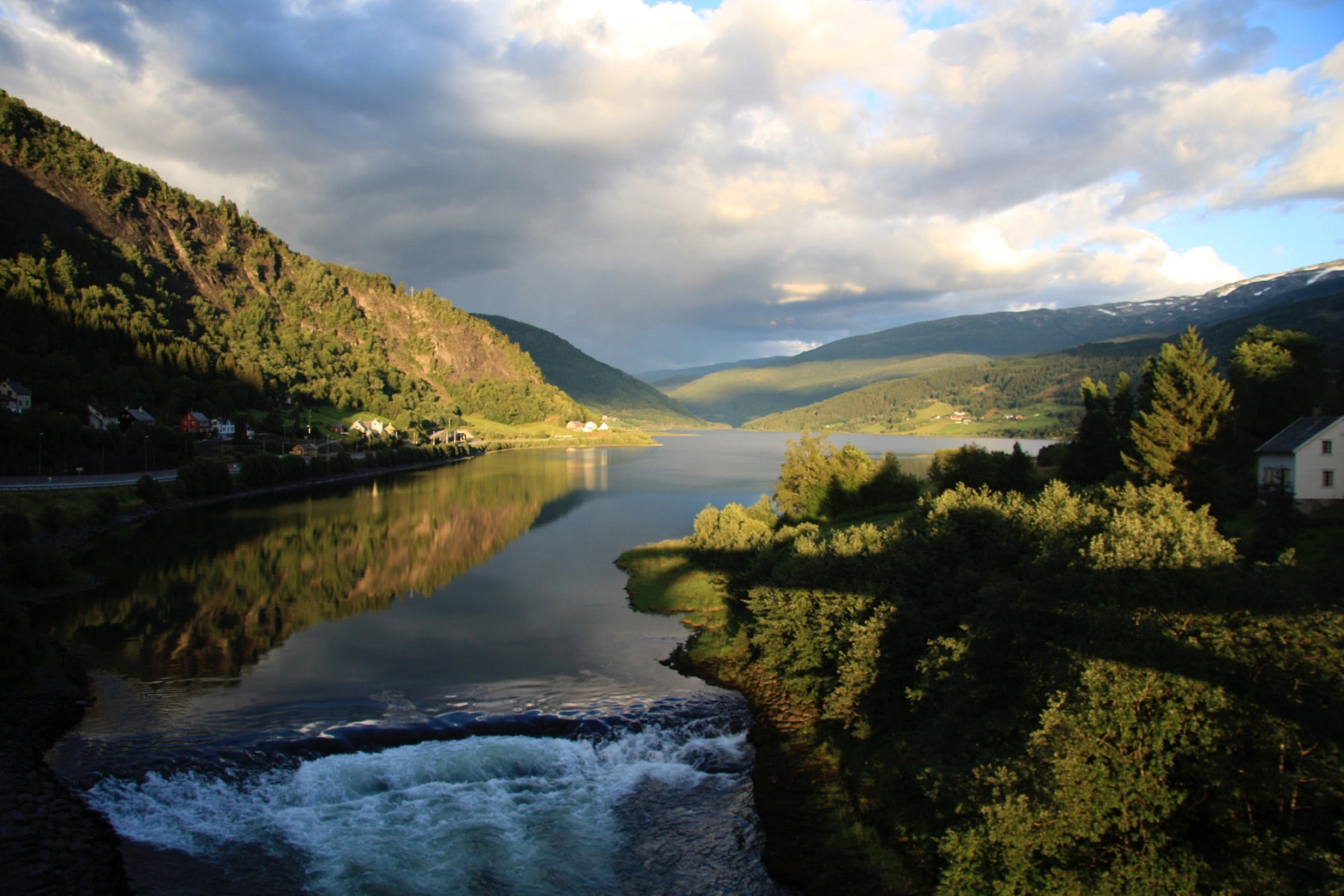
I 2017 tok forskere opp en elleve meter lang sedimentkjerne fra Vangsvatnet på Voss. Kjernen avslører 8000 år med flomhistorie i vestlandsbygden
Les merFinn en ekspert
Våre forskere er ansatt enten hos NORCE, UiB, Nansensenteret eller Havforskningsinstituttet. Forskerne jobber sammen på tvers av ulike naturvitenskapelige disipliner. Finn forskere med fagbakgrunn blant annet innen meteorologi, oseanografi, geologi, geofysikk, biologi og matematikk.
Publikasjoner
Forskere ved Bjerknessenteret publiserer mer enn 200 vitenskapelige artikler hvert år.
Prosjekter
Forskere ved Bjerknes er involvert i flere prosjekter, både nasjonalt og internasjonalt. Prosjektene eies av partnerinstitusjonene, med unntak av våre strategiske prosjekter.
Kalender
Se alle
BCCR Seminar: Mind the Slope: Why Greenland’s Katabatic Storms Challenge Global Models.
Abstract Katabatic storms in southeastern Greenland are fierce, density-driven downslope wind events that influence both local weather and downstream climate. We assess their representation across three generations of ECMWF global reanalyses (ERA5, ERA-Interim, and ERA40) and a hierarchy of Community Earth System Model version 2 (CESM2) simulations at different horizontal resolutions, using in situ observations and the 2.5-km Copernicus Arctic Regional Reanalysis (CARRA) as benchmarks. The global reanalyses systematically underestimate wind speeds by approximately 30% in ERA5 and 50% in ERA-Interim and ERA40, while failing to capture key storm structures. Similar biases occur in CESM2 simulations at standard 1–2° resolutions. In contrast, variable-resolution CESM2 configurations with local grid refinement to 0.25° and 0.125° better resolve Greenland's topography and substantially improve the representation of storm intensity and structure. Sensitivity experiments further demonstrate that resolving the steep ice-sheet margins is critical for capturing katabatic acceleration. The reanalysis data also reveal that these storms generate fast-moving, high-amplitude ocean wave packets that propagate as far downstream as Scandinavia and the British Isles. Accurately representing these storms in global models and reanalyses is therefore essential for simulating North Atlantic climate variability beyond Greenland's immediate coastal region. Speaker information Marcus Lofverstrom is an associate professor in the Department of Geosciences at the University of Arizona. His research group conducts novel research in the fields of atmospheric dynamics, (paleo-)climatology, and glaciology to understand the evolution of the climate system over multi-millennial time scales. Numerical modeling is an important component of his research program, and the group is utilizing models over a broad range of complexities: from conceptual and linear steady-state models to fully coupled state-of-the-art Earth-system models.

Gruppemøte Polar/Carbon om Polhavet 2050 og IPY.
Ledergruppemøte Bjerknessenteret
Våre forskningsgrupper
Andre forskningsområder
Lær om klima
Se alle


Aktuelt
Se alle
El Niño i fokus
Et nytt dashbord utviklet av forskere ved Universitetet i Bergen, Bjerknessenteret for klimaforskning og Federal University of Santa Catarina (UFSC) hjelper brukere med å følge hvordan verdens medier dekker El Niño, og hvordan denne dekningen samsvarer med faktiske klimahendelser.
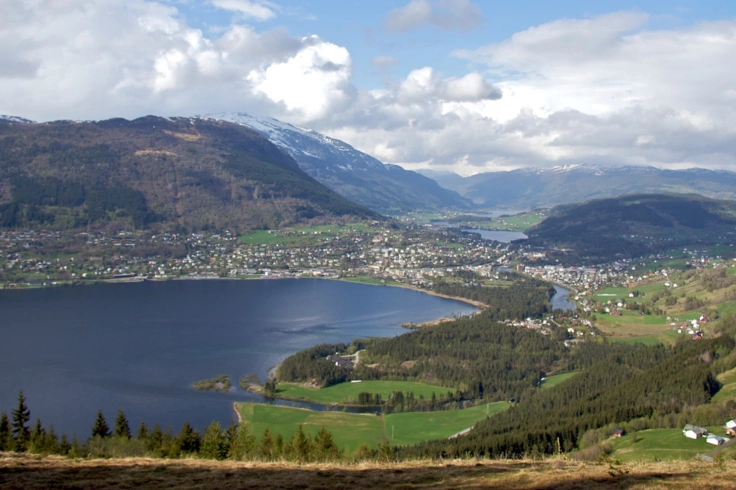
11 meter med gjørme avslører 8000 år med flomhistorie
I 2017 tok forskere opp en elleve meter lang sedimentkjerne fra Vangsvatnet på Voss. Kjernen gir forskerne et sjeldent innblikk i flomhistorien i vestlandsbygden og består av lag på lag med materiale som gjennom flere tusen år har blitt fraktet ut i vannet av elver og bekker. Vi tok en prat med Pål Ringkjøb Nielsen om arbeidet med å avdekke 8000 år med flomhistorie.
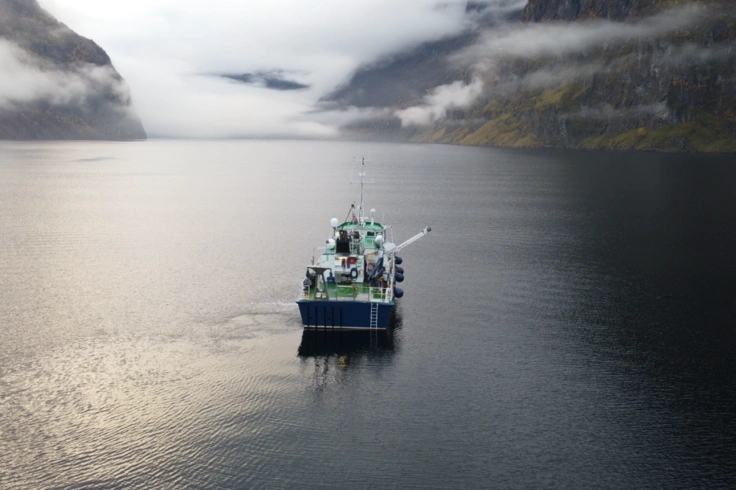
Varmere vann i dypfjorden overrasker forskerne
Målinger fra Sognefjorden og Hardangerfjorden viser at temperaturen øker selv i fjordenes dypeste vannlag. Funnet overrasker forskerne, som nå undersøker hvorfor vann som normalt regnes som stabilt blir varmere.