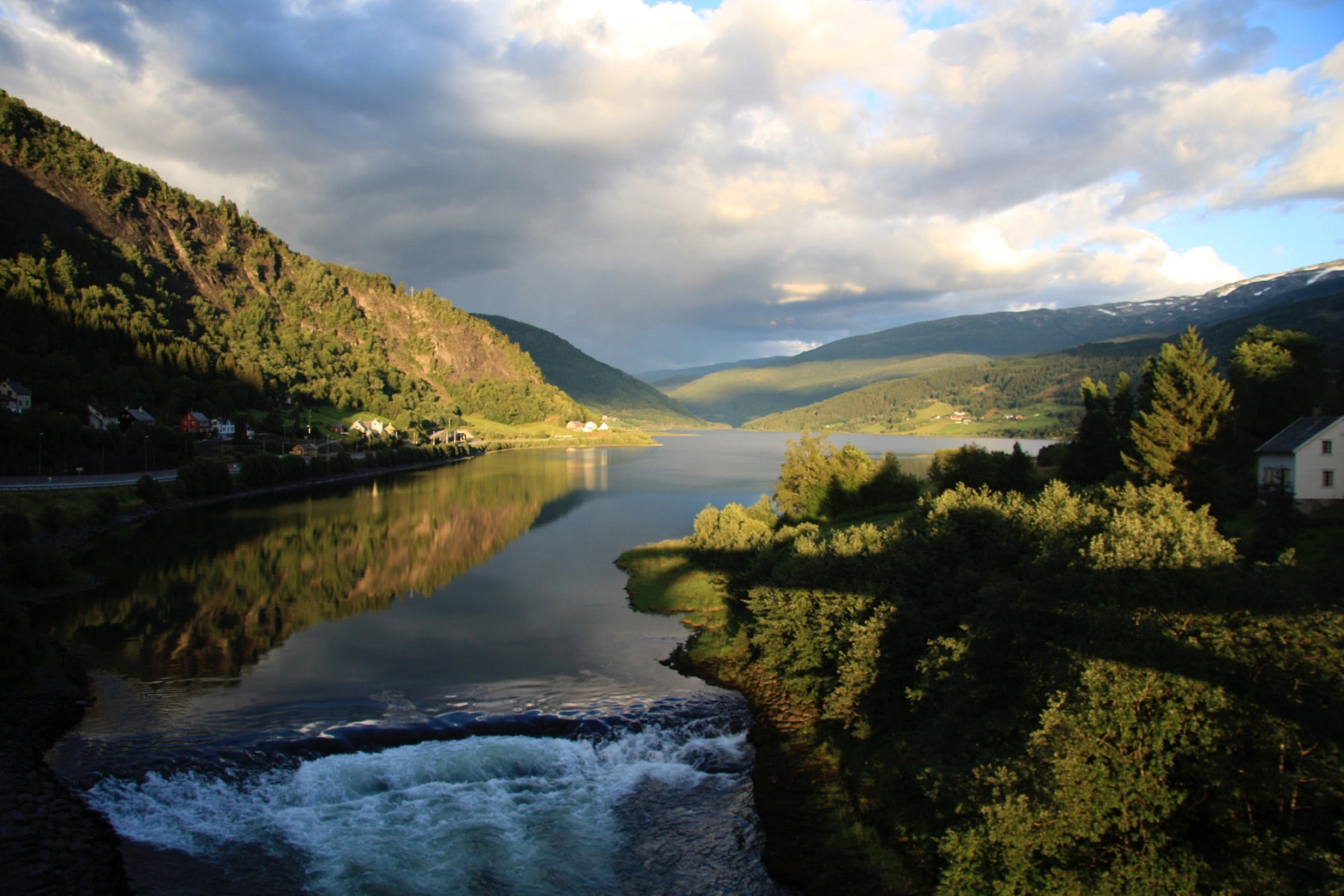
I 2017 tok forskere opp en elleve meter lang sedimentkjerne fra Vangsvatnet på Voss. Kjernen avslører 8000 år med flomhistorie i vestlandsbygden
Les merFinn en ekspert
Våre forskere er ansatt enten hos NORCE, UiB, Nansensenteret eller Havforskningsinstituttet. Forskerne jobber sammen på tvers av ulike naturvitenskapelige disipliner. Finn forskere med fagbakgrunn blant annet innen meteorologi, oseanografi, geologi, geofysikk, biologi og matematikk.
Publikasjoner
Forskere ved Bjerknessenteret publiserer mer enn 200 vitenskapelige artikler hvert år.
Prosjekter
Forskere ved Bjerknes er involvert i flere prosjekter, både nasjonalt og internasjonalt. Prosjektene eies av partnerinstitusjonene, med unntak av våre strategiske prosjekter.
Kalender
Se alle
BCCR Monday seminar: Sara Moreno – Decadal predictions for the renewable energy sector in Europe
Abstract Decadal climate predictions provide an opportunity to anticipate climate variability over the coming years, with potential applications for the renewable energy sector. This seminar presents the work developed during my PhD on improving and exploiting decadal climate information for renewable energy applications in Europe. I will first introduce statistical downscaling approaches to improve the regional information provided by decadal prediction systems. I will then assess their predictive skill for wind, solar and compound energy indicators and investigate the added value of initialization compared with non-initialized climate simulations. Finally, I will present ongoing work combining observations, decadal predictions and climate projections to constrain future climate trajectories and provide surface wind information beyond the conventional decadal prediction horizon. Speaker information My name is Sara Moreno Montes, and I am a PhD candidate at the Barcelona Supercomputing Center (BSC). I am originally from a small city in Catalonia and hold a BSc in Physics and an MSc in Meteorology, both from the University of Barcelona. Before starting my PhD, I worked for two years as a programmer at a private company in Barcelona. After completing my Master's thesis at BSC, I decided to continue there as a PhD candidate. I am currently part of the Climate Services team, and my research focuses on the application of decadal climate predictions to the renewable energy sector in Europe. _________________________________________________________________________________________ Zoom link: https://uib.zoom.us/j/68304284910?pwd=2IgsDMWHuJlQw3XFHSTo3OoGBsRrhz.1 Meeting ID: 683 0428 4910
Carbon System group meeting
Hi all As mentioned earlier, the coming Carbon System meetings will focus on the Research Priorities in the new strategy for the Bjerknes centre. The aim is to develop activities on these Research Priorities. These activities will eventually be articulated in a Bjerknes activity plan, that will accompany the strategy. The meeting on the first Research Priority: Advance fundamental science on coupled Earth system processes, interactions, and feedbacks. We will deepen process-based insight into how the Earth system works– including coupled ocean–atmosphere phenomena, the carbon cycle and biogeochemistry, large-scale climate variability, teleconnections, and tipping elements – to constrain uncertainty and enhance confidence in projections of the evolution of the climate system. will take place October 22nd at 9-11 in the 4th floor seminar room west-wing GFI. We will have 3 presentations, to set the scene, and then an organized discussion on the Research Priority: on what we would like to focus on, what we can hope to achieve, and how we can better collaborate on this in our research theme and with the other research themes. The presentations are: Friederike Fröb: Approaching the edge? - The Earth system and carbon cycle response in TIPMIP-ESMs Timothée Bourgeois: Mitigating the fall? - (Marine) carbon dioxide removal experiments in ESMs Are Olsen: Knowing the truth? – Ocean sink uncertainties in the global carbon budget Best Are & Nadine

Gruppemøte Polar/Carbon om Polhavet 2050 og IPY.
Våre forskningsgrupper
Andre forskningsområder
Lær om klima
Se alle


Aktuelt
Se alle
El Niño i fokus
Et nytt dashbord utviklet av forskere ved Universitetet i Bergen, Bjerknessenteret for klimaforskning og Federal University of Santa Catarina (UFSC) hjelper brukere med å følge hvordan verdens medier dekker El Niño, og hvordan denne dekningen samsvarer med faktiske klimahendelser.
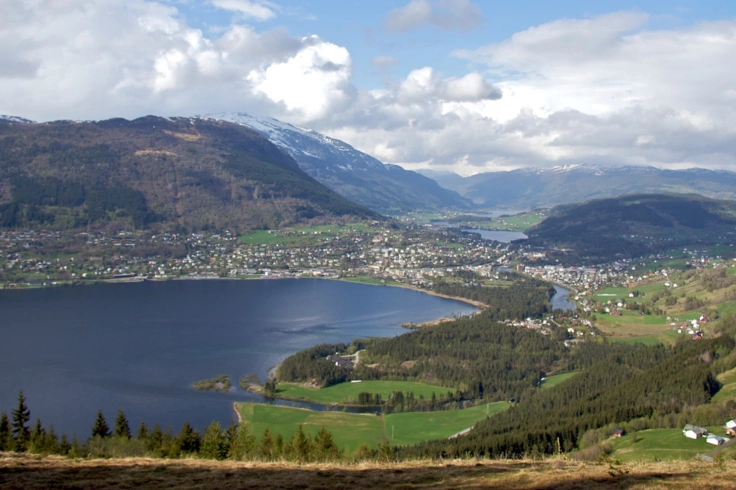
11 meter med gjørme avslører 8000 år med flomhistorie
I 2017 tok forskere opp en elleve meter lang sedimentkjerne fra Vangsvatnet på Voss. Kjernen gir forskerne et sjeldent innblikk i flomhistorien i vestlandsbygden og består av lag på lag med materiale som gjennom flere tusen år har blitt fraktet ut i vannet av elver og bekker. Vi tok en prat med Pål Ringkjøb Nielsen om arbeidet med å avdekke 8000 år med flomhistorie.
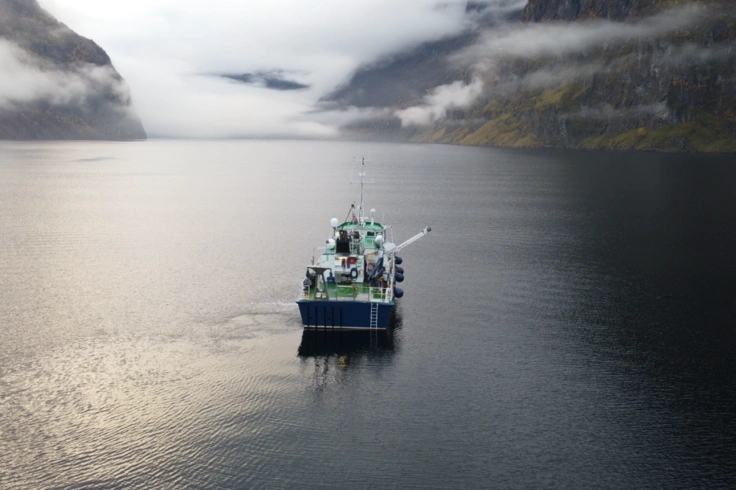
Varmere vann i dypfjorden overrasker forskerne
Målinger fra Sognefjorden og Hardangerfjorden viser at temperaturen øker selv i fjordenes dypeste vannlag. Funnet overrasker forskerne, som nå undersøker hvorfor vann som normalt regnes som stabilt blir varmere.