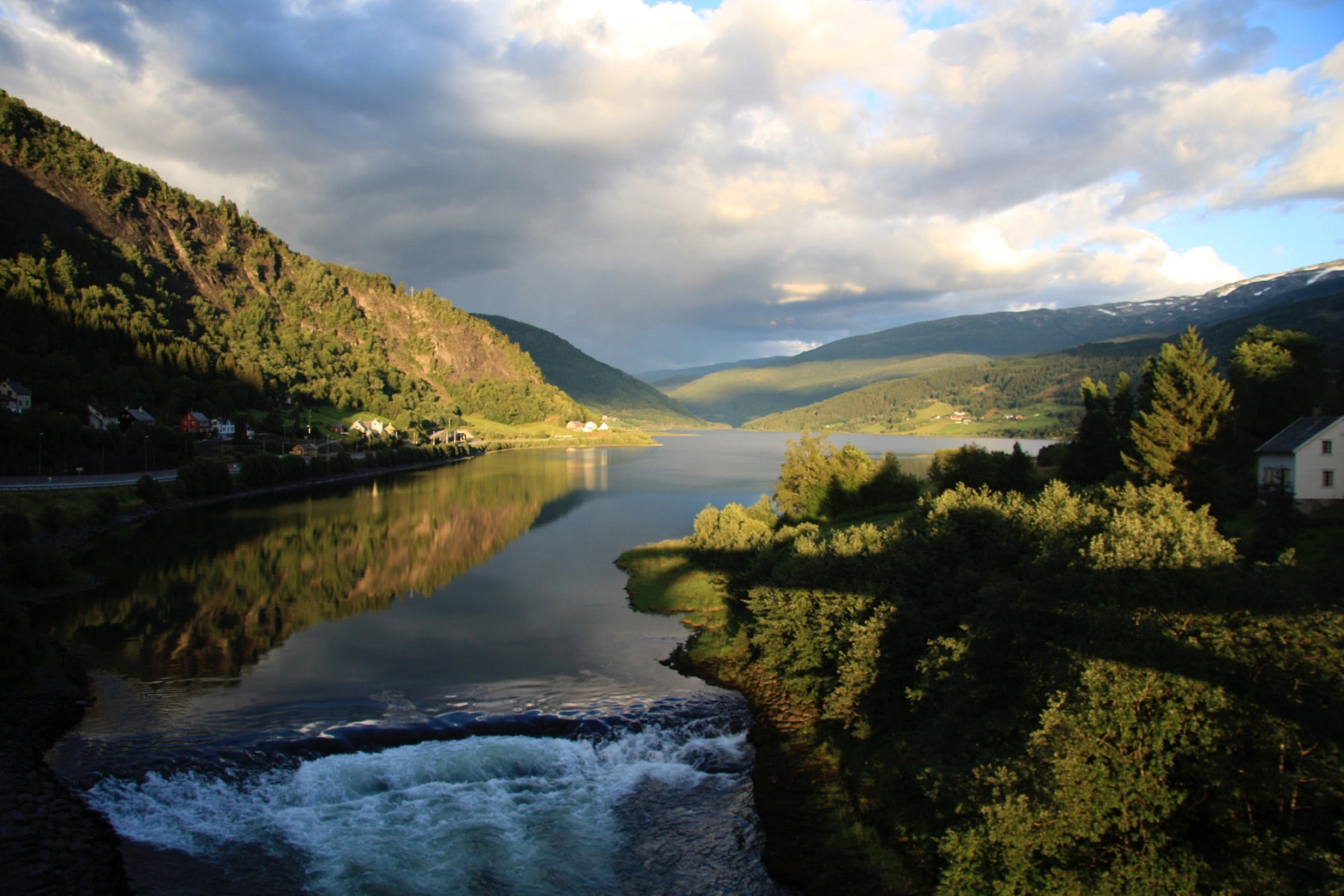
In 2017, researchers retrieved an eleven-metre-long sediment core from Lake Vangsvatnet in Voss. The core reveals 8,000 years of flood history in the community, west in Norway.
Read moreFind an Expert
Our researchers are employed either at NORCE, UiB, the Nansen Center or the Institute of Marine Research. The researchers work together across various scientific disciplines. Find researchers with backgrounds in meteorology, oceanography, geology, geophysics, biology and mathematics, among others.
Projects
Researchers at Bjerknes are involved in several projects, both nationally and internationally. The projects are owned by the partner institutions, with the exception of our strategic projects.
Publications
Researchers at the Bjerknes Center publish more than 200 scientific articles each year.
Calendar
See all
BCCR Moday seminar: Sara Moreno – Decadal predictions for the renewable energy sector in Europe
Abstract Decadal climate predictions provide an opportunity to anticipate climate variability over the coming years, with potential applications for the renewable energy sector. This seminar presents the work developed during my PhD on improving and exploiting decadal climate information for renewable energy applications in Europe. I will first introduce statistical downscaling approaches to improve the regional information provided by decadal prediction systems. I will then assess their predictive skill for wind, solar and compound energy indicators and investigate the added value of initialization compared with non-initialized climate simulations. Finally, I will present ongoing work combining observations, decadal predictions and climate projections to constrain future climate trajectories and provide surface wind information beyond the conventional decadal prediction horizon. Speaker information My name is Sara Moreno Montes, and I am a PhD candidate at the Barcelona Supercomputing Center (BSC). I am originally from a small city in Catalonia and hold a BSc in Physics and an MSc in Meteorology, both from the University of Barcelona. Before starting my PhD, I worked for two years as a programmer at a private company in Barcelona. After completing my Master's thesis at BSC, I decided to continue there as a PhD candidate. I am currently part of the Climate Services team, and my research focuses on the application of decadal climate predictions to the renewable energy sector in Europe. _________________________________________________________________________________________ Zoom link: https://uib.zoom.us/j/68304284910?pwd=2IgsDMWHuJlQw3XFHSTo3OoGBsRrhz.1 Meeting ID: 683 0428 4910
Carbon System group meeting
Hi all As mentioned earlier, the coming Carbon System meetings will focus on the Research Priorities in the new strategy for the Bjerknes centre. The aim is to develop activities on these Research Priorities. These activities will eventually be articulated in a Bjerknes activity plan, that will accompany the strategy. The meeting on the first Research Priority: Advance fundamental science on coupled Earth system processes, interactions, and feedbacks. We will deepen process-based insight into how the Earth system works– including coupled ocean–atmosphere phenomena, the carbon cycle and biogeochemistry, large-scale climate variability, teleconnections, and tipping elements – to constrain uncertainty and enhance confidence in projections of the evolution of the climate system. will take place October 22nd at 9-11 in the 4th floor seminar room west-wing GFI. We will have 3 presentations, to set the scene, and then an organized discussion on the Research Priority: on what we would like to focus on, what we can hope to achieve, and how we can better collaborate on this in our research theme and with the other research themes. The presentations are: Friederike Fröb: Approaching the edge? - The Earth system and carbon cycle response in TIPMIP-ESMs Timothée Bourgeois: Mitigating the fall? - (Marine) carbon dioxide removal experiments in ESMs Are Olsen: Knowing the truth? – Ocean sink uncertainties in the global carbon budget Best Are & Nadine

Gruppemøte Polar/Carbon om Polhavet 2050 og IPY.
Our Research Groups
Cross-Cutting Activities
Learn About Climate Science
View all


News
See all
Bringing El Niño into Focus
A new dashboard developed by researchers at the University of Bergen, the Bjerknes Centre for Climate Research, and the Federal University of Santa Catarina (UFSC) helps users track how the world's media covers El Niño, and how that coverage compares with real-world climate events.
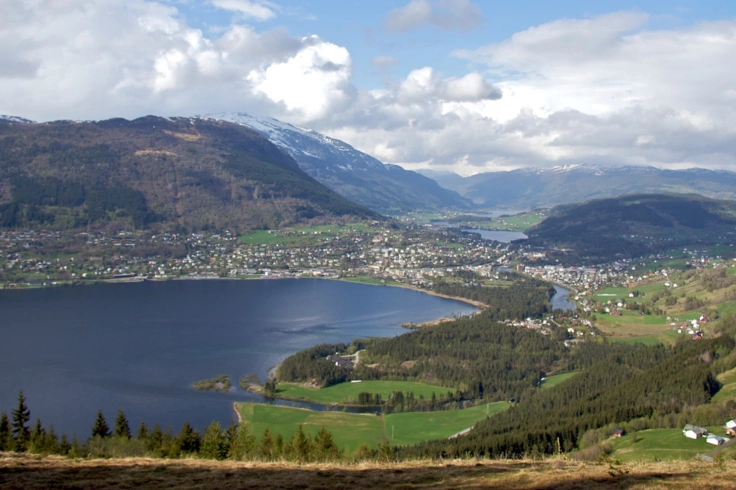
Eleven metres of mud reveals 8,000 years of flood history
In 2017, researchers extracted an eleven-metre-long sediment core from Lake Vangsvatnet in Voss. The core provides a rare glimpse into the flood history of this Western Norwegian community and consists of layer upon layer of material that has been carried into the lake by rivers and streams over thousands of years. We spoke with Pål Ringkjøb Nielsen about the work of uncovering 8,000 years of flood history.
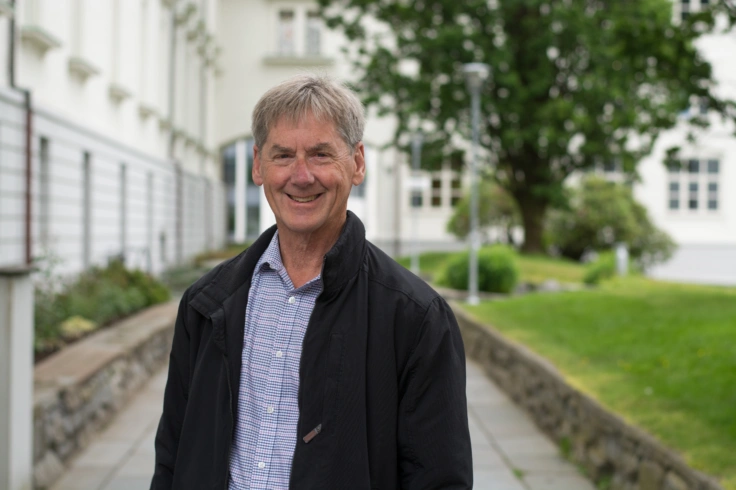
Counting his years in CO2
The year Ralph Keeling was born, his father set up a CO2 monitoring station on the volcano Mauna Loa. Almost seventy years later he can read off his age from a curve that became, not just evidence, but a symbol of climate change.