Brutal field trip provided new insights into Arctic winter
It was the hardest field trip they had ever been on, but the result was both surprising and exciting.
Publisert 11. May 2026
Written by Tori Pedersen
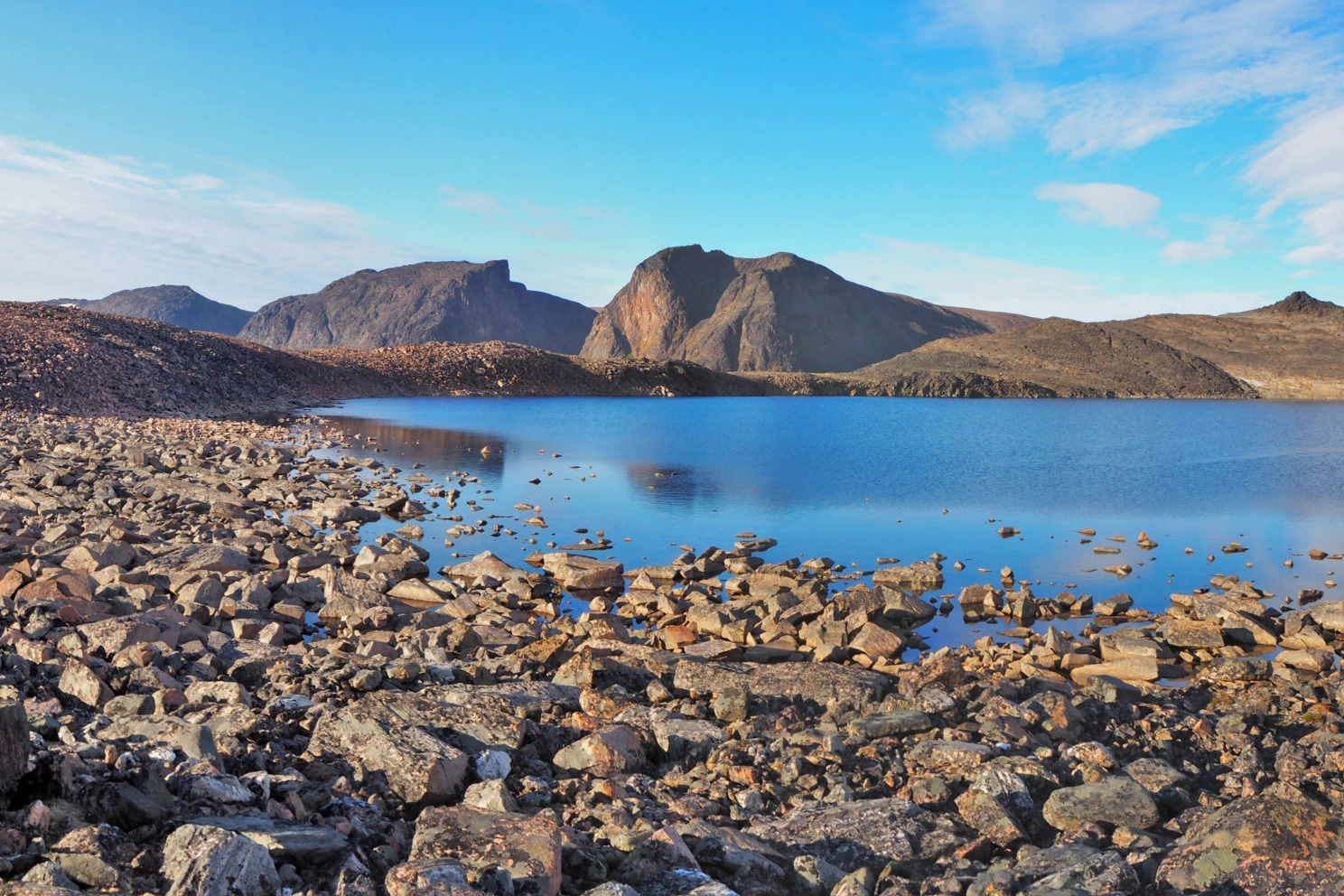
Lake Stuptjørna, is located on the eastern side of Wijdefjorden on northern Spitsbergen, Svalbard. Photo: Mateusz Strzelecki
After hiking nine kilometres with a 400‑metre elevation gain and carrying heavy backpacks through very rocky terrain, the researchers spent more than 24 hours in the field and returned with sediment samples from the lake Stuptjørna.
Stuptjørna lived up to its name: the terrain was steep and at times almost impassable.
“We completely underestimated the trip, especially with the amount of equipment we had to carry. Sleep was also in short supply and people were exhausted,” says research professor Willem van der Bilt of the University of Bergen and the Bjerknes Centre, reflecting on the demanding field trip in the summer of 2022.
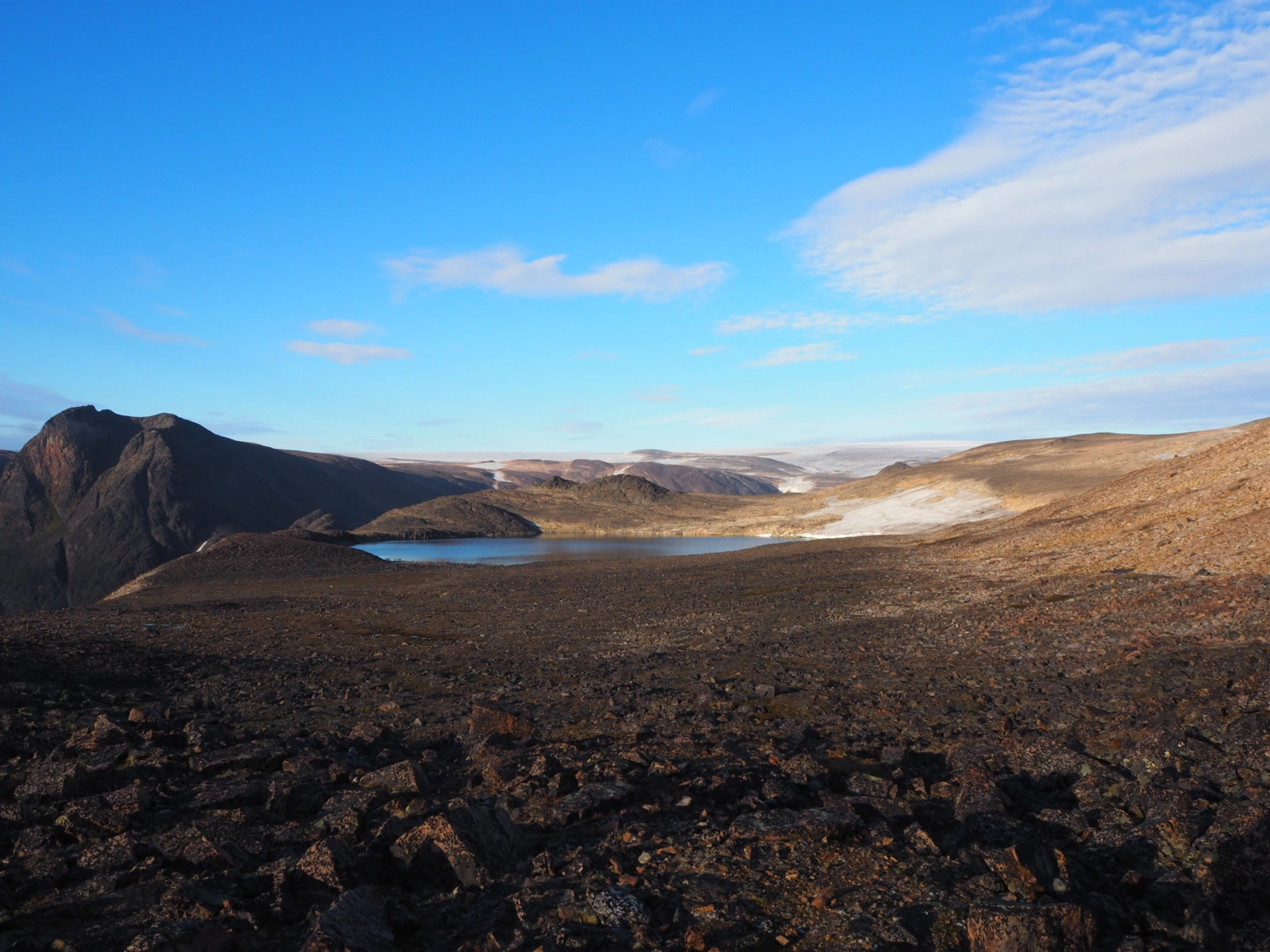
Here you can see that Stuptjørna is a bit tricky to get to. Photo: Alexandra Rouillard
What is that white spot?
Alexandra Rouillard from Umeå University was also part of the crew. She was a postdoc at the time, and it was her first trip to Svalbard. What began as a scenic hike turned into a demanding expedition across steep terrain, unstable boulder fields, and long ascents carrying heavy equipment, all under the constant awareness that polar bears roam the area.
“I seriously began questioning my priorities in life. Indeed, living itself emerges as a strong contender versus science at that point”, she says.
After more than 24 hours, they returned to the shore of Wijdefjorden with their sediment cores and wet gear.
“We all took a (much needed) cleansing swim and finally made it back to the sailboat, ferrying our equipment and people back and forth until the last of the team were on board. Pure joy. Minutes later, we noticed a white spot on the beach we just left behind,” Rouillard says. In the picture below you can see what that was.
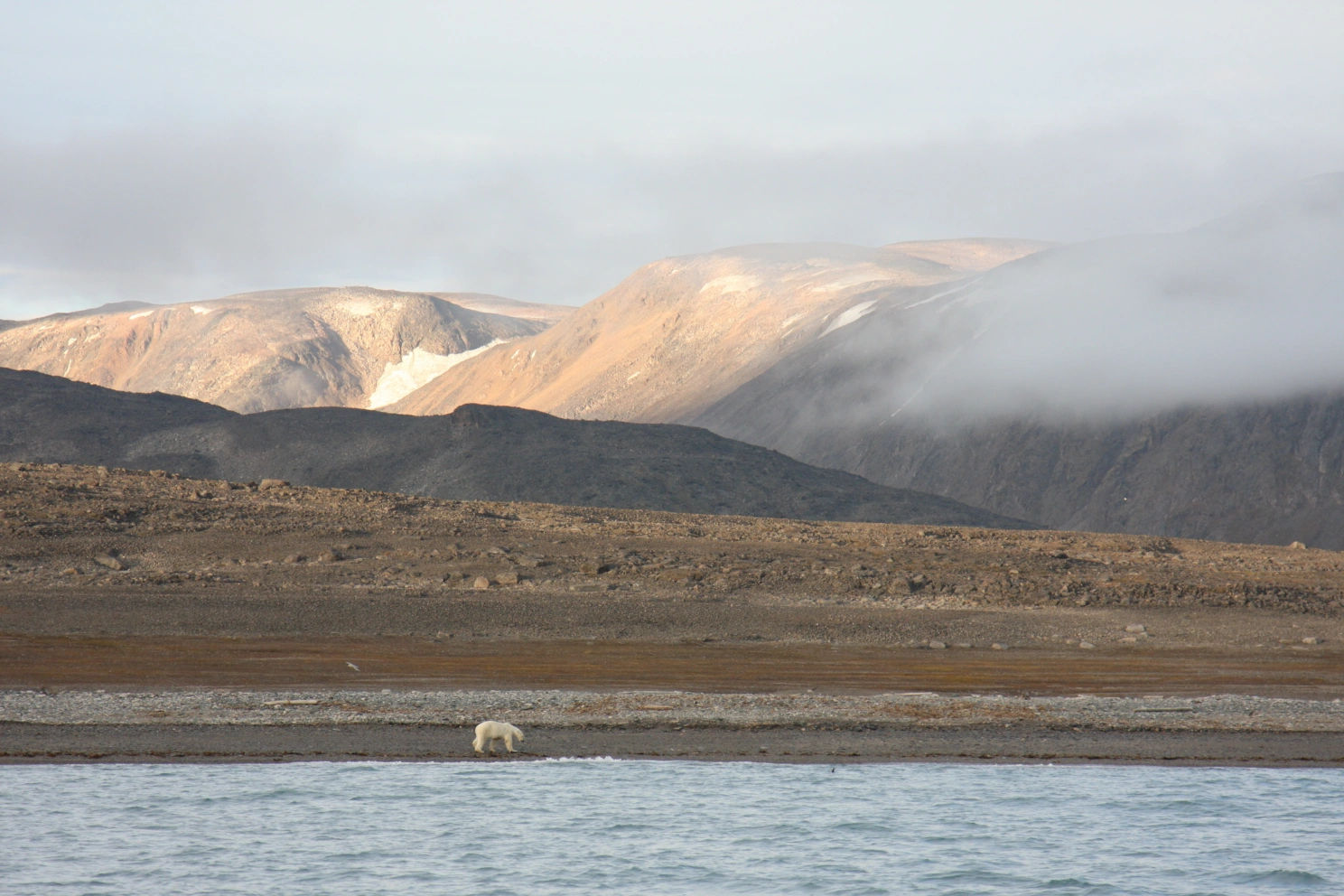
Once everyone was on board the boat, they spotted this one sneaking along the beach. Photo: Alexandra Rouillard
Alexandra’s full account of the hike up to Stuptjørna (it’s quite funny)
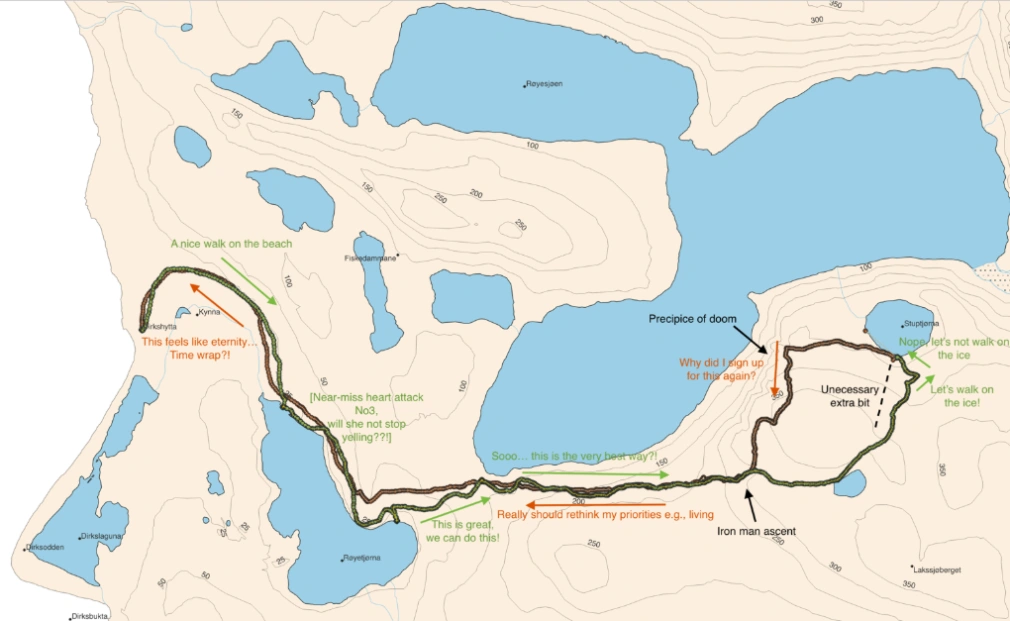
That morning, semi-rested, we got ready for the big ascent (200+m from sea level) to Stuptjørna. We had been staring at this round-sized gem of a lake from remotely-sensed imagery for months (and years for some of us). One of the highest elevated lakes in the entire Archipelago. We pack the gear -strictly the necessary- we need for data collection, safety, firearms, changes of clothes and food into the small boat ferrying us to land, then awkwardly in or onto our backpacks. I have been training and building my body back for this hike: will my injured lower back -post pregnancy of two scandinavian sized boys- allow me to hike 20-30kg of gear up to this lake? Twice? Then also get the work done? The stakes are high; I am nervous. We start walking.
We start on a nice beach of pebbles and cobbles. I am so excited to be there, even to the point of forgetting not to yell at people about how beautiful and amazing everything is, which nearly give our PI A. Schomacker a series of heart attacks: loud voice should only ever be used in the Arctic in the case of a polar bear sighting, which there are (still) many on Svalbard. I calm down some as we start ferrying gear on an inflatable zodiac across the Røyetjørna, while some of us walk along shore. A bit of uphill to a nice viewpoint onto the large lake Røyesjøen, ‘this is great, we can do this!’, we have some well deserved fika.
Onwards comes a perilous passage along a steep mountain hill, with giant sharp boulders we need to hop to and from that look like they have only recently fallen off the cliff… the geologists among us know the timescales of this ‘recent’ fall are way beyond that of a human life, and that from previous experience on this terrain is best way to cross over. But it is my very own human life I feel I am risking at every step crossing this much too inclined field of boulders, unbalanced by giant backpack, and I must ask multiple times whether this was indeed the very best way for some reassurance. Finally in safer terrain for a few minutes, there begins a wild ascent that gives me an impression of how it must be on the final legs of an iron man. I’m at the tail of the group sweating, while some of us simply trot along like mountain goats. With around the corner our prize in sight, we happily walk down again towards it, trying our luck on the presume smoother little leftover snow patch still melting into the lake, and then again deciding against due to sinking at every step. We leave much of the gear in place for sampling the next day, hoping polar bears do not decide to use our materials as entertainment.
The return to the boat on day 1 is attempted via a ’short cut’, which turns out to be much too close for comfort to the ‘precipice of doom’ (towering over a near 200m vertical cliff to Røyesjøen). Note to self: shall return the other way next time. The (too) inclined boulder field exhibits the same traits as on the way over, and I begin seriously questioning my priorities in life. Indeed living itself emerges as a strong contender vs science at that point. Somehow, the souvenir of the exciting and nice 'walk on the beach’ is suddenly very distant in the last few 100 m back to the sailboat.
Thinking about the hike to the lake and back is really daunting, but sleep and the promise of a unique climate record from Stuptjørna gives us strength. This time, our sampling stretches the day, as well as our will - and we return more than 24 hrs later to the shore of Wijdefjorden with our precious cores and wet gear sticking out from every angle of our silhouettes. We all take a (much needed) cleansing swim and finally make it back to the sailboat, ferrying our equipment and people back and forth until the lasts of the team are on board. Pure joy. Minutes later, we notice a white spot on the beach we just left behind (see attached photo).
Surprising layers
The lake was chosen because of its high elevation. The goal was to gain a better understanding of past Arctic winter climate and the natural mechanisms that control it, by using this lake as an archive of winter conditions.
“The higher the lake, the longer winter lasts,” van der Bilt explains.
They collected a sediment core from the lake containing 7,000 years of climate history, and during laboratory analyses they discovered something surprising. The paper is published in Geophysical Research Letters.
“We found out that these little layers we saw already during fieldwork, were minerals that form in the lake under very specific conditions, when there is no oxygen in the water. The longer the lake is covered by ice, the less oxygen is found in the water, which is directly linked to winter climate”, van der Bilt explains.
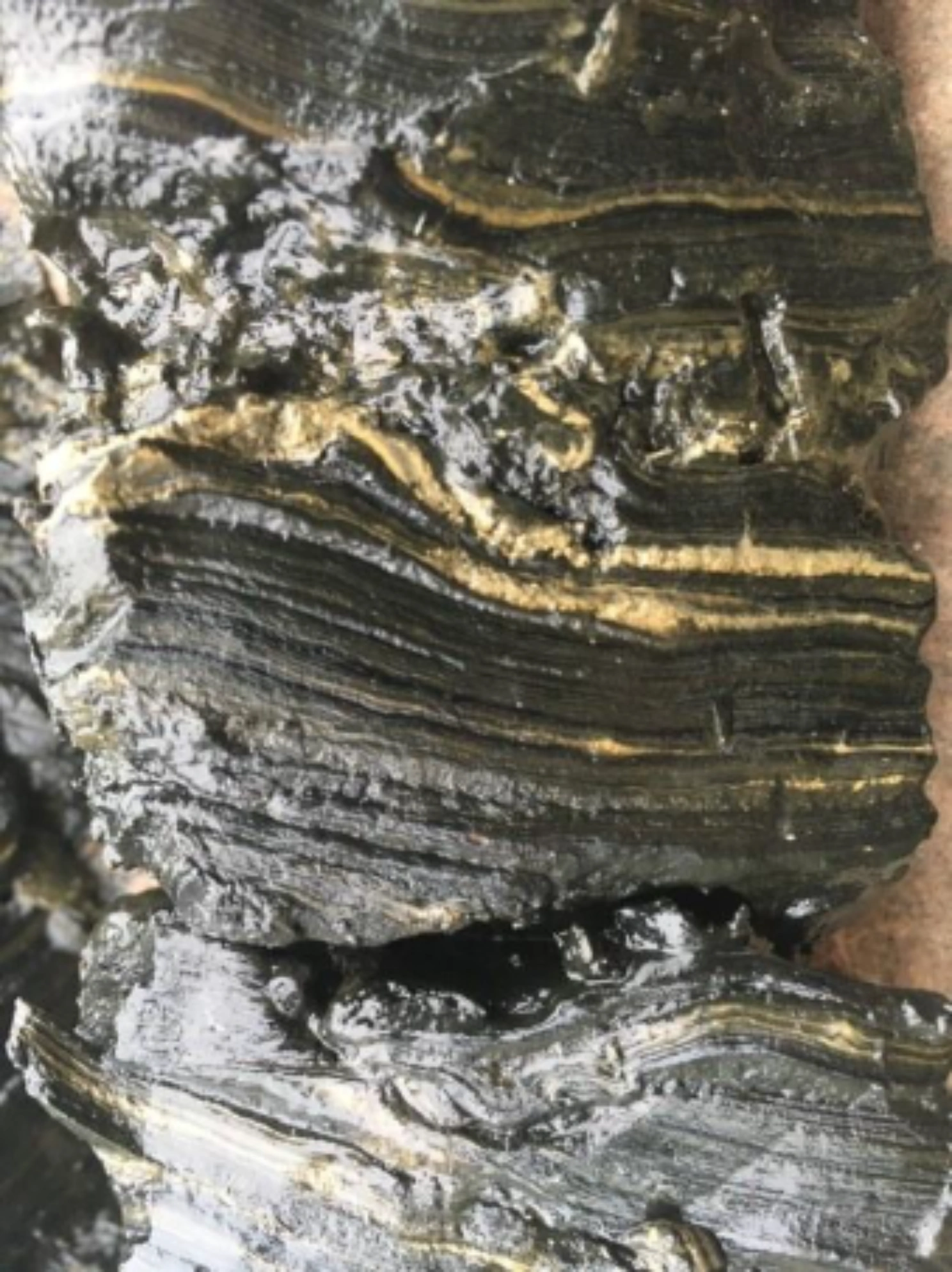
A side view of very finely layered sediment that has been taken near the lakeshore. Photo: Alexandra Rouillard
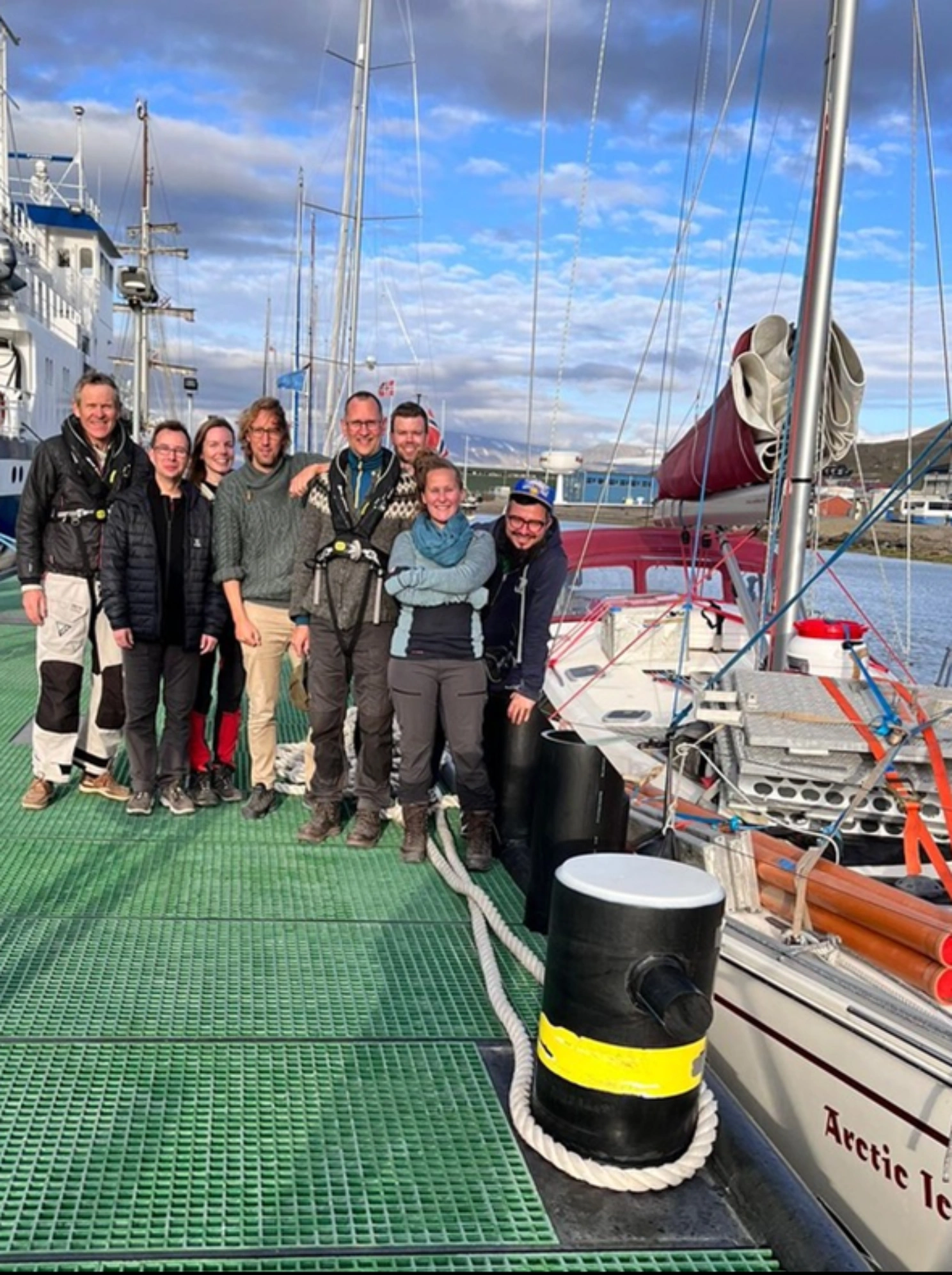
The researchers gathered before boarding the sailboat that would take them to Wijdefjorden. Photo: private
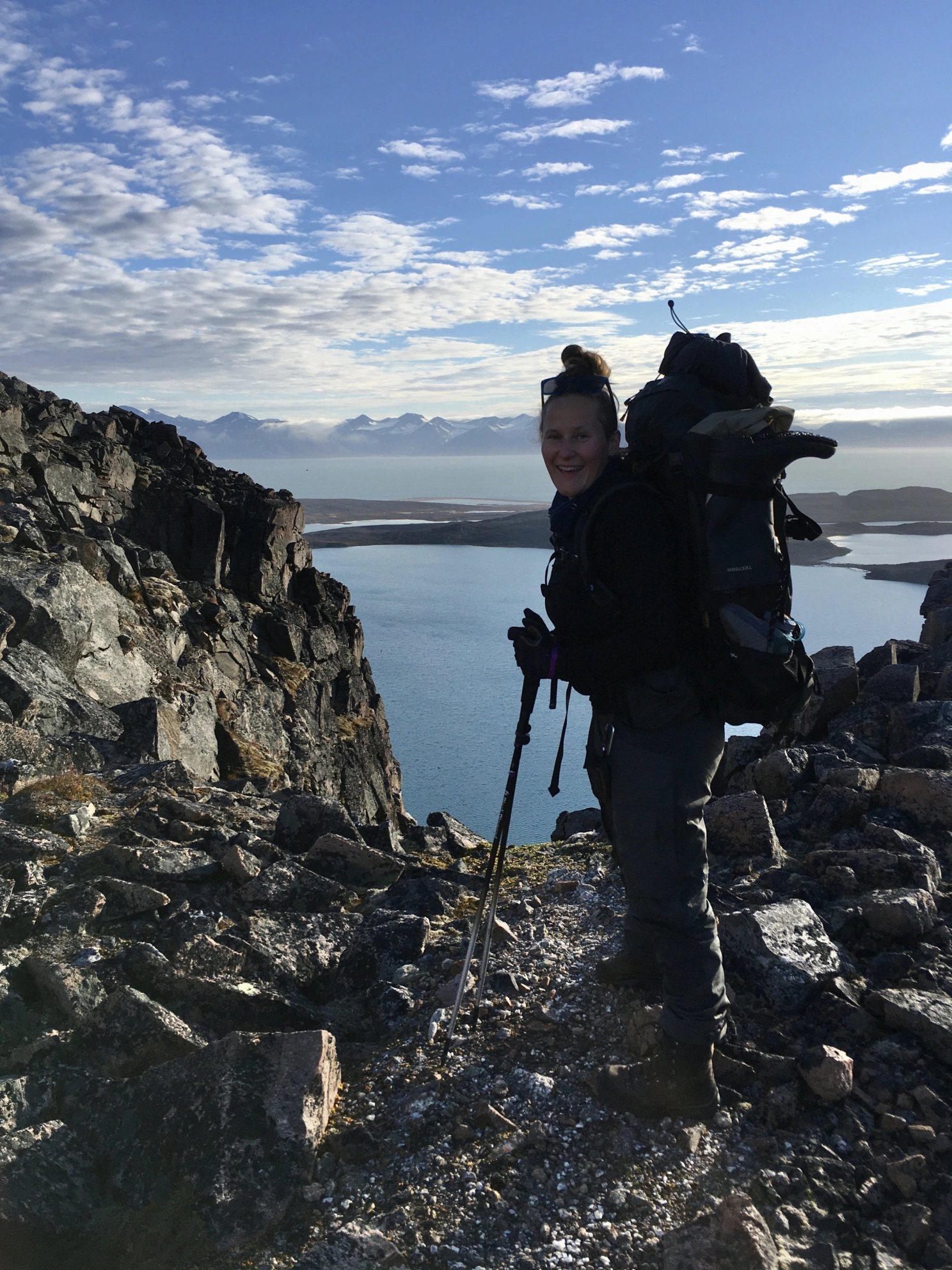
Alexandra Rouillard. Photo: Marie Bulínová
Combining methods
Methodologically, the study married established laboratory methods with new scanning techniques. For example, medical CT scans were used to identify the (often invisible) anoxic mineral concretions, while their chemical composition was confirmed using microscopic analysis. In addition, they relied on hyperspectral imaging, a method that identifies the characteristic visible and invisible light spectra of specific materials. In this case, they used the light spectra of pigments produced by bacteria that lived in the lake when there was little oxygen.
They found that variations in winter climate track a well-known 1500-year climate cycle.
“You can think of it as the heartbeat of natural climate in this area. But we are the first to report that it also has an impact on winter climate on land,” van der Bilt says.
“So, depending on where you are in that cycle in a future also shaped by human climate warming, that cycle could either make the impacts of human climate change worse or dampen it a little bit.”
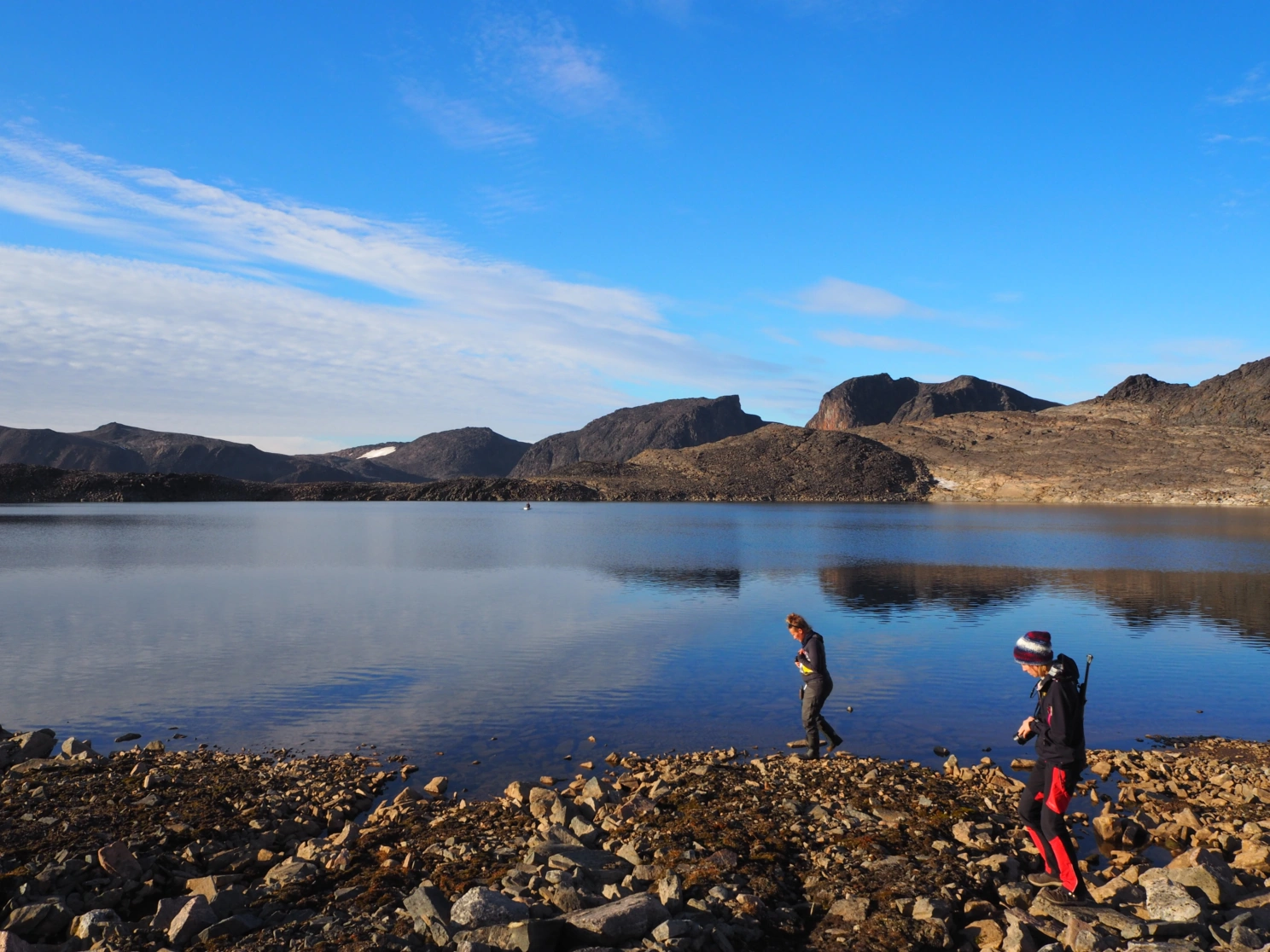
Up close to Stuptjørna. Photo: Mateusz Strzelecki
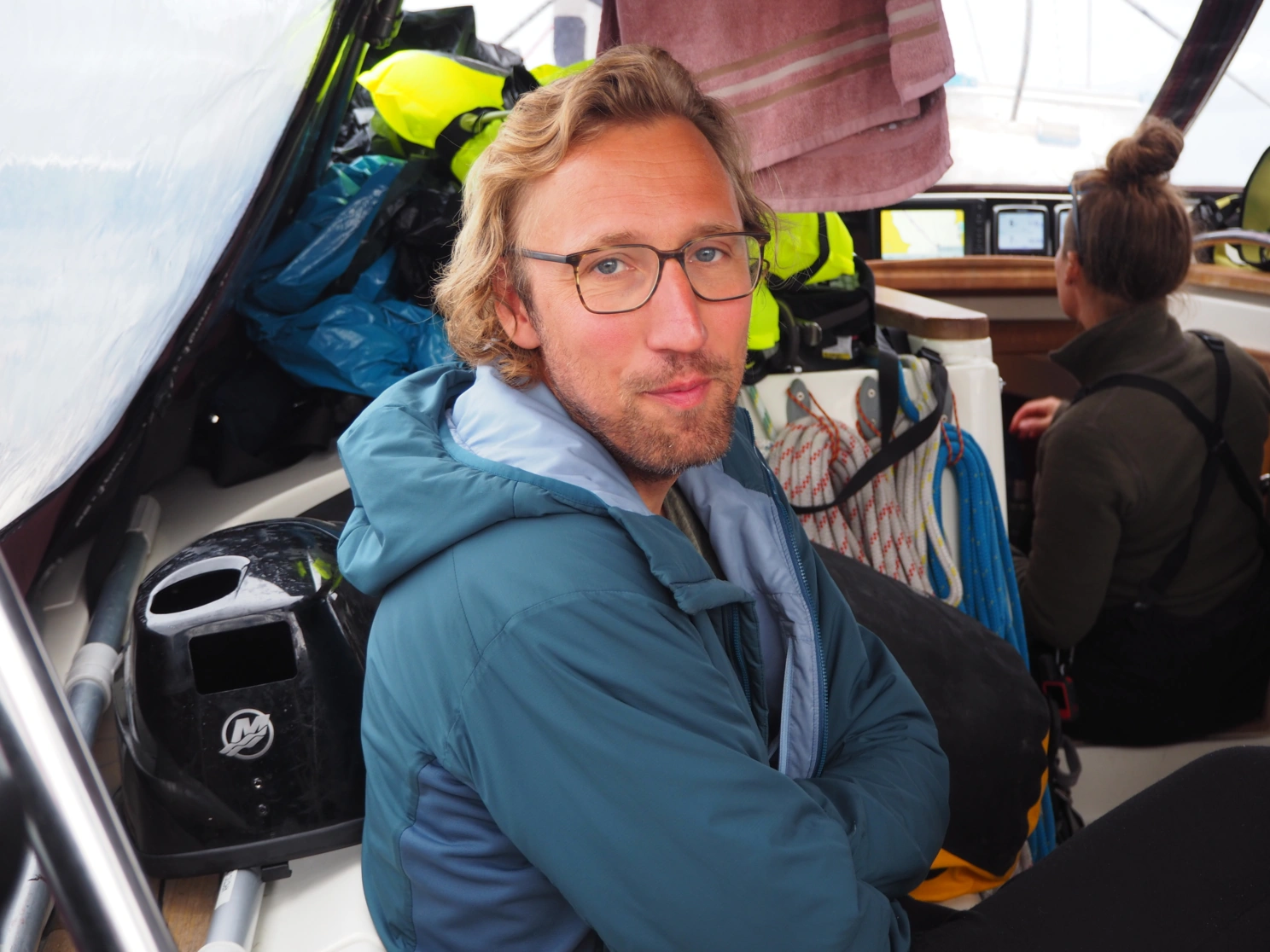
Willem van der Bilt back on the sailboat. Photo: private
Volcanic eruptions
The second big thing is that almost every extreme winter they found in this lake appeared to happen after multiple volcanic eruptions that had occurred closely spaced in time.
Volcanic eruptions inject large clouds of particles and gases into the atmosphere, which can block incoming sunlight for years to decades.
“By combining all kinds of fancy scanning and microscope techniques, we find that these extreme volcanic winters happened throughout the past 8,000 years, regardless of the background state of climate, meaning they happened under warm and cold conditions. That means that extremely cold volcanic winters also can happen in the warmer future that the region faces”.
References
Siderite Concretions in Svalbard Lake Sediments Capture 7,000 Years of Extreme Arctic Cold Season Climate Change