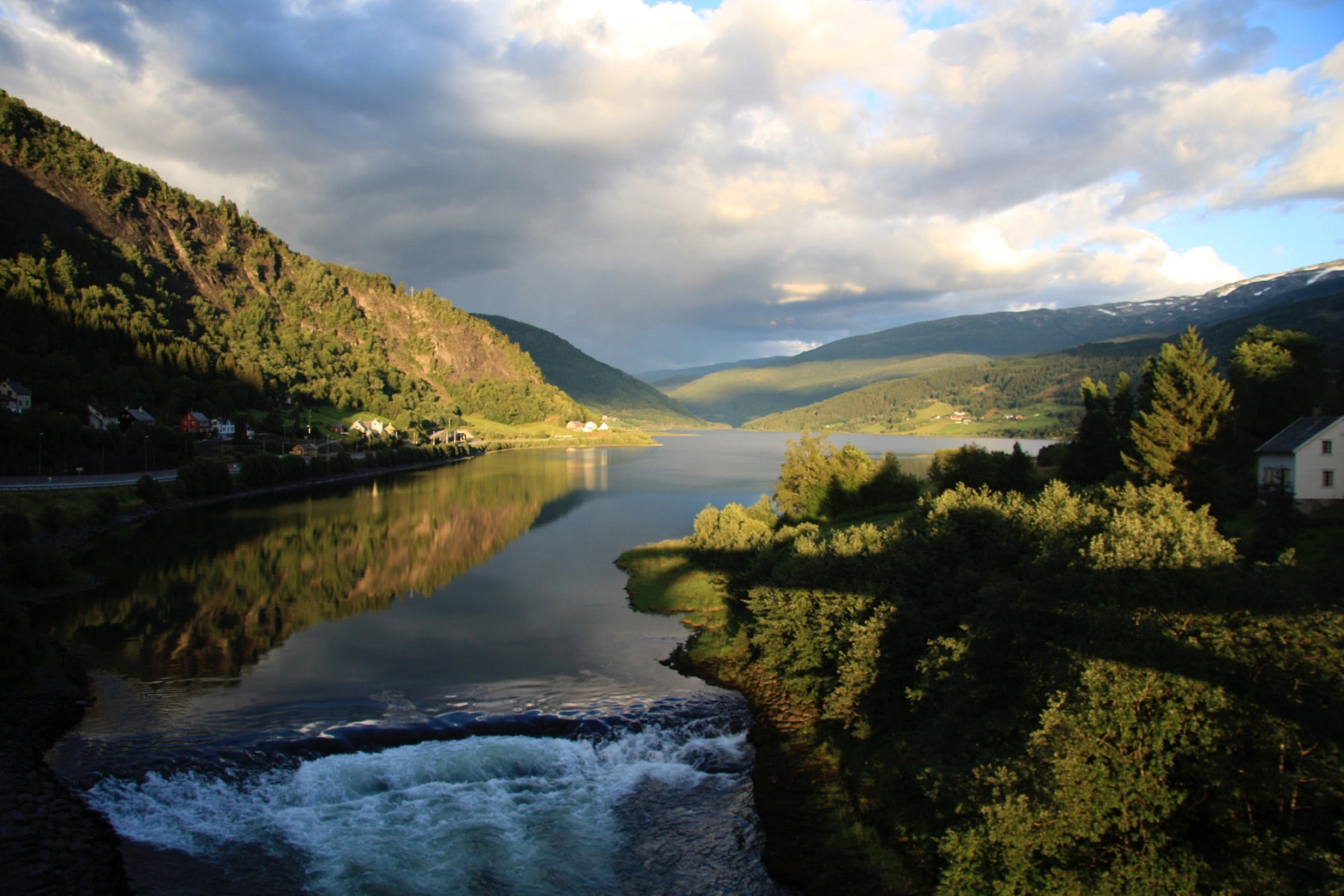
In 2017, researchers retrieved an eleven-metre-long sediment core from Lake Vangsvatnet in Voss. The core reveals 8,000 years of flood history in the community, west in Norway.
Read moreFind an Expert
Our researchers are employed either at NORCE, UiB, the Nansen Center or the Institute of Marine Research. The researchers work together across various scientific disciplines. Find researchers with backgrounds in meteorology, oceanography, geology, geophysics, biology and mathematics, among others.
Projects
Researchers at Bjerknes are involved in several projects, both nationally and internationally. The projects are owned by the partner institutions, with the exception of our strategic projects.
Publications
Researchers at the Bjerknes Center publish more than 200 scientific articles each year.
Calendar
See all
BCCR Seminar: Mind the Slope: Why Greenland’s Katabatic Storms Challenge Global Models.
Abstract Katabatic storms in southeastern Greenland are fierce, density-driven downslope wind events that influence both local weather and downstream climate. We assess their representation across three generations of ECMWF global reanalyses (ERA5, ERA-Interim, and ERA40) and a hierarchy of Community Earth System Model version 2 (CESM2) simulations at different horizontal resolutions, using in situ observations and the 2.5-km Copernicus Arctic Regional Reanalysis (CARRA) as benchmarks. The global reanalyses systematically underestimate wind speeds by approximately 30% in ERA5 and 50% in ERA-Interim and ERA40, while failing to capture key storm structures. Similar biases occur in CESM2 simulations at standard 1–2° resolutions. In contrast, variable-resolution CESM2 configurations with local grid refinement to 0.25° and 0.125° better resolve Greenland's topography and substantially improve the representation of storm intensity and structure. Sensitivity experiments further demonstrate that resolving the steep ice-sheet margins is critical for capturing katabatic acceleration. The reanalysis data also reveal that these storms generate fast-moving, high-amplitude ocean wave packets that propagate as far downstream as Scandinavia and the British Isles. Accurately representing these storms in global models and reanalyses is therefore essential for simulating North Atlantic climate variability beyond Greenland's immediate coastal region. Speaker information Marcus Lofverstrom is an associate professor in the Department of Geosciences at the University of Arizona. His research group conducts novel research in the fields of atmospheric dynamics, (paleo-)climatology, and glaciology to understand the evolution of the climate system over multi-millennial time scales. Numerical modeling is an important component of his research program, and the group is utilizing models over a broad range of complexities: from conceptual and linear steady-state models to fully coupled state-of-the-art Earth-system models.

Gruppemøte Polar/Carbon om Polhavet 2050 og IPY.
Ledergruppemøte Bjerknessenteret
Our Research Groups
Cross-Cutting Activities
Learn About Climate Science
View all


News
See all
Bringing El Niño into Focus
A new dashboard developed by researchers at the University of Bergen, the Bjerknes Centre for Climate Research, and the Federal University of Santa Catarina (UFSC) helps users track how the world's media covers El Niño, and how that coverage compares with real-world climate events.
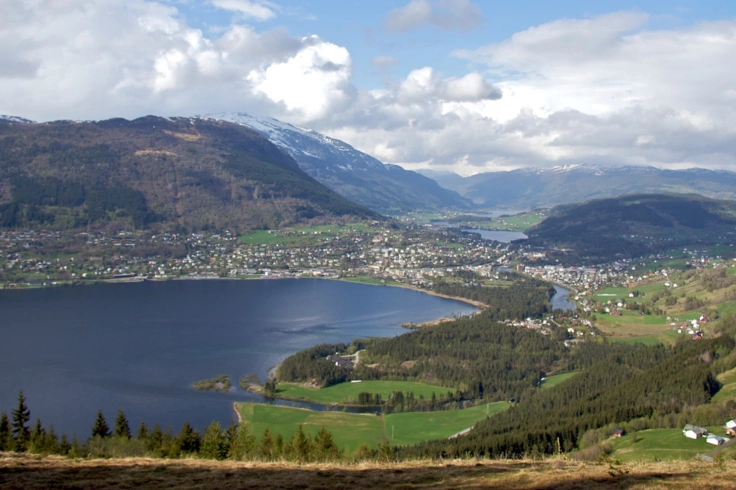
Eleven metres of mud reveals 8,000 years of flood history
In 2017, researchers extracted an eleven-metre-long sediment core from Lake Vangsvatnet in Voss. The core provides a rare glimpse into the flood history of this Western Norwegian community and consists of layer upon layer of material that has been carried into the lake by rivers and streams over thousands of years. We spoke with Pål Ringkjøb Nielsen about the work of uncovering 8,000 years of flood history.
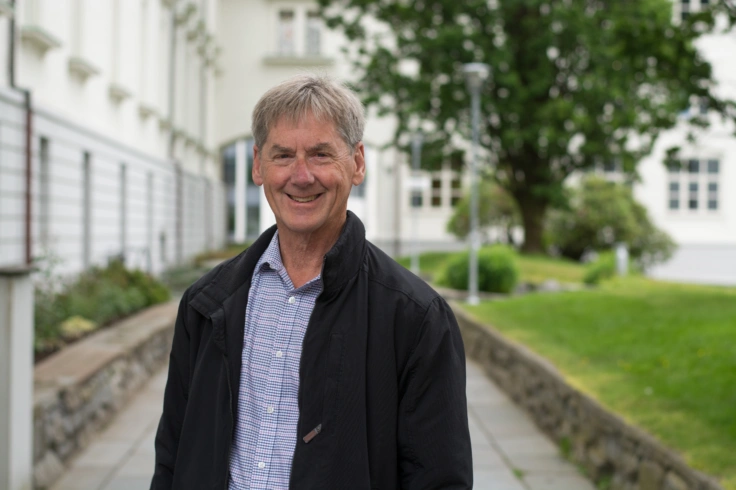
Counting his years in CO2
The year Ralph Keeling was born, his father set up a CO2 monitoring station on the volcano Mauna Loa. Almost seventy years later he can read off his age from a curve that became, not just evidence, but a symbol of climate change.