Islands in the Sky are Teeming with Life
PhD student Lotta Schultz has studied the biodiversity of alpine regions and found them surprisingly full of life. But it is a life rapidly changing due to climate change and human activity.
Publisert 13. September 2026
Written by Thea Svensson
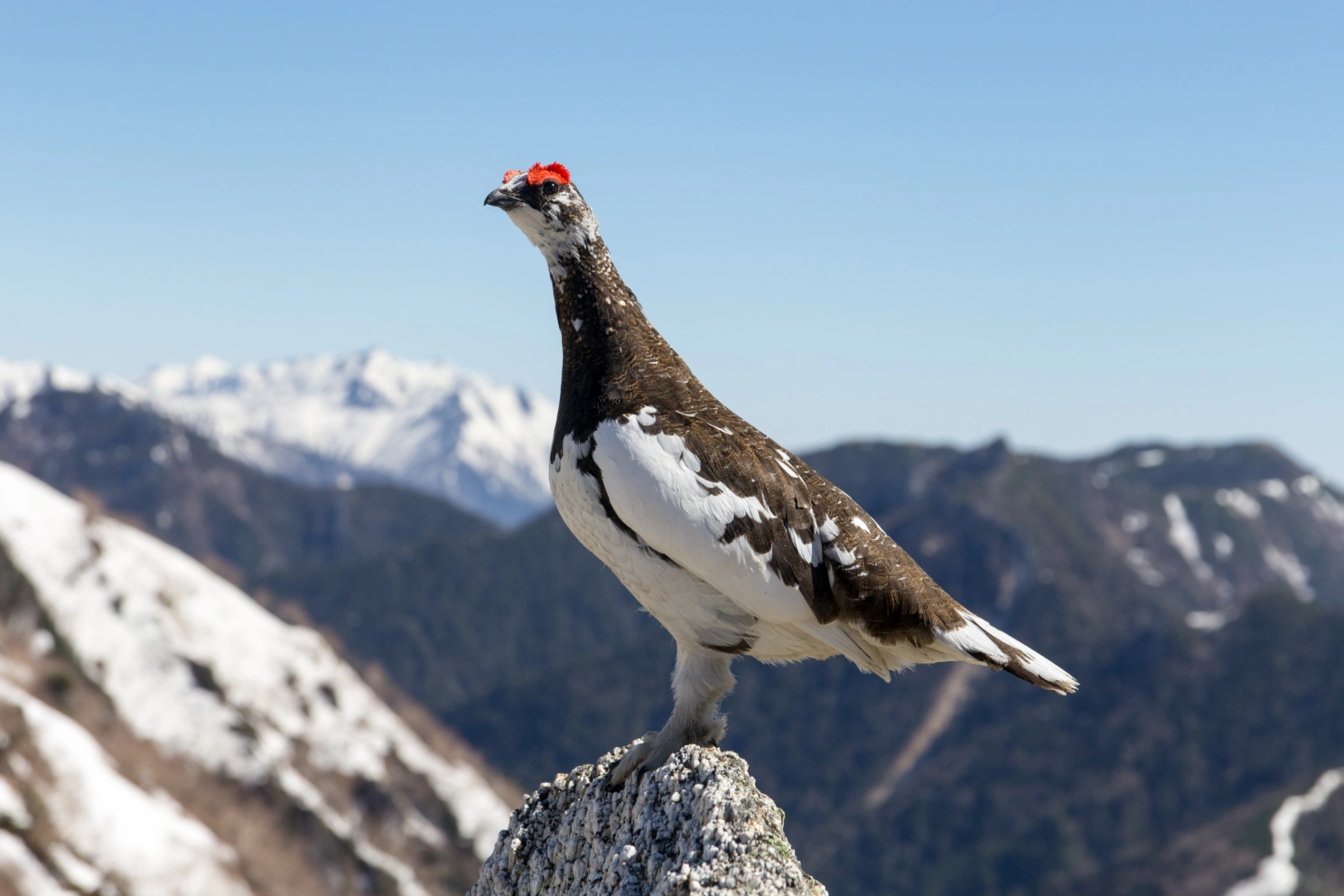
Male rock ptarmigan (L. m. japonicum) in summer plumage on Mount Tsubakuro, Japan. Credit: Daisuke Tashiro. Wikimedia commons / CC BY-SA 2.0. https://en.wikipedia.org/wiki/Rock_ptarmigan#/media/File:Lagopus_muta_japonica_Mount_Tsubakuro.jpg

In a recent publication in Nature Communications, Lotta Schultz shows how diverse, unique and alive the alpine regions of the earth really are. High above the treeline there is a world full of plants, mammals, reptiles and birds that have survived and adapted to truly challenging conditions, creating an ecosystem unlike any other. No wonder Schultz is so passionate about this particular part of our planet.
- I grew up in the Austrian alps, a little west of Innsbruck, she explains.
- So, mountains have always been an important part of my life. I have always been fascinated by them.
After taking a master’s degree in ecology at the University of Vienna, Schultz took what she describes as a “detour” into marine ecology – though quickly realized where her true passions lie.
- I was too far away from the mountains, she laughs.
- Even in my free time, I just want to be outside, hiking up a mountain.

Lotta in her element.
That passion eventually brought her to Norway, where she joined the University of Bergen and the Bjerknes Centre as part of the Mountains in Motion Research Team led by Suzette Flantua. The team studies mountains as dynamic Earth system components, shaped by changing climates, shifting treelines and expanding and retreating glaciers.
The work done by Schultz and her colleagues aims to understand how these changes affect life in alpine ecosystems. But before answering that question, they first had to tackle a more basic one.
- We needed to understand what alpine biodiversity actually looks like across the world's mountains, she says.
- Before we can study how biodiversity changes, we need the data to describe it.
Mountains are Hotspots for Life
Although the alpine biome covers only around three percent of Earth's land surface, Schultz and her colleagues found that it contains 7.8 percent of all vertebrate species worldwide. More than ten percent of all bird species and mammal species occur in alpine environments.
- Mountains in general are hotspots for biodiversity, says Schultz.
- But the alpine biome is special in a different way. There are hotspots within alpine ecosystems. Some mountain regions are incredibly biodiverse, while others have far fewer species.
The clearest example is found in the tropical Andes in South America, which emerged as one of the world's great alpine biodiversity hotspots. In contrast, mountain systems such as the European Alps and the Scandinavian mountains support fewer species relative to their size.
What surprised Schultz most was not the overall richness of alpine life, but how different each mountain range turned out to be.
- I thought there would be a more obvious global pattern, she says.
- Instead, every mountain range seemed unique. In one region you find highly specialized birds, in another specialized mammals. The biodiversity of each mountain system tells a story of its own.
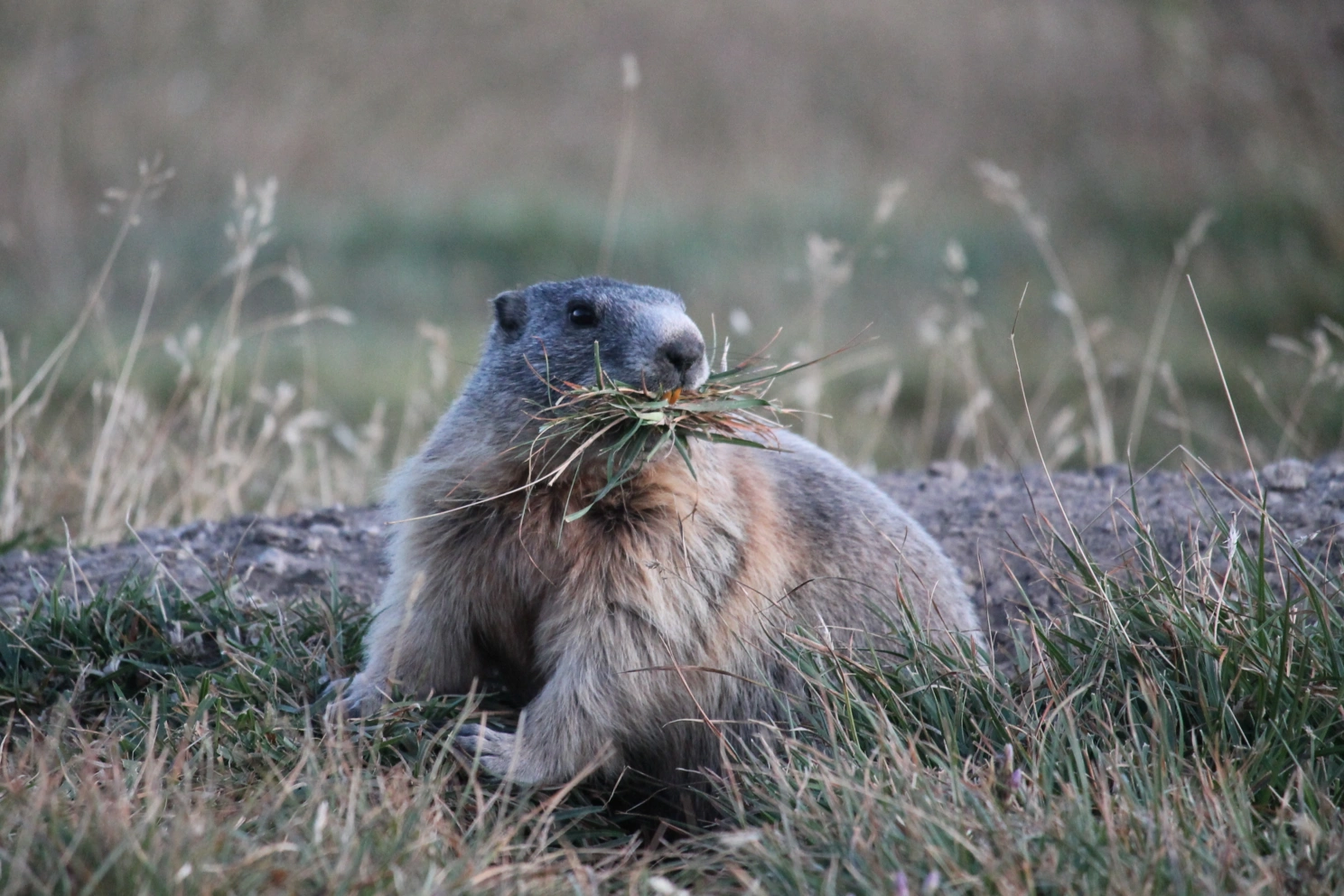
Alpine marmot (Marmota marmota) in the Austrian Alps. Photo: Lotta Schultz.
True Alpine Specialists
The alpine zone begins above the treeline, where conditions become too harsh for trees to survive.
- Within a mountain, we have different life zones, Schultz explains.
- As you move up a mountain, at some point the trees become shorter and more scattered, and then there are no trees anymore. That's what we call the alpine zone.
The study differentiates between species that occur occasionally in alpine environments and true alpine specialists. While some species can thrive across a broad range of elevations, others are restricted to life above the treeline. These specialists are often particularly vulnerable because they have nowhere higher to move when conditions change.
- Some species live in the mountain forest but also venture into the alpine zone, for example for breeding, says Schultz.
- But others are much more closely tied to the alpine zone. One example is the rock ptarmigan; a characteristic alpine bird found above the treeline – also in mountain regions here in Norway.
According to the study, 360 vertebrate species qualify as alpine specialists. Remarkably 91 percent of the alpine specialists are confined to a single mountain range. This shows how restricted many alpine species are, and how different one alpine biome may be to another.
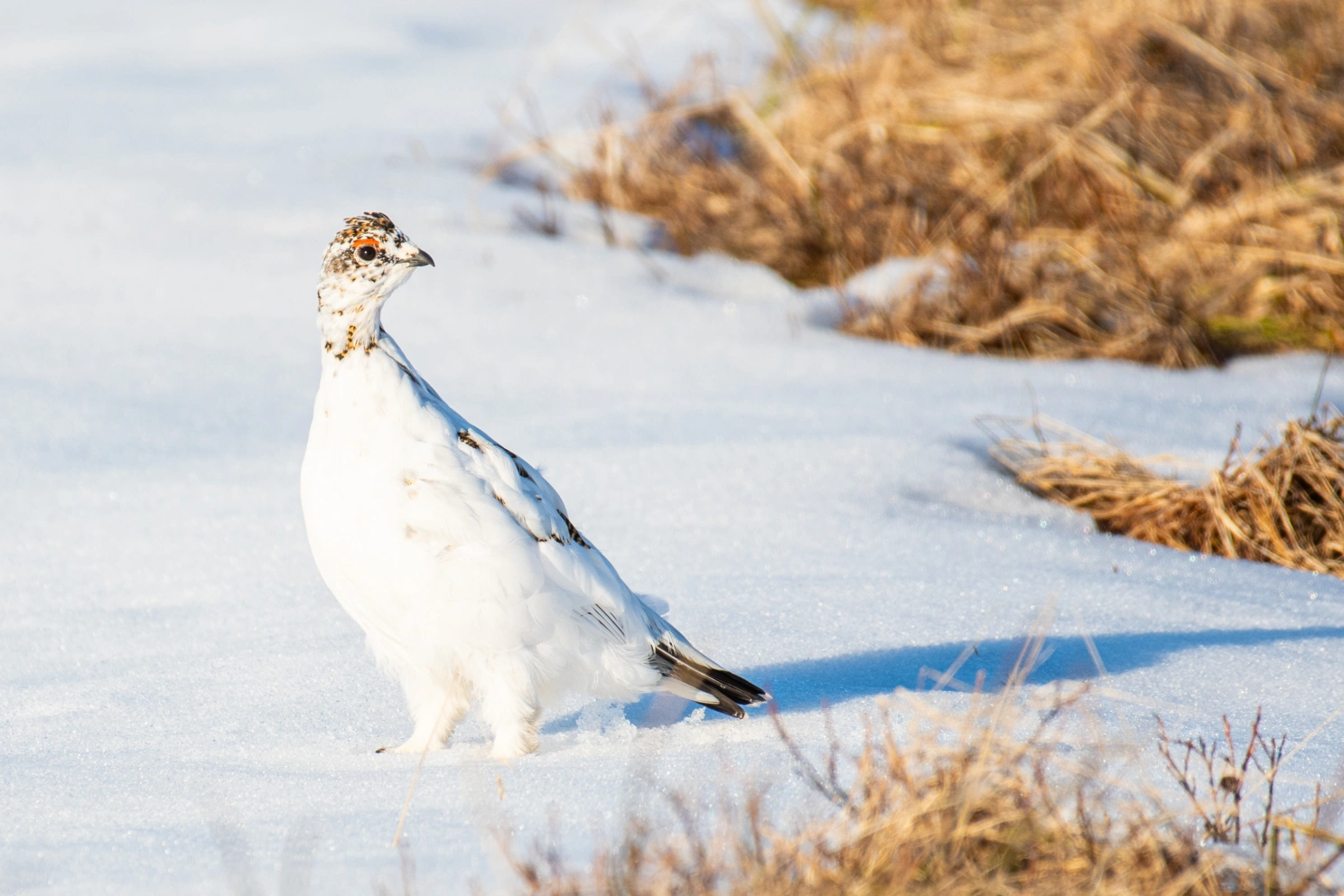
The rock ptarmigan’s scientific name (Lagopus muta) comes from Ancient Greek words meaning “hare foot,” a reference to its distinctive feather-covered feet. Image shows rock ptarmigan bird on island of Hrisey in North Iceland. Source: Colourbox. Photo by Gestur Gíslason
Mountains as Living Islands
One reason alpine regions support such unique biodiversity may be that they function much in a similar way as islands do. Separated by valleys, forests and lowlands, mountaintops isolate populations from one another. Over long periods of time, this isolation can drive evolution and the emergence of new species.
- Alpine ecosystems are sometimes referred to as “islands in the sky”, says Schultz.
Just as rising and falling sea levels can connect and separate oceanic islands, shifting climates have repeatedly connected and fragmented alpine habitats over thousands of years. Glaciers expand during colder periods and forests move uphill during warmer periods, influencing where alpine habitats can reside. This is a recurrent process across all mountains worldwide.
- You have populations that are together at one point and then become separated, Schultz explains.
- That can trigger a lot of ecological and evolutionary processes and potentially lead to the formation of new species.
Researchers sometimes describe these changing landscapes as a “pump for biodiversity”. Generating species diversity through repeated cycles of connection and isolation, as well as mixing of species communities.
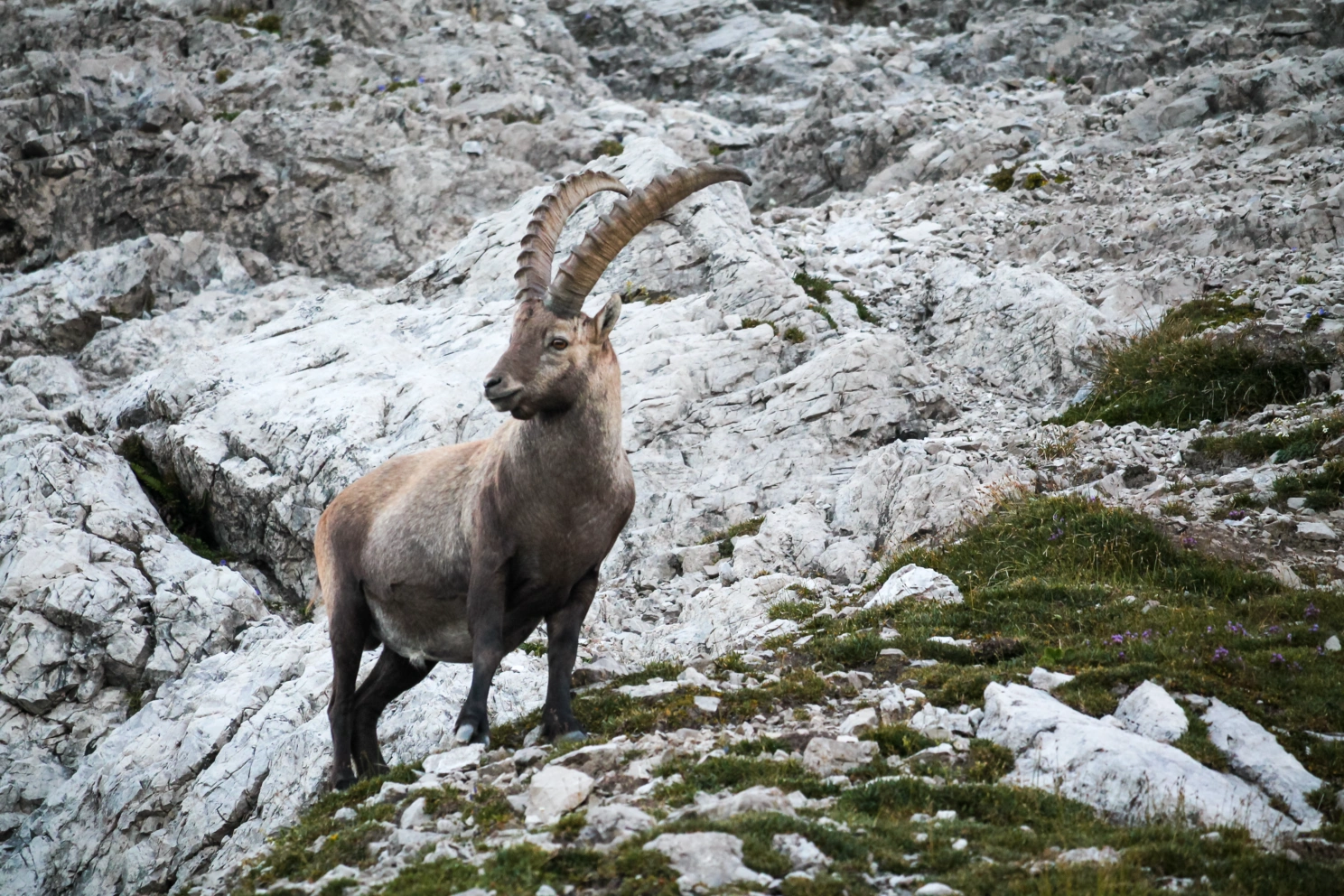
Alpine ibex (Capra ibex) in the Austrian Alps. Photo: Lotta Schultz
Building a Global Mountain Network
Understanding alpine biodiversity on a global scale required a global research effort. While data exists for many mountain regions, it is often collected in different ways and stored in separate databases, making global comparisons difficult.
- There is actually a lot of data on alpine biodiversity, Schultz says, but most of these datasets are regional and often come in very different data formats.
- You might have detailed data for specific regions, but for our study we needed to zoom out and use larger scale data in a consistent format across many different mountain regions.
To build the dataset behind the study, Schultz combined information from global biodiversity databases, scientific literature and spatial analyses. The team also collaborated with the Global Mountain Biodiversity Assessment, a worldwide network of mountain researchers, to help validate the compiled data.
- There was a lot of emailing back and forth, Schultz says.
- But it was also a really nice experience. There were a lot of motivated people willing to help and contribute their knowledge and expertise.
More than thirty experts helped review the data and became co-authors on the publication. For Schultz, that international exchange became one of the most rewarding aspects of the project.
- It showed me how important global collaborations are in research, she says.
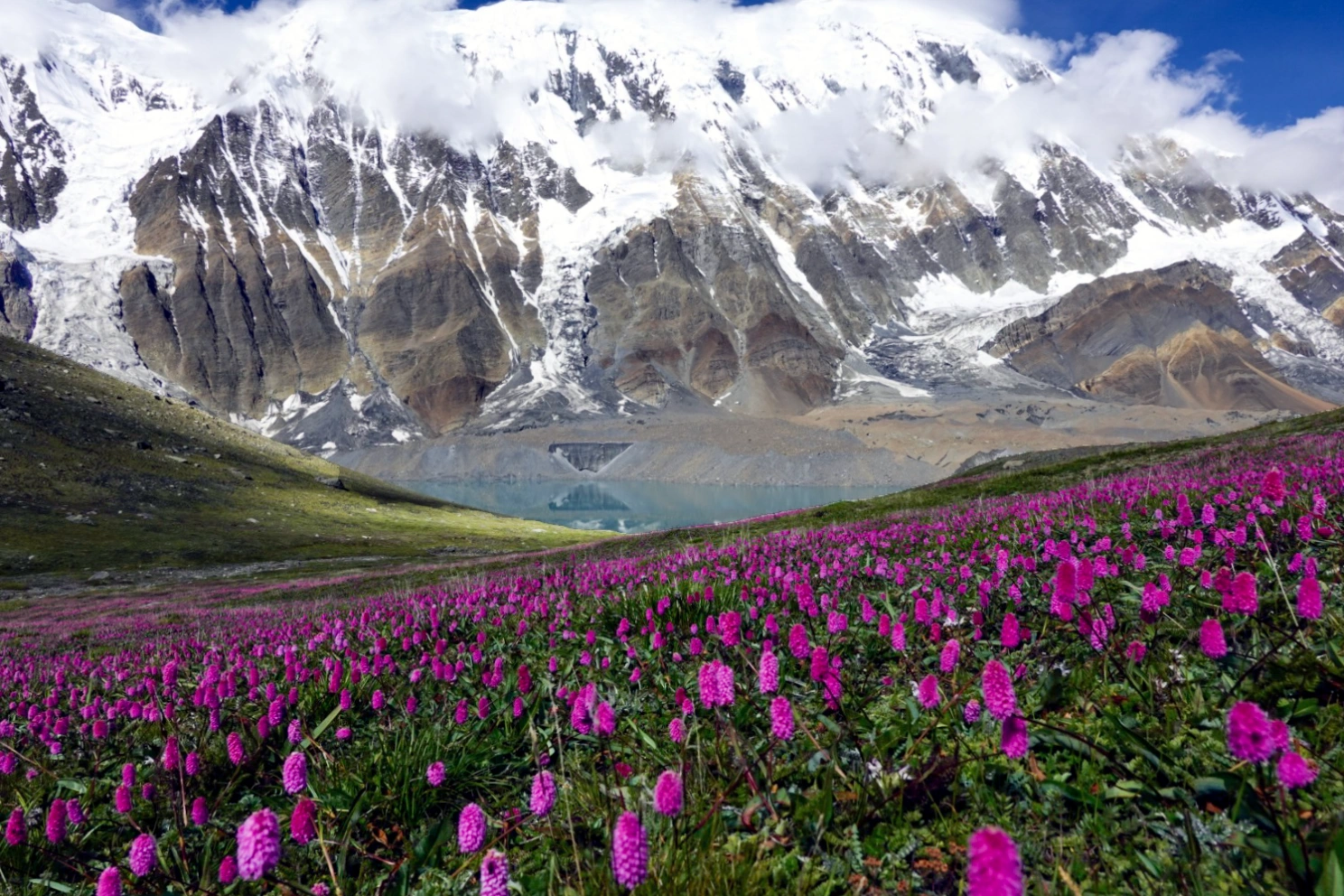
Glacier lake in the Himalaya (Manang) at an elevation of around 4900 meters. The pink flowers are an alpine plant called Bistorta macrophylla. Photo: Lotta Schultz.
The Human Impact
The same processes that shaped alpine biodiversity in the past are now being accelerated by climate change. As temperatures rise, species adapted to cold conditions lose habitats. Trees advance uphill, while species from lower elevations move into alpine areas and compete with established communities. But climate change is only part of the story.
- We have climate change yes, but we also have human impacts, Schultz says.
- And that plays a very important role in mountain regions around the world.
In the Alps, where Schultz grew up, she has witnessed these changes firsthand. Tourism infrastructure continues to expand, while improved technology allows agriculture to move higher up the mountainside than ever before.
- The small paths I knew when I was younger have become large gravel roads, she says.
- Machines can now reach places that were impossible only a decade or so ago.
Balancing conservation with human needs is rarely straightforward. Traditional alpine farming practices have existed for centuries and remain an important part of local cultures and economies.
At the same time, Schultz believes that people must be able to experience mountain environments if they are to appreciate their worth.
- If you want to protect something, people need to see its value, she says.
- They need to see nature, the plants and the animals, to understand why these ecosystems matter.
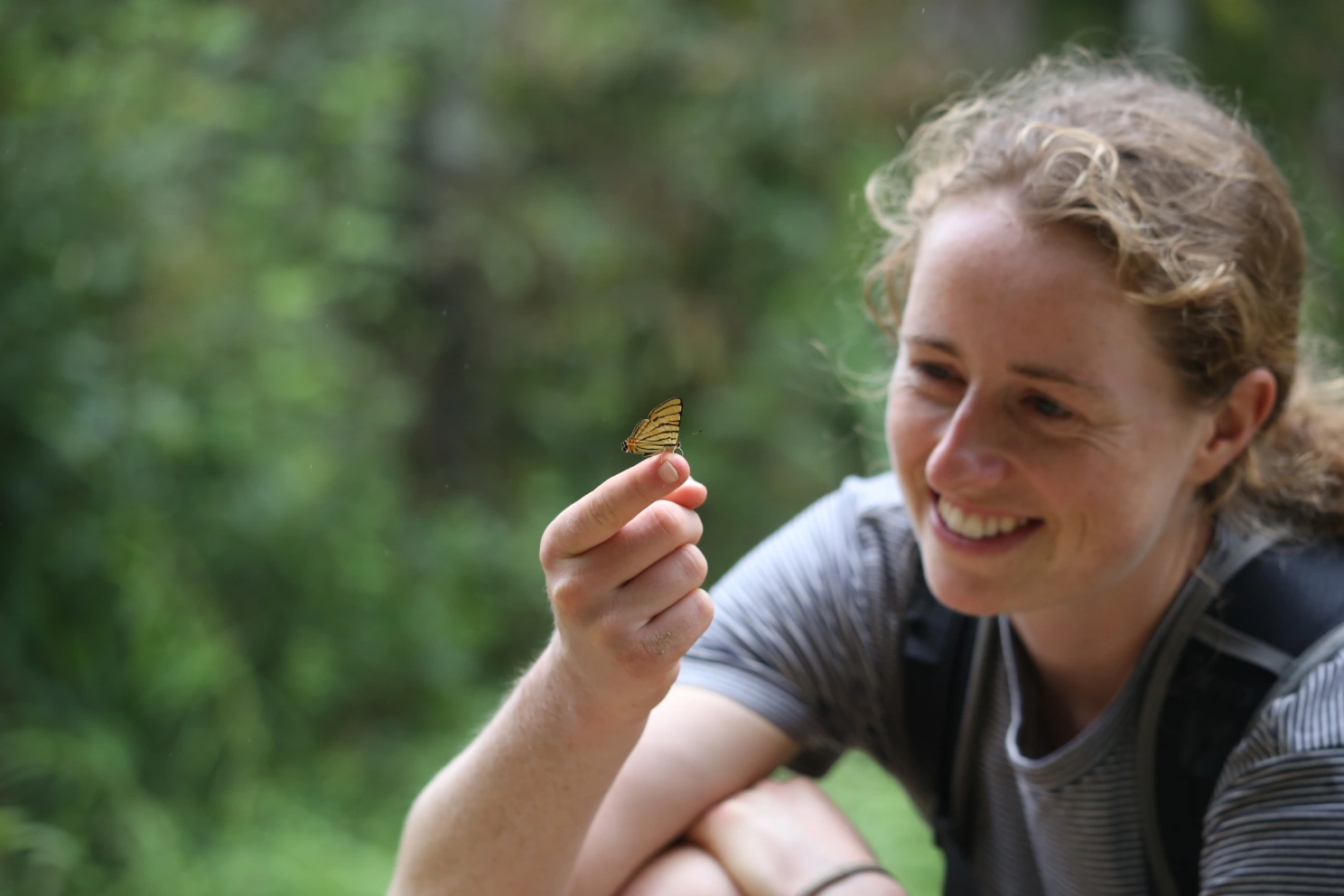
Lotta Schultz admiring a butterfly.
The Story Begins Above the Treeline
For Schultz, perhaps the most remarkable aspect of alpine ecosystems is how much life thrives in places many people perceive as barren and inhospitable. Across the Himalayas, the Andes, the Alps and the mountains of Norway, very different communities have evolved under similar environmental conditions.
- It’s not the easiest place to live, she says.
- But these species are still there. They are incredibly resilient.
That resilience does not mean that alpine ecosystems are invulnerable. As climate change and human activities continue to reshape mountain landscapes, understanding the distribution and uniqueness of alpine biodiversity becomes increasingly important.
The new global dataset developed by Schultz and her collaborators provides an important foundation for that work. It reveals a world of extraordinary diversity hidden above the treeline, where every mountain range tells a different evolutionary tale.
- What fascinates me most is how much life is on top of mountains, Schultz says.
- You reach the treeline, and then the story begins.
Lotta’s work was made possible thanks to Trond Mohn Foundation and University of Bergen as part of a Start Up Grant to Suzette Flantua.
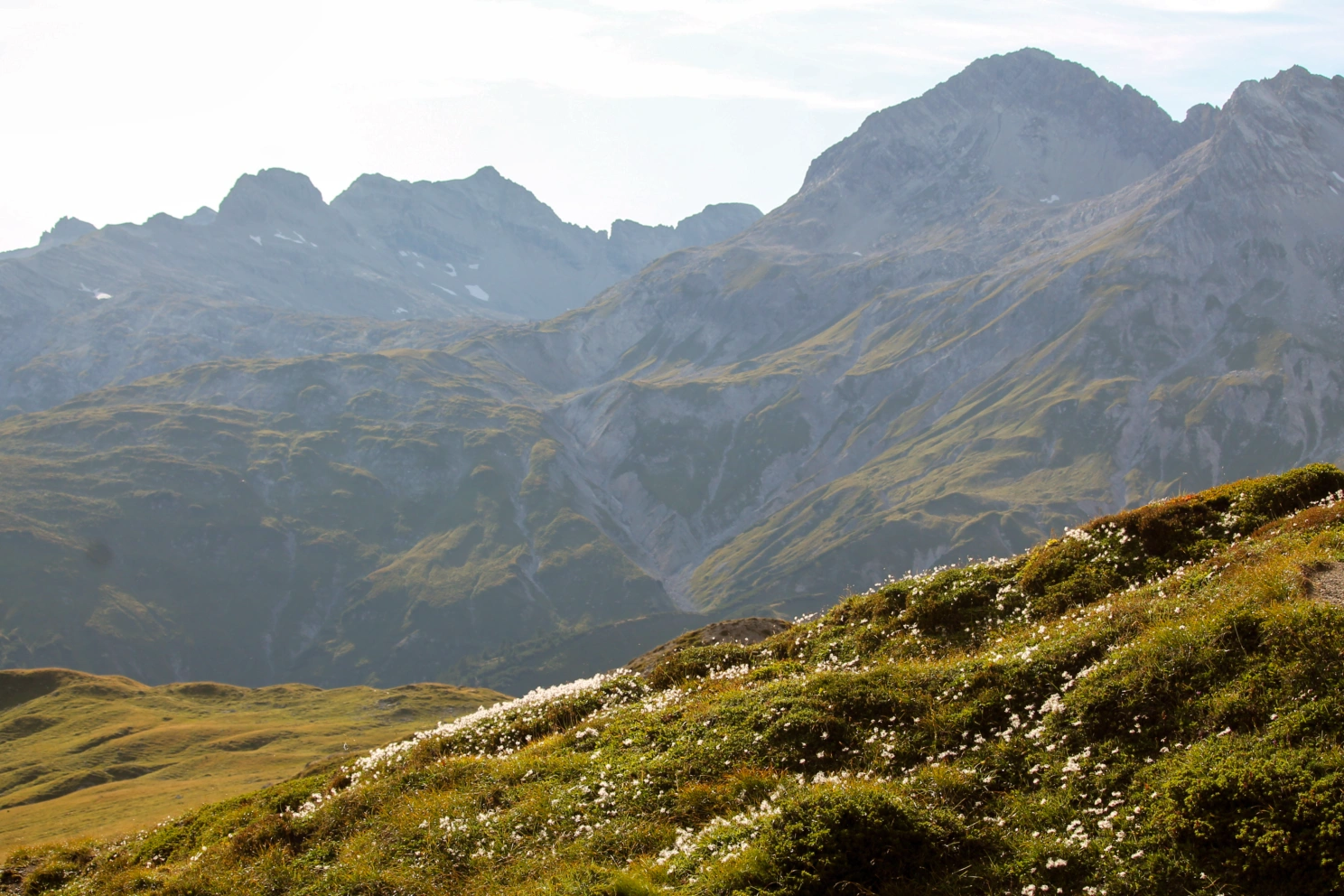
Photo of the Austrian Alps by Lotta Schultz
References
Contrasting patterns of alpine biodiversity across mountains and taxa worldwide