Hopp til hovedinnhold

Kalender

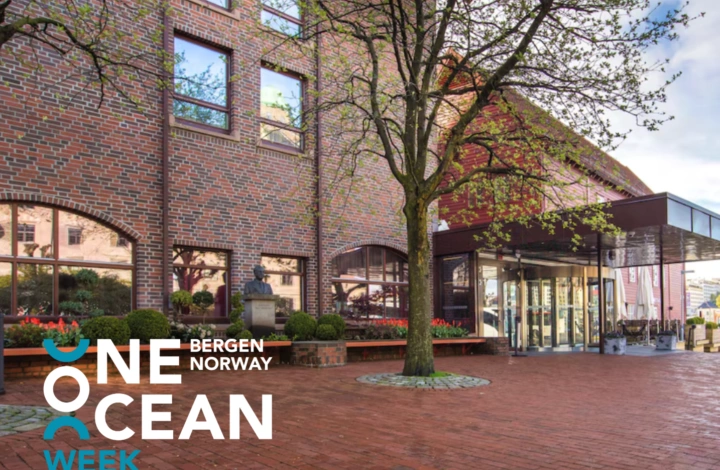
Parallel Sessions – One Ocean Summit
Tidspunkt

20. april 2026, 12:00-14:00

Sted

Dreggsallmenningen 1, 5003 Bergen

Welcome to the One Ocean Summit Parallel Sessions! The Parallel Sessions part of the One Ocean Summit is open for registration, limited seats available.
Please choose wich session you would like to attend when registering.

Programme 

A: Ocean Security and Geopolitics in a Changing World
Shifting geopolitical landscapes, strategic competition, and climate‑driven pressures are reshaping security at sea. This session examines maritime safety, naval presence, international law, and the mechanisms needed to prevent conflict and maintain stability in increasingly contested waters. Our aim is to highlight how cooperation, shared intelligence, and strong governance frameworks underpin a safe and predictable ocean.
Hosts: Royal Norwegian Naval Academy, in collaboration with PwC, the Norwegian Shipowners’ Association, and the Institute of Marine Research

B: Predicting Our Blue Future
This session focuses on foresight: how science, modelling, and advanced ocean observation systems can help us understand future ocean conditions and the blue economy. Participants will explore climate and energy scenarios, real‑time ocean models, and data‑driven forecasting tools. The purpose is to illuminate how predictive capabilities can guide decision‑making, resilience planning, and sustainable ocean use.
Hosts: University of Bergen, in collaboration with DNV, the Nansen Center, NORCE, the Institute of Marine Research, and the Bjerknes Centre for Climate Research 

C: Clean Shipping and Ocean Innovation
This session showcases cutting‑edge solutions for zero‑emission maritime transport and ocean‑based innovation. Topics include clean maritime technologies, green fuels and infrastructure, circular models for ocean industries, and global collaboration for scaling sustainable shipping. The session emphasizes the investments, partnerships, and policies needed to accelerate the transition toward a decarbonized ocean economy. 
Hosts: Maritime CleanTech, Washington Maritime Blue (USA), Waterborne Technology Platform (EU) and Pôle Mer Méditerranée (France) 

Sign up here: https://oneoceanweek.pameldingssystem.no/one-ocean-summit-parallelle 

Read more: https://oneoceanweek.no/arrangement/parallel-sessions-one-ocean-summit/ 

Flere kalenderoppføringer

Se alle
Illustrasjonsbilde

1st BCCR AMOC forum

Dear All, We are pleased to announce the 1st BCCR AMOC forum, that will take place on December 10th 2026 in the Bjerknes meeting room 4020. We plan to provide some light snack or meal for lunch/coffee break during this event, within limits of budget and number of participants. Hence, we kindly ask participants to register by Friday December 4th using the link below, so we can plan for this. Link to registration form and tentative program: https://docs.google.com/forms/d/e/1FAIpQLSdlIqpgCVQNbE1D66BiwY2TLB-HTbn2WvBf8g1zEkhXZhMM1Q/viewform?usp=dialog
Illustrasjonsbilde

BCCR Seminar: Mind the Slope: Why Greenland’s Katabatic Storms Challenge Global Models.

Abstract Katabatic storms in southeastern Greenland are fierce, density-driven downslope wind events that influence both local weather and downstream climate. We assess their representation across three generations of ECMWF global reanalyses (ERA5, ERA-Interim, and ERA40) and a hierarchy of Community Earth System Model version 2 (CESM2) simulations at different horizontal resolutions, using in situ observations and the 2.5-km Copernicus Arctic Regional Reanalysis (CARRA) as benchmarks. The global reanalyses systematically underestimate wind speeds by approximately 30% in ERA5 and 50% in ERA-Interim and ERA40, while failing to capture key storm structures. Similar biases occur in CESM2 simulations at standard 1–2° resolutions. In contrast, variable-resolution CESM2 configurations with local grid refinement to 0.25° and 0.125° better resolve Greenland's topography and substantially improve the representation of storm intensity and structure. Sensitivity experiments further demonstrate that resolving the steep ice-sheet margins is critical for capturing katabatic acceleration. The reanalysis data also reveal that these storms generate fast-moving, high-amplitude ocean wave packets that propagate as far downstream as Scandinavia and the British Isles. Accurately representing these storms in global models and reanalyses is therefore essential for simulating North Atlantic climate variability beyond Greenland's immediate coastal region. Speaker information Marcus Lofverstrom is an associate professor in the Department of Geosciences at the University of Arizona. His research group conducts novel research in the fields of atmospheric dynamics, (paleo-)climatology, and glaciology to understand the evolution of the climate system over multi-millennial time scales. Numerical modeling is an important component of his research program, and the group is utilizing models over a broad range of complexities: from conceptual and linear steady-state models to fully coupled state-of-the-art Earth-system models.