Hopp til hovedinnhold

Kalender

Stormtracks group meeting

Tidspunkt

25. mars 2026, 13:00-14:00

Sted

Bjerknes meeting room 3180, Jahnebakken 5

Hi everyone,


We’ll have our Stormtracks group meeting this Wednesday (25.03) from 14:00 to 15:00 at Skybar (BCCR 3180). This week Mari will give a talk on Comparison of cloud properties during a marine cold air outbreak in two convection permitting numerical weather prediction models.


The meeting will be hybrid and you can join remotely via Zoom: https://uib.zoom.us/j/62886269543?pwd=ajWbi97zr0hbniaoQdZkUtD2EUSSri.1
Meeting ID: 628 8626 9543 | Password: qSKTfKU3


The meeting schedule for this semester is in the following google doc: https://docs.google.com/document/d/1F9hy45DSeS9qrXl-3l4cNzCPSE9OuBBVqdCu3VY240U/edit?usp=sharing

See you all there! :)

Cheers,
Birgit and Yangfan

Kontaktpersoner

Flere kalenderoppføringer

Se alle
Illustrasjonsbilde
08.04.26

Workshop on Self-Organizing Maps

Dear all, Mark Seefeldt from the University of Colorado - Boulder who is in Bergen for the spring as a visiting Fulbright Scholar kindly invites you to a workshop or short tutorial on Self-Organising Maps. A brief description of which is below, and the key details are: When: Wednesday, April 8, 12:30-1:45 PM Where: BCCR - Undervisningsrom 4020 Please send an email to Mark Seefeldt (mark.seefeldt@colorado.edu) if you would like to download the slides prior to the workshop. Or if you have any questions. Kind regards, Priscilla Workshop Description The method of Self-organizing maps (SOMs) is an artificial neural network data analysis technique that objectively stratifies large volumes of data into a smaller number of recurring patterns on a physically meaningful basis. SOMs have been used for the past 20+ years in the atmospheric and climate sciences identifying patterns in sea-level pressure, winds, relative humidity, and vertical profiles of potential temperature, to name a few applications. This workshop will provide an introduction to the application of SOMs in atmospheric and climate sciences by providing an overview of SOMs, a description of what is done during SOM training, and reviewing two common methods to create SOMs and corresponding analyses. Throughout the presentation there will be a variety examples provided showing the different ways in which SOMs have been applied to atmospheric and climate sciences.
Illustrasjonsbilde
26.03.26

Ocean science bar: Arctic Sea Ice - the big picture and the small cracks

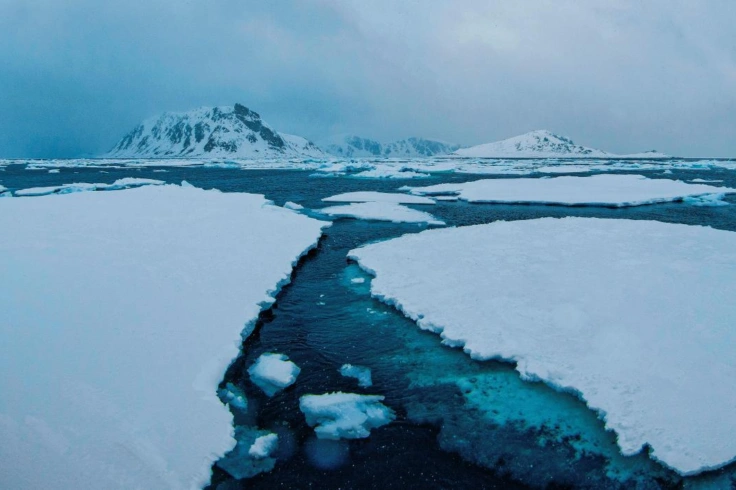
Arctic sea ice is shrinking fast, reshaping the Arctic Ocean and its role in the global climate system. As the ice retreats and changes character, its influence on ecosystems and societies is shifting in ways we are only beginning to grasp. In this event, three researchers will show how climate prediction and sea‑ice modelling shed light on what the Arctic of tomorrow may look like. Read more about the event here: Arctic Sea Ice – the big picture and the small cracks | Ocean | UiB Free and open for all! Photo: Colourbox