Prosjekt
The Breathing Ocean (O2Ocean)

In O2Ocean (2022–2025) researchers from the Bjerknes Centre, NORCE, the Nansen Environmental and Remote Sensing Center and the Institute of Marine Research, look into why climate models have underestimated the observed decline in marine oxygen levels. This is needed to improve projections of future oxygen conditions
Status
Active
Owner
Bjerknes Centre for Climate Research
Project lead
Nadine Goris
Investigating the breathing ocean
The oxygen level in the global ocean has declined, limiting the living space of fish. New research is aimed at improving future oxygen projections.
Oxygen levels in the ocean have fallen. Globally, sea water contains two percent less gaseous oxygen than in 1960. Locally, reductions have been much more severe. Too little oxygen causes problems for marine life, especially fish and larger organisms. Zones with good living conditions are shrinking.
Tuna, a very important resource, are among the most strongly affected species. The space suitable for cod is also getting more limited. How much this will change in the future, is still uncertain.
"We don't know yet how serious the lack of oxygen will be", says Nadine Goris, researcher at the Bjerknes Centre and NORCE.
She leads a new project aiming to present reliable projections of how oxygen conditions in the ocean will develop through this century.
Researchers from Bjerknessenteret

Nadine Goris
Forsker II / Researcher II - Carbon System, NORCE Research Centre
Related articles
See all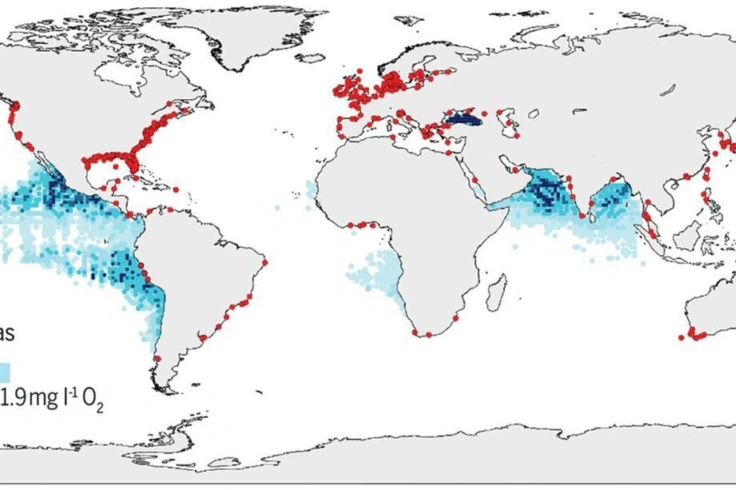
Investigating the breathing ocean

Podcast: The Breathing Ocean