Prosjekt
Centre for Mountains in Transitions (CMT)
Snow - Glaciers - Landscape - People
Status
Active
Duration
2026-2030
Website
Project lead
Jostein Bakke
Funded by
Trond Mohn Research Foundation & UiB
The Centre for Mountains in Transition (CMT), a new interdisciplinary research centre based at the University of Bergen, dedicated to understanding and addressing the impacts of climate and environmental change in mountain regions.
With a primary focus on the Scandinavian mountains, CMT brings together leading researchers in climate science, ecology, hydrology, geoscience, and social sciences to explore how mountain systems are changing—and how we can build resilience for the future.
CMT aims to generate cutting-edge knowledge and practical solutions to safeguard mountain ecosystems and the communities that depend on them. Through four interconnected research themes—Trends, Seasonality, Extremes, and Resilience—CMT investigates long-term environmental changes, seasonal dynamics, extreme events, and strategies for sustainable mountain management.
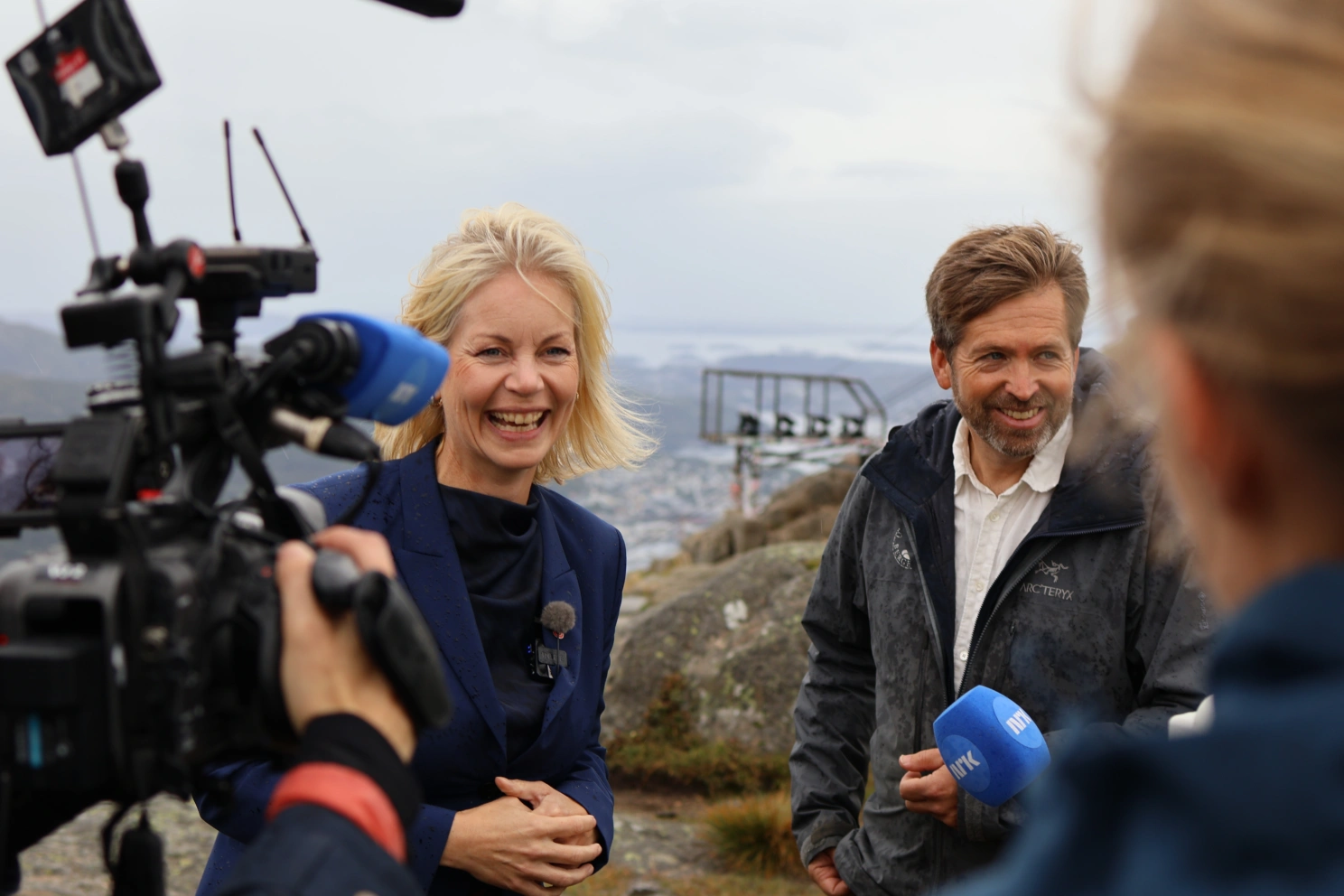
Minister of Research and Higher Education, Sigrun Aasland, during the opening of the new mountain centre. Photo: Bjerknes Centre
The center is led by UiB and the Bjerknes Centre and will be operated in collaboration with NORCE, the Norwegian University of Life Sciences (NMBU), and the Norwegian Trekking Association (DNT).
Glaciers are sensitive to climate change and are therefore considered by the UN Climate Panel as a key indicator of changes in climate. The UN has declared 2025 as the International Year of Glacier Preservation.
In the video below, Professor Jostein Bakke, from the University of Bergen and the Bjerknes Centre, explains why glaciers are important. (The video is in Norwegian)
Researchers from Bjerknessenteret

Jostein Bakke
Professor - Polar Climate, UiB - University of Bergen

Benjamin Aubrey Robson
Førsteamanuensis / Associate Professor - Polar Climate, UiB - University of Bergen

Vigdis Vandvik
Professor - Carbon System, UiB - University of Bergen
Other projects
Arctic Ocean 2050
Research for a sustainable ocean management
A new Arctic Ocean requires new knowledge and insight into changes, how they interact and links to areas further south.

Navigating the Uncharted Territory of the Anthropocene Climate
How much carbon must be removed to prevent too much global warming? Is it possible to alter the Earth’s energy balance by managing incoming solar radiation? These are some of the questions addressed in the NAVIGATE project.