Jerry Tjiputra

Title & Institution
Forsker I / Researcher I - Carbon System, NORCE Research Centre
About
My research focuses on applying Earth system models, complemented withobservational evidence, to study how the ocean carbon cycle and ecosystem respond to various climate change from interannual up to centennial timescales. In particular, I am interested in the physical and biogeochemical mechanisms governing the variation of ocean carbon sources and sinks from the near-past and into the future and how they interact with and feedback to the climate. Recently, I have also used the model to study impact of the global carbon cycle to natural and anthropogenic external forcing in the climate system, such as volcanic eruption and idealized climate engineering.
Together with the biogeochemistry group in Uni, we apply an integrated (modeling and analytical) approach to get the full picture of terrestrial and ocean carbon cycle role in regulating the climate. We contribute to the Global Carbon Project and better understanding of climate change impact on high latitude permafrost system, marine ecosystem and ocean acidification. The group also plays a key contributing role in developing and maintaining the carbon cycle components of the Norwegian Earth system model (NorESM).
Selected publications
Selected projects

Navigating the Uncharted Territory of the Anthropocene Climate
How much carbon must be removed to prevent too much global warming? Is it possible to alter the Earth’s energy balance by managing incoming solar radiation? These are some of the questions addressed in the NAVIGATE project.
Biogeochemistry in Sea Ice environments
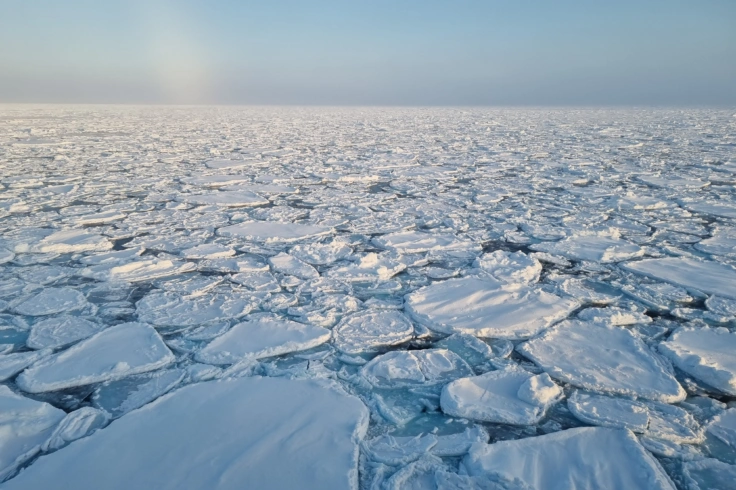
The Arctic warms 2 to 4 times faster than the rest of the planet. A phenomenon known as Arctic amplification. One of the new strategic projects at the Bjerknes Centre, called BioCrystal (Biogeochemistry in Sea Ice environments), wants to investigate how rapid warming and changing sea-ice conditions in the Arctic affect biological and chemical processes in the sea ice and ocean.
A particular focus is on primary production, air-sea CO₂ exchange, and the biological carbon pump, which transports carbon from the surface to the deep ocean.