Arctic Ocean 2050
When the summer sea ice in the Arctic Ocean disappears over the next 25 years, the Arctic will be changed forever. To understand what this means for us, the Arctic Ocean 2050 research program will start in 2026.
Publisert 05. February 2026
Written by Thea Svensson

Motiv: Kronprins Haakon i fastisen øst for Grønland Fotograf: Trine Lise Sviggum Helgerud Serie / Ekspedisjon / Tokt: 2023 Tokt til Framstredet september Opphavsrett / copyright: Trine Lise Sviggum Helgerud, Norsk Polarinstitutt Klausul: Norsk Polarinstitutt / Norwegian Polar Institute
A Historic Boost for the High North
Arctic Ocean 2050 is a massive initiative where 18 Norwegian universities and institutes are joining forces to study everything from the deep seabed to the atmosphere. The government has pledged one billion NOK over ten years to ensure that Norwegian researchers are present in these vital marine areas.
As the Arctic Ocean becomes more open and "blue," it affects weather patterns, fish stocks, the environment, and the connectivity between landmasses. Arctic Ocean 2050 aims to provide the answers needed to manage these resources effectively. By combining technology and research, Norway will play a leading role in the Arctic, ensuring we are prepared for the major changes ahead.
Knowledge for a New and Open Ocean
Researchers from the Bjerknes Centre and the University of Bergen, Marius Årthun and Are Olsen, have led the work in developing the project plan.
- The Bjerknes Centre plays a central role in Arctic Ocean 2050. We have led the development of both the science plan and the implementation plan, and we have several representatives in the project management team, says Marius Årthun.
- Our expertise in areas such as large-scale ocean and atmospheric circulation, sea ice, model development, and satellite products is very important for Arctic Ocean 2050.
Collaboration in the Arctic
Several Bjerknes researchers are involved in the project. Among them is Helene Langehaug from NERSC and the Bjerknes Centre, who serves as deputy leader.
- There are four deputy leaders in total who will assist the program manager with the operational running of Arctic Ocean 2050. Additionally, the deputy leaders have different areas of responsibility, such as management, technology, and international cooperation. I will help facilitate increased collaboration across the six Research Themes (RT), says Langehaug.
All partners in the Bjerknes Centre are part of Arctic Ocean 2050, along with 14 other partners.
- At the Nansen Center, we will contribute to two research themes in the first year: RT1 (The Arctic Ocean in the World) and RT5 (Advances in Observing and Modelling). This includes the analysis of NorCPM and satellite data in the Arctic, as well as data-driven sea ice forecasting, she continues.
- I look forward to contributing—I believe Arctic Ocean 2050 will be vital for Norwegian and international knowledge of the Arctic Ocean!
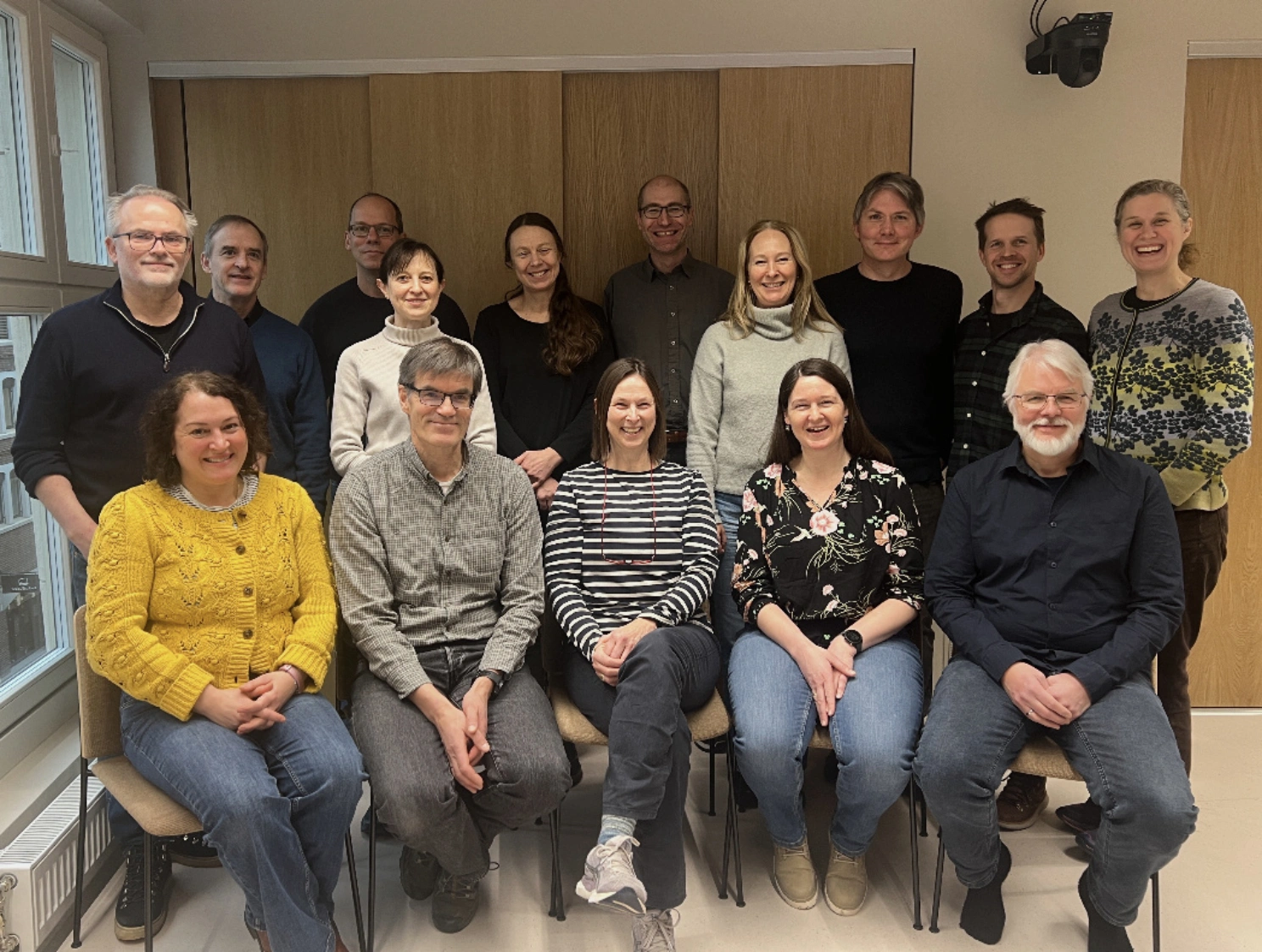
The leader group, gathered at NUPI in Oslo.