New Strategic Projects
The Bjerknes Center has four new strategic projects for the period 2026-2030, with the ambition to build something that lasts beyond the four project years.
Publisert
Written by Thea Svensson, Tori Pedersen, Andreas Langenes, Ellen Viste
- It has been inspiring to see the breadth, quality and commitment in this process. We received many strong project ideas, and it was no easy task to select the four projects, says center director Kikki Flesche Kleiven.
- The strategic projects are an important investment in the future of the Bjerknes Center. They will not only deliver excellent research, but also strengthen collaboration across our academic communities and partner institutions, develop new research collaborations and lay the foundation for larger initiatives in the future. We have high expectations for these four projects, and look forward to following them in the years to come.
The new strategic projects are DYNAMIC-AI led by Sigrid Passano Hellan (NORCE), BioCrystal led by Jöran März (UiB) and Shuang Gao (NERSC), GRADIENT led by Lea Svendsen (GFI-UiB) and NorCPMNext led by Yiguo Wang (NERSC) and Francine Schevenhoven (UiB).
DYNAMIC-AI
Project title: DYNAMIC-AI: Dynamics of Unprecedented and Compound Extremes using AI
As climate change reshapes where, when and how extreme events occur, society faces growing risks from both unprecedented and compound extremes, where multiple hazards coincide or amplify each other.
To address this challenge, the Bjerknes Centre for Climate Research has launched the strategic project DYNAMIC-AI (Dynamics of Unprecedented and Compound Extremes using AI), led by Sigrid Passano Hellan (NORCE) and co-led by Stephen Outten (NERSC).
The project will investigate extreme weather and climate events in both the present and future, with a particular focus on events that lie beyond historical experience and preparedness.
- The goal is to understand what we may experience now, and what we could experience in the future, which we may not be prepared for, Hellan explains.
A particular focus will be on the most challenging and least understood extremes, including unprecedented events that lie beyond living memory and historical records. DYNAMIC-AI will also investigate compound extreme events, where different hazards coincide or reinforce each other.
- These are situations where individual extremes occur together or interact, increasing their overall impact, says Hellan.
DYNAMIC-AI will combine climate modelling, machine learning, physical understanding of atmospheric processes, and hydrological modelling to improve our ability to analyse and predict rare, high-impact events.
By bringing together expertise across disciplines, the project aims to generate knowledge that can strengthen preparedness for some of the most dangerous and least understood climate-related hazards.
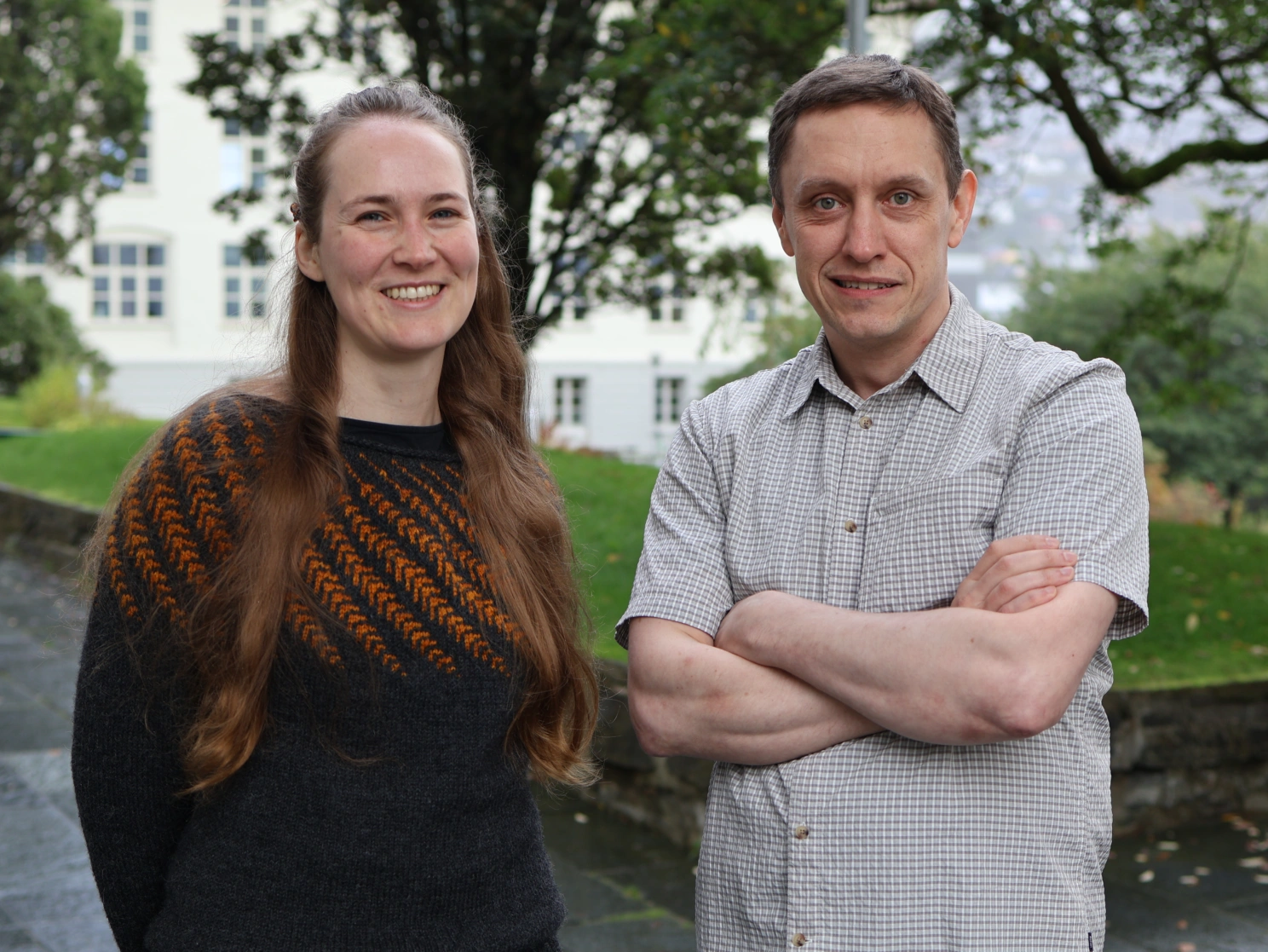
Project leader Sigrid Passano Hellan (NORCE) and co-leader Stephen Outten (NERSC).
BioCrystal
Project title: BioCrystal – Biogeochemistry in Sea Ice environments
The Arctic warms 2 to 4 times faster than the rest of the planet. A phenomenon known as Arctic amplification. One of the new strategic projects at the Bjerknes Centre, called BioCrystal (Biogeochemistry in Sea Ice environments), wants to investigate how rapid warming and changing sea-ice conditions in the Arctic affect biological and chemical processes in the sea ice and ocean.
A particular focus is on primary production, air-sea CO₂ exchange, and the biological carbon pump, which transports carbon from the surface to the deep ocean.
- By combining observations with advanced numerical models, the project seeks to improve understanding of how the Arctic system functions today and how it may change in the future, says project leader Joeran Maerz, researcher at the University of Bergen and the Bjerknes Centre.
The project wants to contribute to the understanding of how the Arctic was like before it was affected by climate change, to better measure and understand how much the Arctic has changed over time.
- It is really nice to do this project with all the interdisciplinary capacities we have within the Bjerknes Centre and also to reach out to collaborators beyond the Centre. Hopefully, we can later grow the project into something bigger, says Shuang Gao, researcher at The Nansen Center and Bjerknes. Gao is leading the project together with Maerz.
The project leverages three existing modelling frameworks: the global Norwegian Earth System Model NorESM for climate simulations and future projections, the Arctic forecasting and reanalysis system TOPAZ, and the advanced sea-ice model neXtSIM. BioCrystal will strengthen and connect these models by adding improved representations of sea-ice biogeochemistry and its interactions with the ocean and atmosphere.
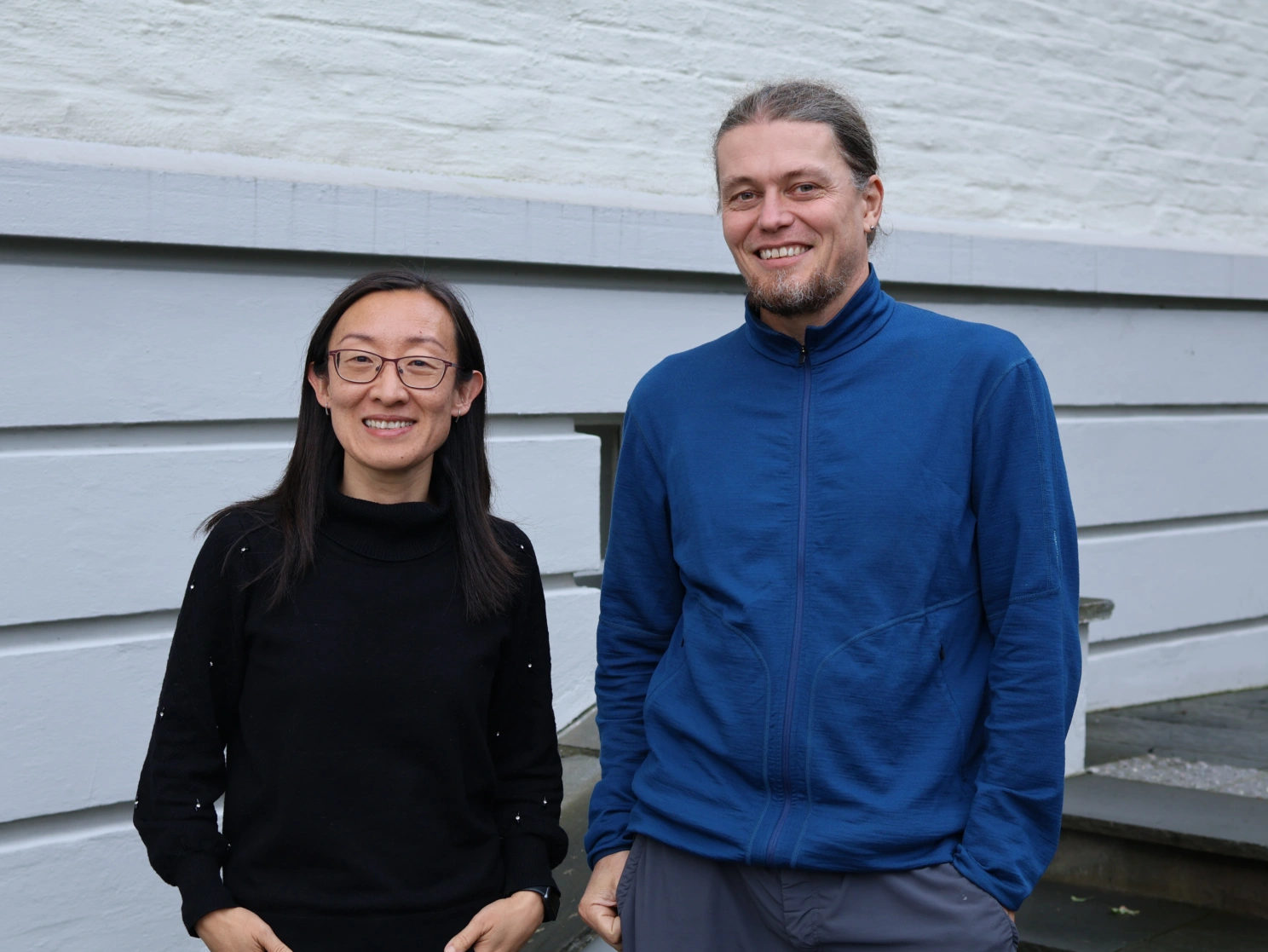
Project leaders Jöran März (UiB) and Shuang Gao (NERSC)
GRADIENT
Project title: Global Responses and Drivers of the Tropical Pacific Zonal SST Gradient Trend.
Our climate models tell us one thing. Observations of the Pacific Ocean show something else. Why?
This is one of the major unresolved questions in climate science today, and the starting point for one of the new strategic research projects at the Bjerknes Centre, called GRADIENT.
The tropical Pacific Ocean is one of the most important drivers of Earth's climate system. The temperature differences between the warm waters in the west and the cooler waters in the east influence the atmosphere, ocean circulation, and weather patterns, not only around the Pacific but across much of the globe.
- The tropical Pacific has a very strong influence on weather and atmospheric conditions worldwide, so it is extremely important to understand how it may change in the future, says Associate Professor at the University of Bergen and GRADIENT project leader Lea Svendsen.
However, climate scientists are faced with a mystery. Observations from the past century show that the temperature difference between the eastern and western Pacific has become stronger. Climate models, on the other hand, suggest that the opposite should be happening. This discrepancy between models and observations may have implications for how accurately we can project future climate change, including in regions far from the Pacific.
- In the observations, we see one type of trend, while climate models indicate something different in response to global warming. This raises the question of whether the models are wrong, or whether there is something they are unable to capture. Could this be a transitional stage, with the climate eventually evolving toward what the models project? These are some of the questions we are trying to answer in the GRADIENT project, says Svendsen.
To understand what is happening, the researchers are combining advanced climate models with evidence from past climates to investigate how the Pacific Ocean has behaved under very different climate conditions, ranging from the last ice age to warm periods several million years ago. The goal is to gain a better understanding of the mechanisms driving these changes and thereby improve projections of future climate, both in the tropics and in the North Atlantic and Arctic regions.
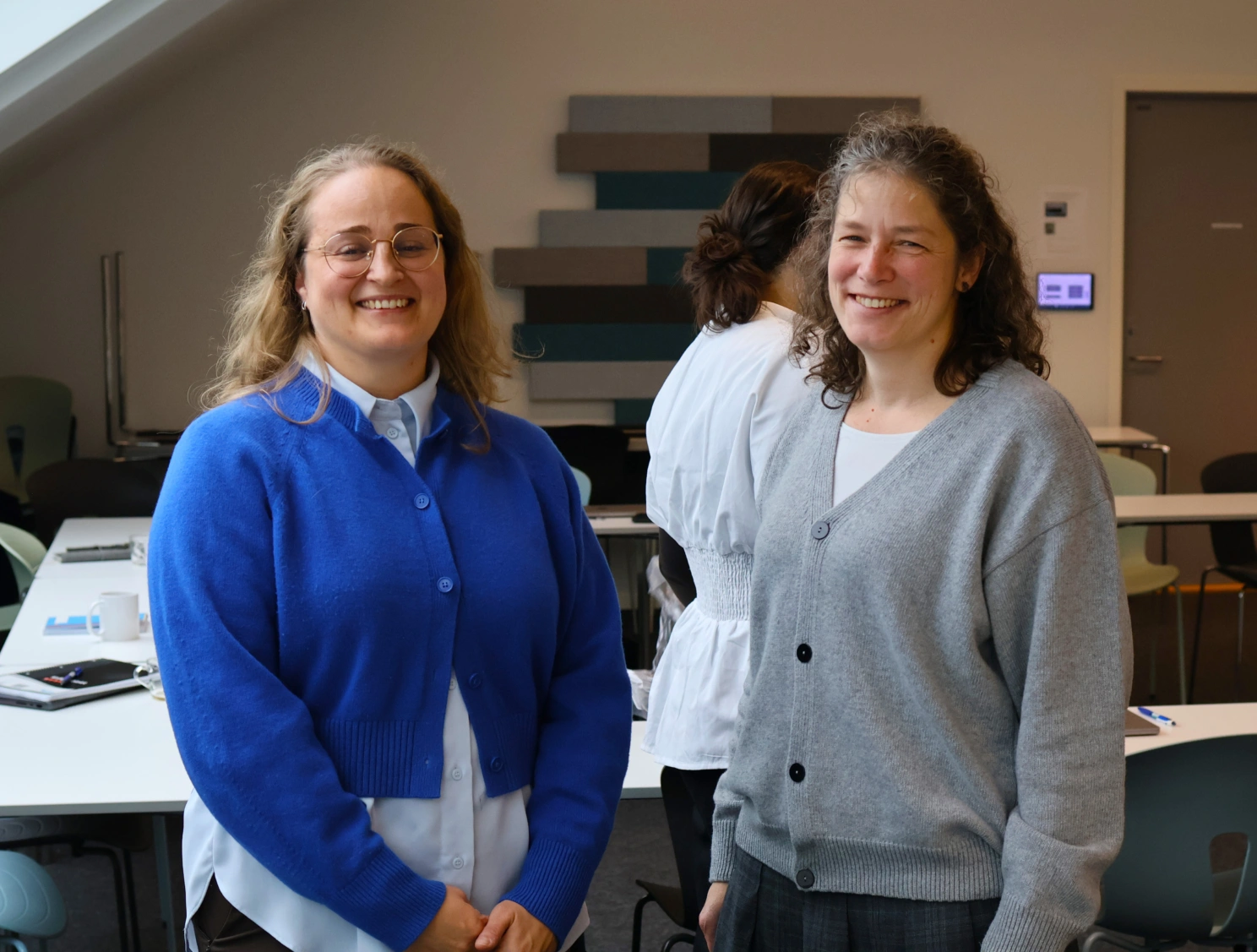
Project leader Lea Svendsen (GFI-UiB) with co-leader Nele Meckler (UiB).
NorCPMNext
Project title: Pioneering subseasonal-to-seasonal prediction of regional climate and extremes through hybrid AI-physics modelling (NorCPMNext).
- Society needs early warnings to prepare for extreme events such as Storm Hans, Storm Amy, and the recent heatwaves in Europe, says Yiguo Wang.
The researcher from the Nansen Center and the Bjerknes Centre will lead the Bjerknes Centre's new initiative to develop a forecasting system for weather conditions ranging from two weeks to one year ahead.
Traditional weather forecasting models use the laws of physics to calculate how the atmosphere will evolve from its current state. This works well for forecasts up to a week or ten days into the future, but beyond that, forecast skill drops sharply. Today's weather has too little influence on what happens two weeks from now. Air is highly variable, and the atmosphere's memory does not extend that far.
Over longer timescales, however, the ocean, Arctic sea ice, and snow cover on land play a greater role. Variations in ocean currents and water temperatures occur more slowly and have a stronger influence over longer periods than changes in the atmosphere. This information can be exploited to predict climate conditions years and even decades into the future.
The period between a few weeks and one year falls into a gap between these two forecasting extremes. To predict weather conditions twenty days from now or the coming winter season, it is necessary to account for both the atmosphere's short memory and the ocean's long memory.
Yiguo Wang and colleagues at the Nansen Center, the University of Bergen, and NORCE will develop a new forecasting system for this timescale.
For such forecasts to be useful at the local level, they must provide detailed geographical information. In the new system, the distance between forecast grid points will be five kilometres. This level of detail is unusual for forecasts extending as far as one year into the future, particularly when computational costs must be kept manageable.
To achieve this, the researchers will use artificial intelligence to improve the forecasting model currently in use.
- I like to describe it as getting the best of both worlds, says Francine Schevenhoven.
Schevenhoven, a researcher at the University of Bergen and the Bjerknes Centre, will co-lead the new project together with Yiguo Wang.
- I hope we can demonstrate that the two approaches strengthen one another by combining the physical knowledge built up over decades with the new data-driven opportunities available today, she says.
When asked what he most hopes to achieve, Yiguo Wang responds without hesitation:
- If decision-makers find the information we provide useful, I will be truly pleased.
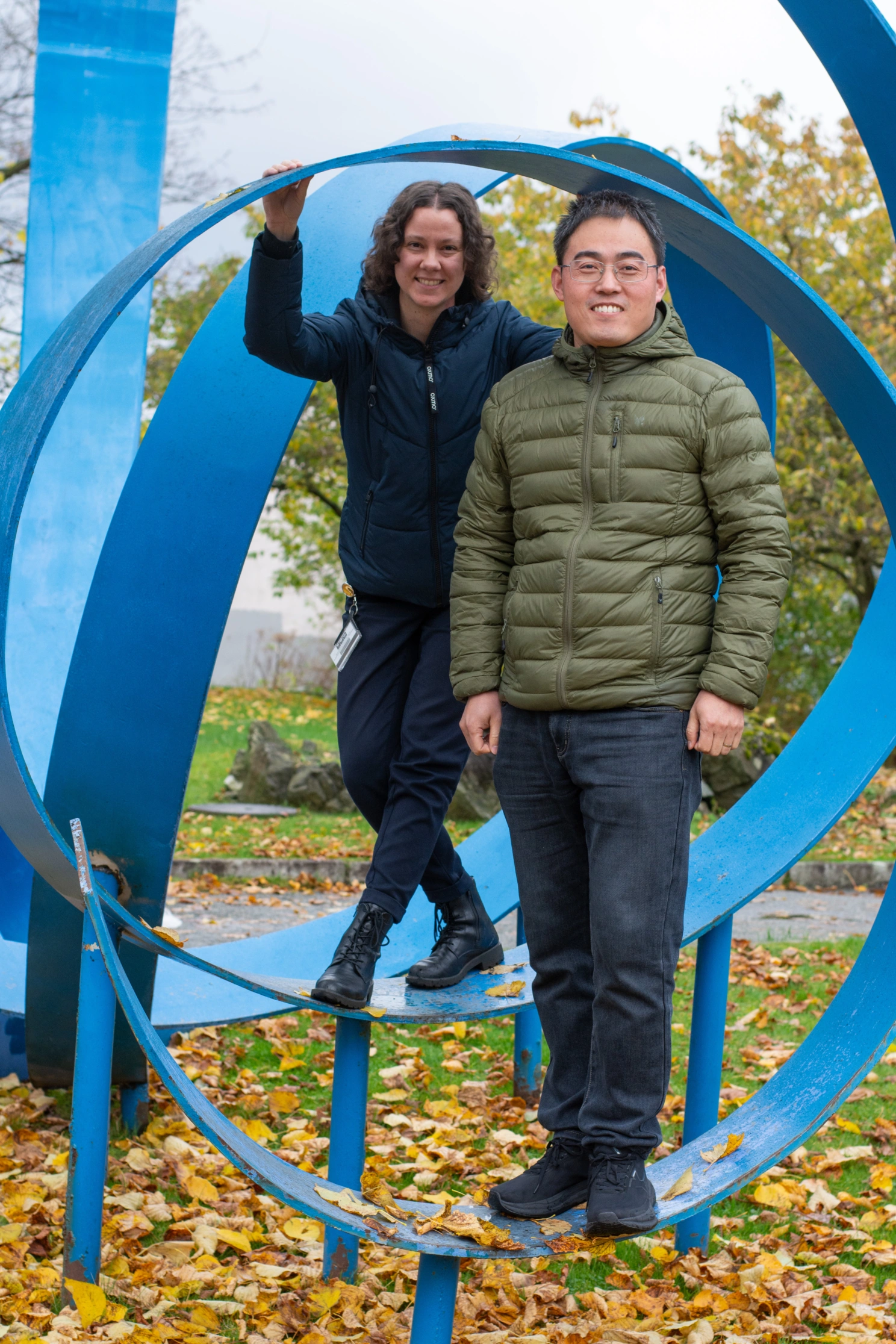
Project leaders Francine Schevenhoven and Yiguo Wang. Photo: Ellen Viste
Related Projects
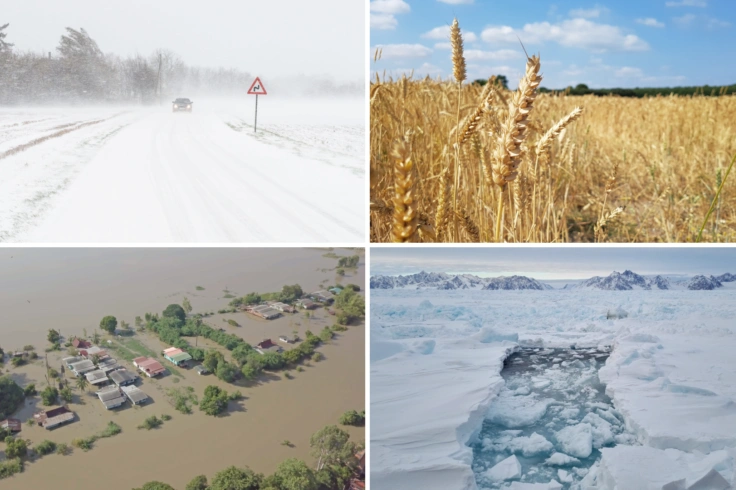
Pioneering subseasonal-to-seasonal prediction of regional climate and extremes through hybrid AI–physics modelling
Society needs reliable predictions to be able to prepare for extreme events like the storms Hans, Amy and the recent heatwaves in Europe. The researcher from the Nansen Environmental and Remote Sensing Center and the Bjerknes Centre will lead the Bjerknes Centre’s new project aimed to develop a climate prediction system for the period between two weeks and one year.

Global Responses and Drivers of the Tropical Pacific Zonal SST gradient Trend
Our climate models say one thing. Observations of the Pacific Ocean show something else. Why?
That is one of the great unresolved questions in today's climate research – and the starting point for one of the Bjerknes Center's new strategic research projects, which has been named GRADIENT.
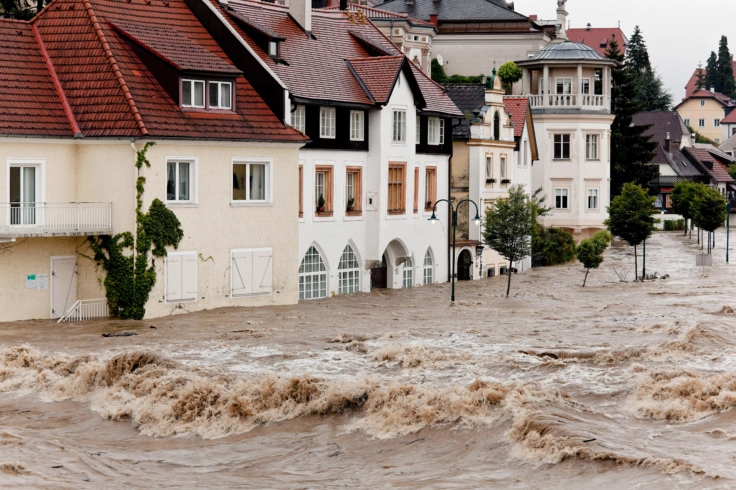
Dynamics of Unprecedented and Compound Extremes using AI
Extreme weather and climate events are becoming more frequent and intense, while changes in climate are also affecting where and when these events occur. This can lead to new types of risks, including compound extremes where multiple hazards occur to increase overall impacts.
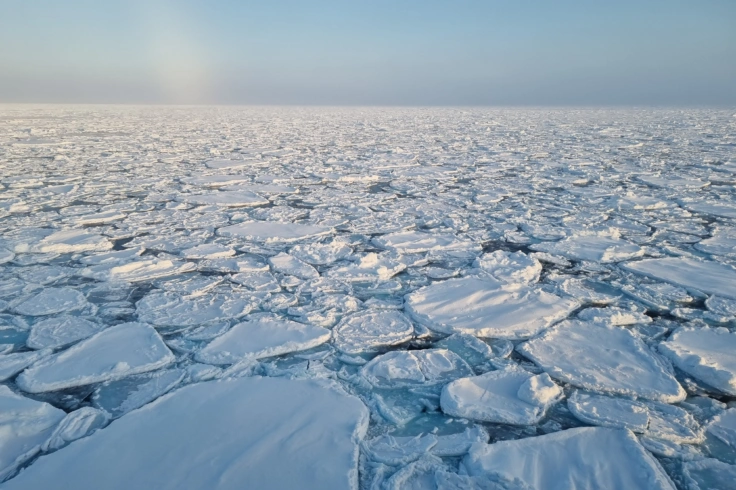
Biogeochemistry in Sea Ice environments
The Arctic warms 2 to 4 times faster than the rest of the planet. A phenomenon known as Arctic amplification. One of the new strategic projects at the Bjerknes Centre, called BioCrystal (Biogeochemistry in Sea Ice environments), wants to investigate how rapid warming and changing sea-ice conditions in the Arctic affect biological and chemical processes in the sea ice and ocean.
A particular focus is on primary production, air-sea CO₂ exchange, and the biological carbon pump, which transports carbon from the surface to the deep ocean.