When Pacific Weather Shakes Atlantic Fisheries
How El Niño and La Niña reach across the globe to impact fish populations thousands of kilometres away
Publisert 18. December 2025
Written by Thea Svensson
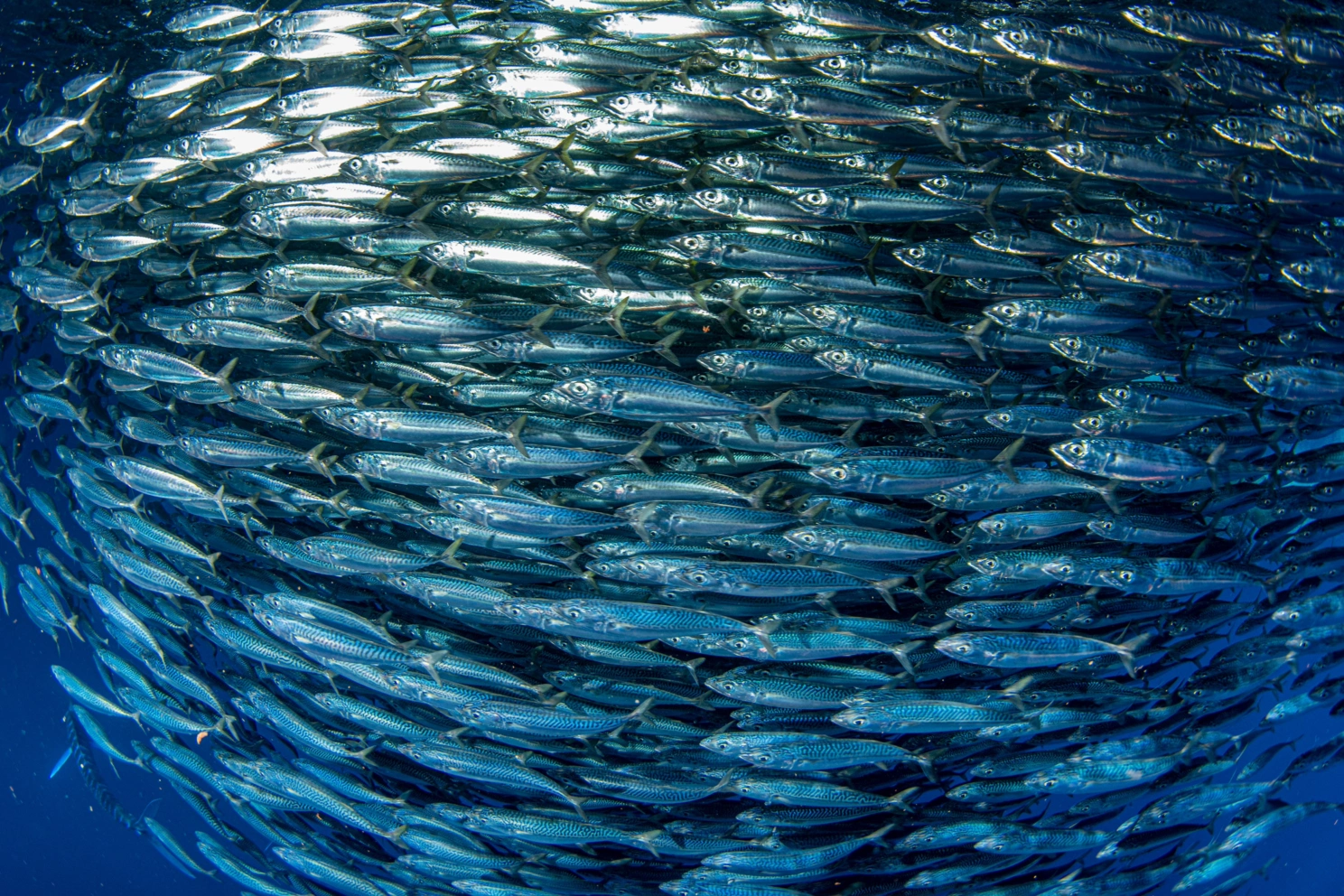
Sardine school of fish - underwater. By: Andrea Izzotti. Source: Adobe Stock
TRIATLAS
This paper was written as part of the TRIATLAS project. TRIATLAS has a multidisciplinary approach, in which different researchers from many different areas come together, from ocean physics, physics of the atmosphere, ecologists, biogeochemists, and even people working in social science. Together they try to understand the ecosystems in the South Atlantic and in the tropical Atlantic.
TRIATLAS is a research project financed by the EU Horizon 2020, lasting until November 2023. Coordinated by prof. Noel Keenlyside, UiB and the Bjerknes Centre for Climate Research and co-lead by Dr. Heino Fock, Thünen Institute.
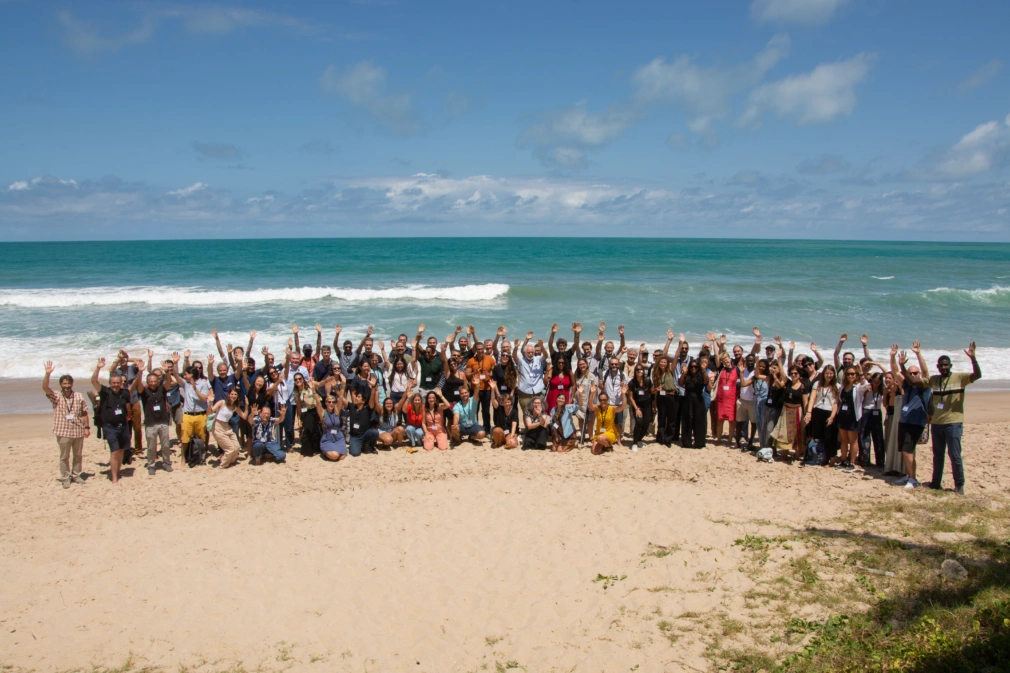
When El Niño strikes in the Pacific Ocean, you might not expect fishermen off the coast of Senegal or Brazil to feel its effects. But they do, and in ways that are both surprising and complex, according to a new paper.
- Over 600 million people live in coastal regions of the tropical and South Atlantic, many of them rely on fishing for food and income, says Belén Rodríguez de Fonseca of the Complutense University of Madrid, who is a part of the research team and the main author of the paper.
Despite being half a world away from the Pacific Ocean, changes in La Nina and La Nino (ENSO) can still affect them. What happens when the Pacific doesn’t stay in the Pacific? Understanding these far-reaching connections is vital for coastal communities that depend on the sea.
Atmospheric Pathways Between Oceans
So how does a warming event in the Pacific end up affecting fish catches on the other side of the world? The answer lies in what scientist call "teleconnections", atmospheric pathways that connect distant parts of the globe.
- How ENSO influences the tropical Atlantic is fairly well known, as far as the physical system goes, says Noel Keenlyside, professor at the University of Bergen and the Bjerknes Center, and one of the researchers behind the paper.
- We know how the winds will change, how the precipitation patterns will change, how they would change the sea surface temperature (SST), he continues. What is less known is how the marine ecosystem actually responds. This paper focused on synthesising what is known, what are the gaps, and the way forward.
There are two main routes these pathways take to reach the Atlantic, the tropical pathway and the extratropical pathway.
The tropical pathway works through shifts in the Walker Circulation, a massive east-west circulation of air in the tropics. When El Niño warms the Pacific, it shifts where rain falls and where the air sinks, affecting everything from the Amazon to the Congo.
The extratropical pathway operates differently and is primarily related to atmospheric Rossby waves, which are large-scale, low-frequency waves in a rotating fluid, such as the Earth's atmosphere and oceans, caused by the earth’s rotation.
Depending on the locations these pathways can alter several climatic factors important for fish population and catch, like changes to wind, rainfall, river discharge, and upwelling.
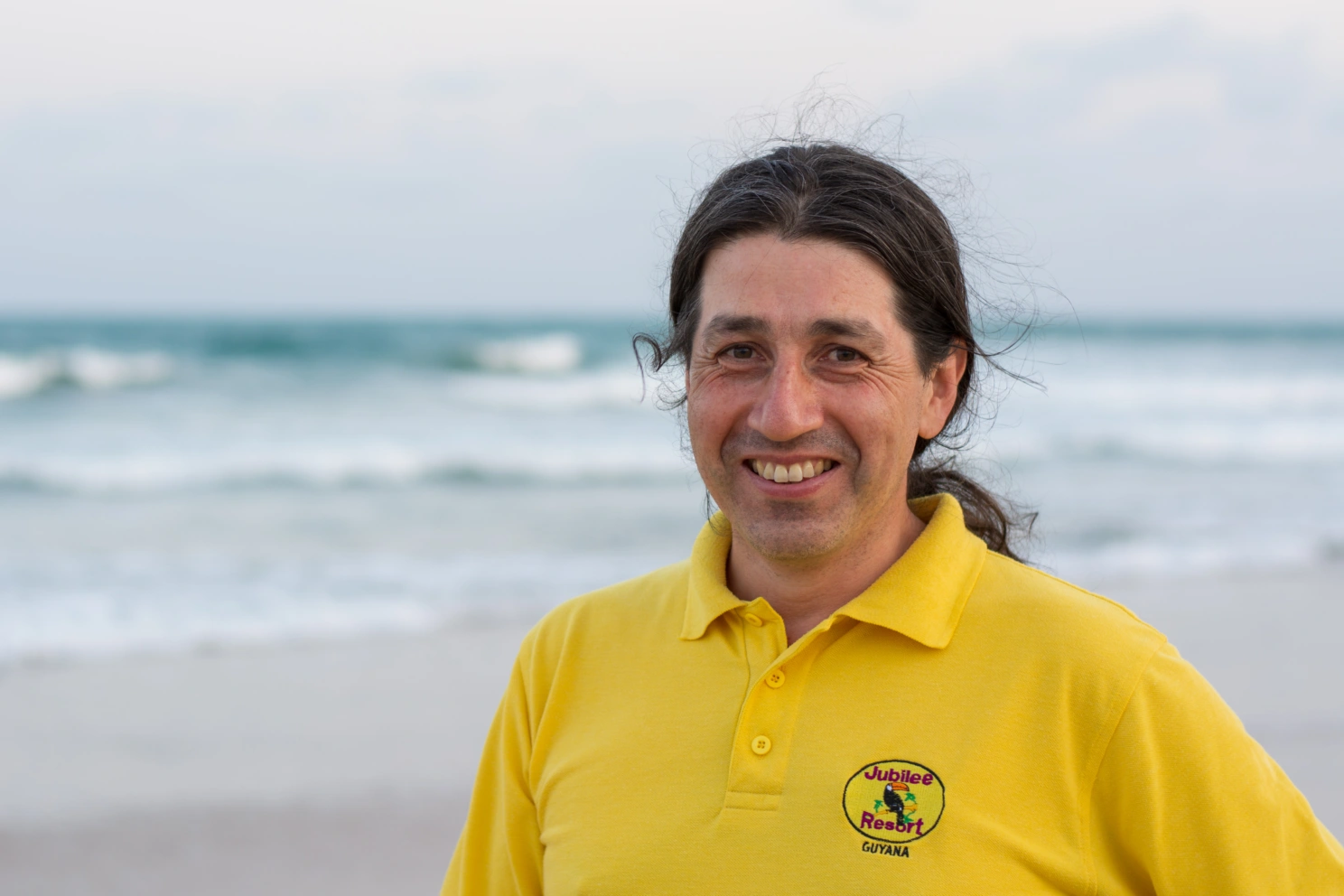
Noel Keenlyside is the leader of TRIATLAS. He describes the paper as a key TRIATLAS publications, very interdisciplinary, with many scientists from and external to the project involved. Photo: Ellen Viste
When More Rain Means More Fish (Sometimes)
The impacts of these pathways vary dramatically depending on where you are.
Take the La Plata Basin in South America for example. During El Niño, increased rainfall boosts river discharge, delivering nutrients to the ocean. Chlorophyll levels rise; fish biomass increases and catches of species like hake and flatfish tend to go up.
- Some regions like La Plata River, they receive more rain during El Nino. But more rain isn’t always a good thing, says Belén.
- Sometimes, like in the Amazon where the turbidity is bad, when it rains more and is cloudier, there is even less light coming into the ocean and photosynthesis is less effective.
But just north in the Patos Lagoon, the same increased rainfall and freshwater flow can actually decrease catches of pink shrimp. Average catches drop from 4,200 tons during La Niña to just 1,100 tons during El Niño. The freshwater plumes that form inhibit juvenile mullet from entering the lagoon and change the distribution of mature populations.
In the Congo River region, El Niño tends to increase discharge, the opposite of what happens in the Amazon. This brings more nutrients to the coast, boosting fish populations, especially sardinella.
The Upwelling Story
For many Atlantic fisheries, it's not about rainfall, it's about upwelling. Upwelling brings cold, nutrient-rich water from the depths to the surface, fuelling the entire marine food web.
- Upwellings bring nutrients from the bottom as well as fresh water and oxygen, in other words they bring life, says Belén.
Off the coast of Mauritania and Senegal, El Niño weakens the trade winds, reducing upwelling. Nutrient supply drops, chlorophyll concentrations fall by up to 20%, and fish catches decline. Madeiran sardinella populations drop as food becomes scarce and spawning success decreases.
- Upwellings bring more nutrients and more chlorophyll. And these winds are coming from the north towards the equator and reduce the trade winds. Because of this reduction of the trade winds there is a reduction of the nutrients, Belén says.
But move south to the Gulf of Guinea, and the picture flips. There, El Niño actually strengthens upwelling, delivering nutrients that boost populations of round sardinella. This was especially true in the 1980s when ocean currents created ideal conditions for egg and larval survival.
Not All Fish React the Same Way
Perhaps the most fascinating, and challenging, aspect of ENSO's influence is how species-specific the responses are.
In the Amazon region, while overall fish biomass shows no clear pattern, southern brown shrimp, which make up 90% of shrimp landings on the northern Brazilian shelf, actually increase during El Niño. Reduced river discharge lowers turbidity (water clarity), allowing better light penetration. This favours post-larval migration and boosts survival rates. Meanwhile, in the same region at the same time, other species of fish inhabiting the ocean floor show no clear response at all.
The apparent lack of signals doesn't reflect an absence of impacts, the researchers note. Rather, it reflects the averaging out of species-specific relationships. Some species increase, others decrease, and the aggregate numbers can mask what's really happening.
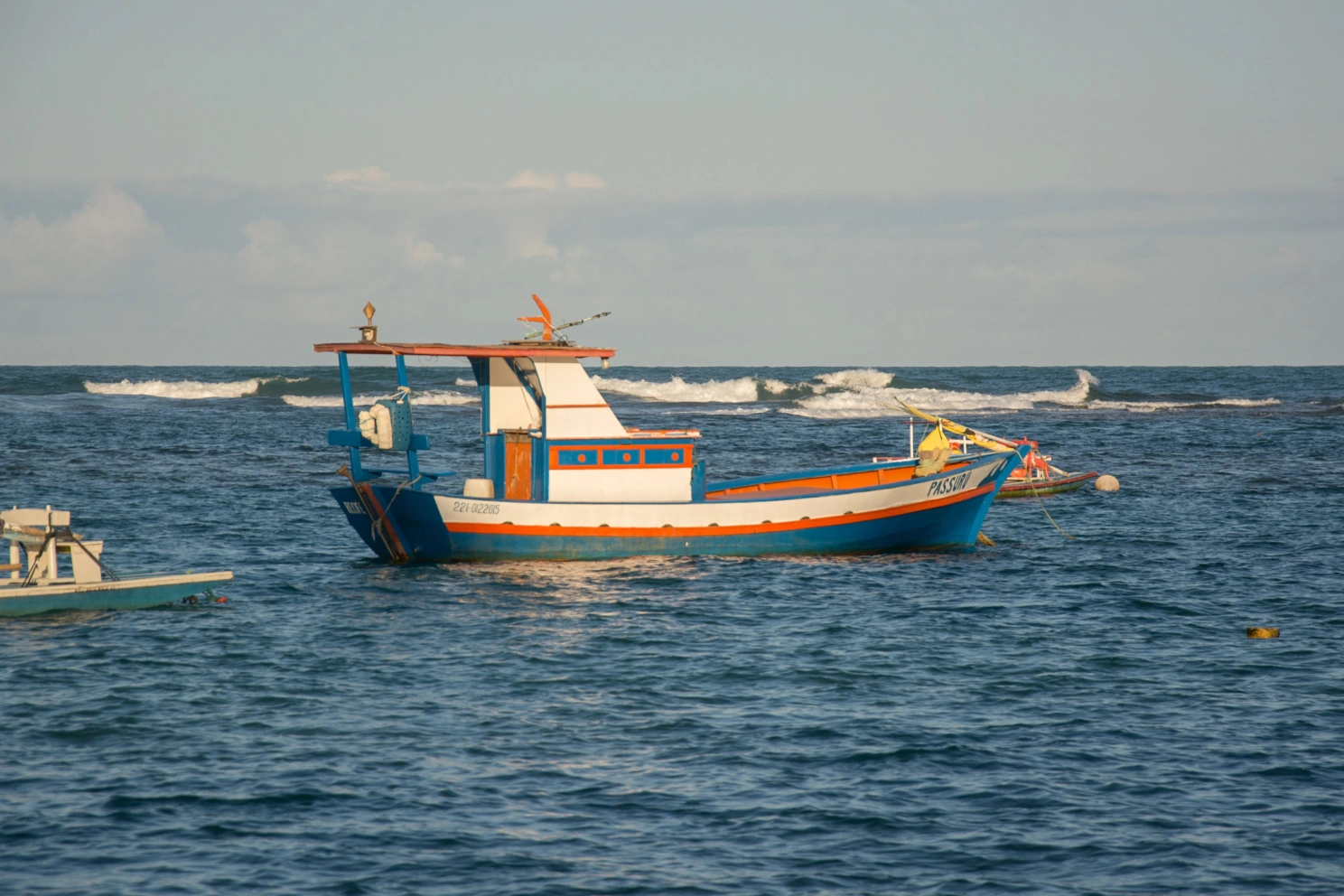
Fishing boat in Brazil. Photo: Ellen Viste
A Moving Target
If all of this sounds complicated, it gets even more so. These relationships aren't stable over time.
- There are variabilities at lower timescales, says Belén, for example on a decadal timescale the signals changes. Sometimes El Nino follows a pathway, but because of the decadal variability the pathway changes. So, when something acts a particular way in one region, in another decade its acting in a different region.
The connection between ENSO and Congo River discharge, for instance, has changed dramatically. Before the 1990s, El Niño was associated with decreased discharge. After the mid-1990s, the relationship flipped to increased discharge. Similarly, sardinella populations off West Africa only started showing clear responses to ENSO after the mid-1990s.
These shifts happen because ENSO itself isn't always the same. There are different "flavours" of El Niño, eastern Pacific versus central Pacific events, and they trigger different teleconnection patterns. There's also a shift that occurred in the late 1970s, when central Pacific events became more frequent, fundamentally altering how ENSO impacts reached the Atlantic.
- The effects of El Nino and La Nina is kind of like throwing a pebble into a pond and seeing where the ripples form. In some decades the stone is thrown in a certain part of the pond, and in some decades its thrown in a different part of the pond, and that affects which areas are affected by the ripples. Thats why the effects of ENSO is decadal, explains Belén.
Add in interactions with other climate patterns, the Atlantic Meridional Mode, the Pacific Decadal Oscillation, the North Atlantic Oscillation, and you have a system that's constantly changing on timescales from years to decades.
What Does the Future Hold?
Climate models project that ENSO variability will increase in the future, with more frequent extreme El Niño and La Niña events. But paradoxically, the historical signal connecting ENSO to the Atlantic is projected to weaken.
Uniform warming of the ocean surface will tend to weaken the Walker Circulation. Enhanced stratification, the layering of the ocean, could reduce the effectiveness of wind-driven upwelling by up to 25%. And changes in the location and intensity of subtropical high-pressure systems will modify where and how ENSO impacts emerge.
The uncertainty in these projections is substantial, and that's a problem for communities that need to plan and adapt, and who are adversely affected by climate change.
- When we talk about climate change, we are talking about a trend. But, in this trend, sometimes you have El Nino and sometimes you have La Nina. This opens windows of opportunity. Sometimes, in a bad way because the climate change enhances the impacts. But sometimes there are positive windows of opportunity as well, Belen says.
For the Amazon, reductions in rainfall during El Niño are projected to intensify. But in models, the impact on fisheries tends to diminish, at least in some regions. In the Mauritania-Senegal upwelling system, a moderate decrease in upwelling intensity is likely, potentially reducing fish productivity further.
Filling the Gaps
The researchers behind this comprehensive review are clear about what's needed next: better data and better models.
Physical and biological variables are insufficiently sampled to unravel ENSO impacts, they write. This includes river discharge estimations, nutrients, and primary productivity.
Long-term observational records are essential but often absent, particularly in regions like the southern Benguela and estuaries. Satellite observations, while high-resolution, are too short to capture multi-decadal variability and can struggle with turbid water and cloud cover.
Marine ecosystem models also need improvement. They need to better represent how different species respond to temperature, oxygen, and pH changes. They need to incorporate food webs more realistically and account for fish movement and species interactions.
It is critical to develop high-resolution models that integrate physical, biogeochemical and biological processes, the authors emphasize, alongside observational data on fish movement and biogeochemical variables.
Why It Matters
For the millions of people who depend on Atlantic fisheries, understanding these connections isn't an academic exercise. Sudden shifts in sea surface temperatures or upwelling strength cascade through the marine food web, eventually impacting local fish stocks and the communities that depend on them.
- The areas studied by Triatlas have historically been less a focus for study than similar regions like the California upwelling and the Humbolt upwelling, says Belén.
- People living in these areas are low income and rely on fishing to make a living. They face climate change through sea level rise and erosion, she explains.
The researchers call for improved forecasting models combined with adaptive management strategies. Enhanced monitoring, greater support for flexible fishing policies, and a transdisciplinary approach involving stakeholders, researchers, and policymakers.
Such efforts would have marked bearing on developing effective early warning systems and preparedness measures to mitigate ENSO impacts related to fisheries and food security, they conclude.