Less Sea Ice in the Arctic
This year's sea ice maximum is approaching record low levels – an accelerating trend, according to researchers.
Publisert 22. March 2026
Written by Thea Svensson
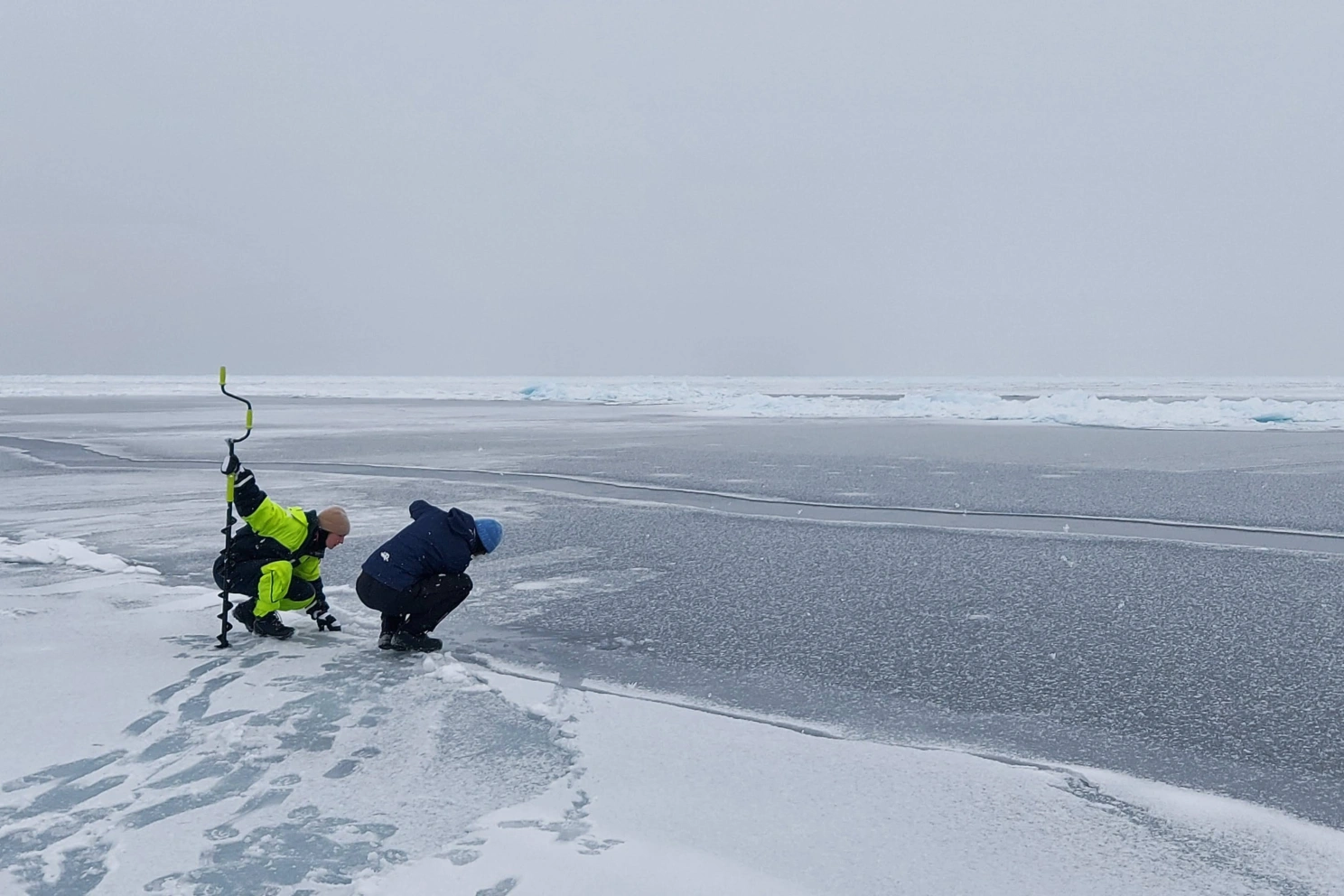
The winter sea ice edge in Disko Bay in March 2023. PhD student Linda Latuta and MSc student Dana King searches for a safe place to take temperature and salinity observations from the fast ice, the sea-ice that is attached to land and grounded icebergs. Photo Lars H. Smedsrud (University of Bergen).
- This year's sea ice maximum is set to be the second lowest since satellite measurements began, except for 2025, says research leader at the Bjerkness Center and UiB Marius Årthun.
Since 1979, satellites have been monitoring the sea ice in the Arctic and measuring how extensive it has been at its largest, which in scientific circles is called the sea ice maximum. In its first year, the measurements showed an extent of over 16.5 million km2 of sea ice, from the first measurement until this year it has been reduced by a full 1.5 million km2. Only 2018 and 2025 have had similar low values at this time of year.
- The development in 2025-2026 indicates an accelerated loss of sea ice after a few years of more stable ice cover. This may indicate that natural variability and the effects of global warming are moving in the same direction, explains Årthun.
The areas around the Labrador Sea (west of Greenland), in the Barents Sea, and the area north of Svalbard are where the loss of sea ice is greatest.
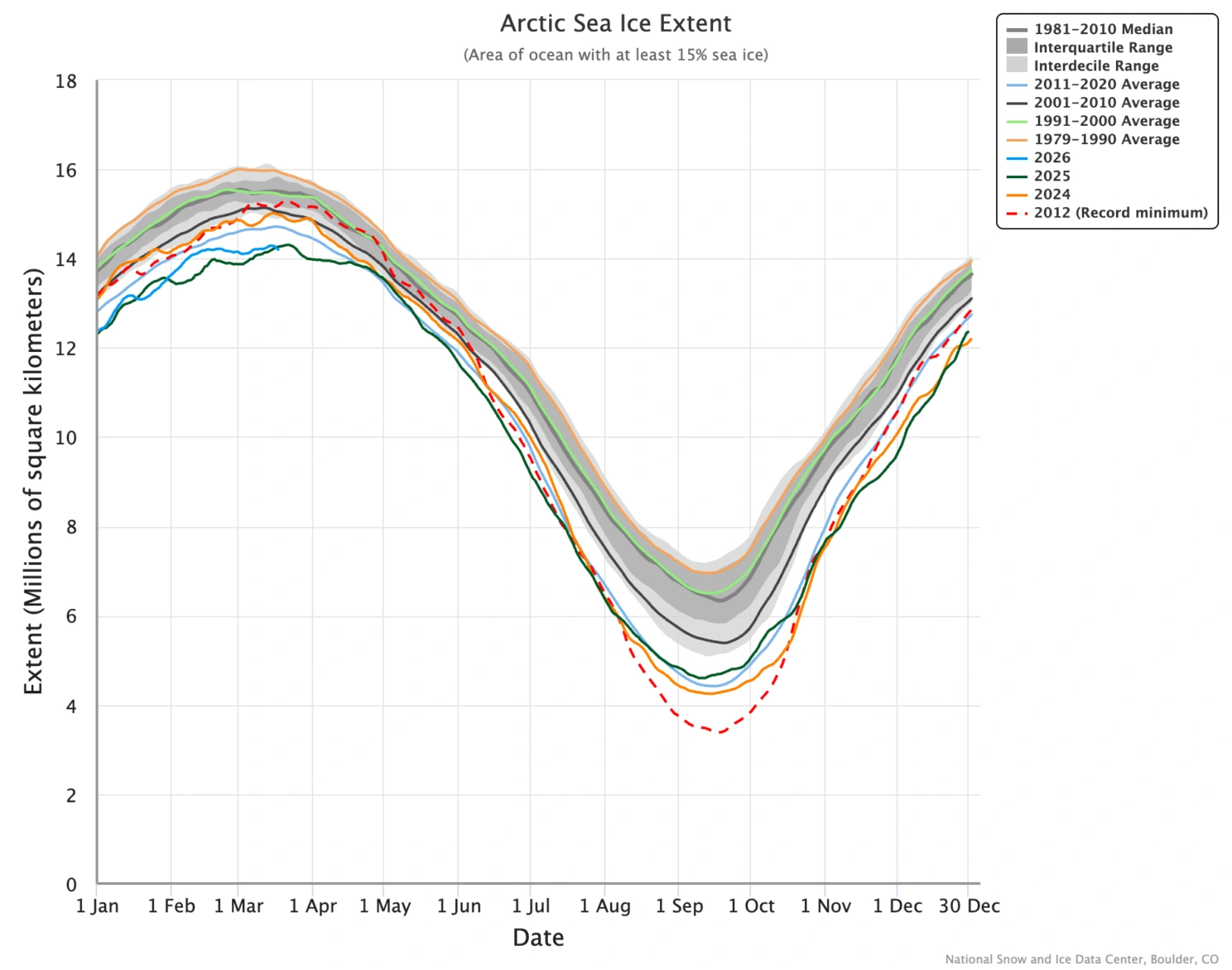
Annual sea ice maximum and minimum, where 2026 is represented by the blue line. Source: National Snow and Ice Data Center. https://nsidc.org/sea-ice-today/sea-ice-tools/charctic-interactive-sea-ice-graph
Loss of sea ice linked to increased CO2
This is a trend that follows the amount of carbon released into the atmosphere, according to Lars Henrik Smedsrud, marine dean at the UiB Faculty of Natural Sciences and Technology and researcher at the Bjerknes Center.
- What strikes me is that the big picture over the last 30-40 years is quite linear, and therefore as expected, says Smedsrud.
- The gradual decline in winter ice cover reflects the increasing atmospheric concentration of CO2, he explains.
Less sea ice in winter
- In winter, the sea ice used to reach as far south as Bjørnøya in the Barents Sea, and freeze over the entire Disko Bay on the west coast of Greenland, says Smedsrud. But not anymore!
Smedsrud is participating in the project "Climate Narratives", where they study climate change in Greenland in general, and in particular the sea ice in Disko Bay in Greenland.
- This is among the areas that have lost winter ice and will be completely open in March 2026, says Smedsrud.
- Preliminary analyses show that sea ice and the temperature of Atlantic water have a degree of covariation also in Disko Bay. This has long been established in the Barents Sea.
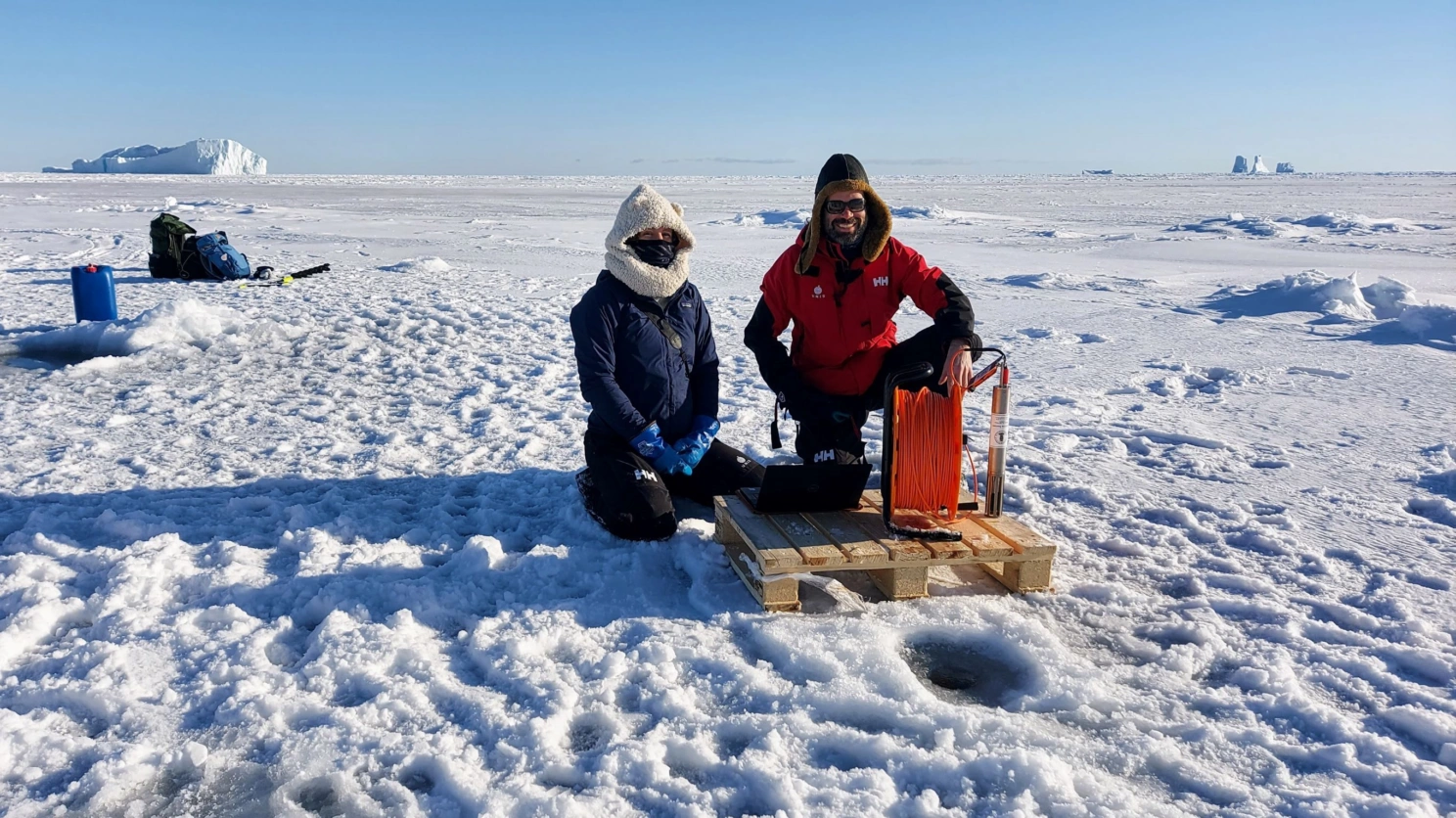
Lars Henrik Smedsrud og Dana King på Diskobukta i Grønland, 2023
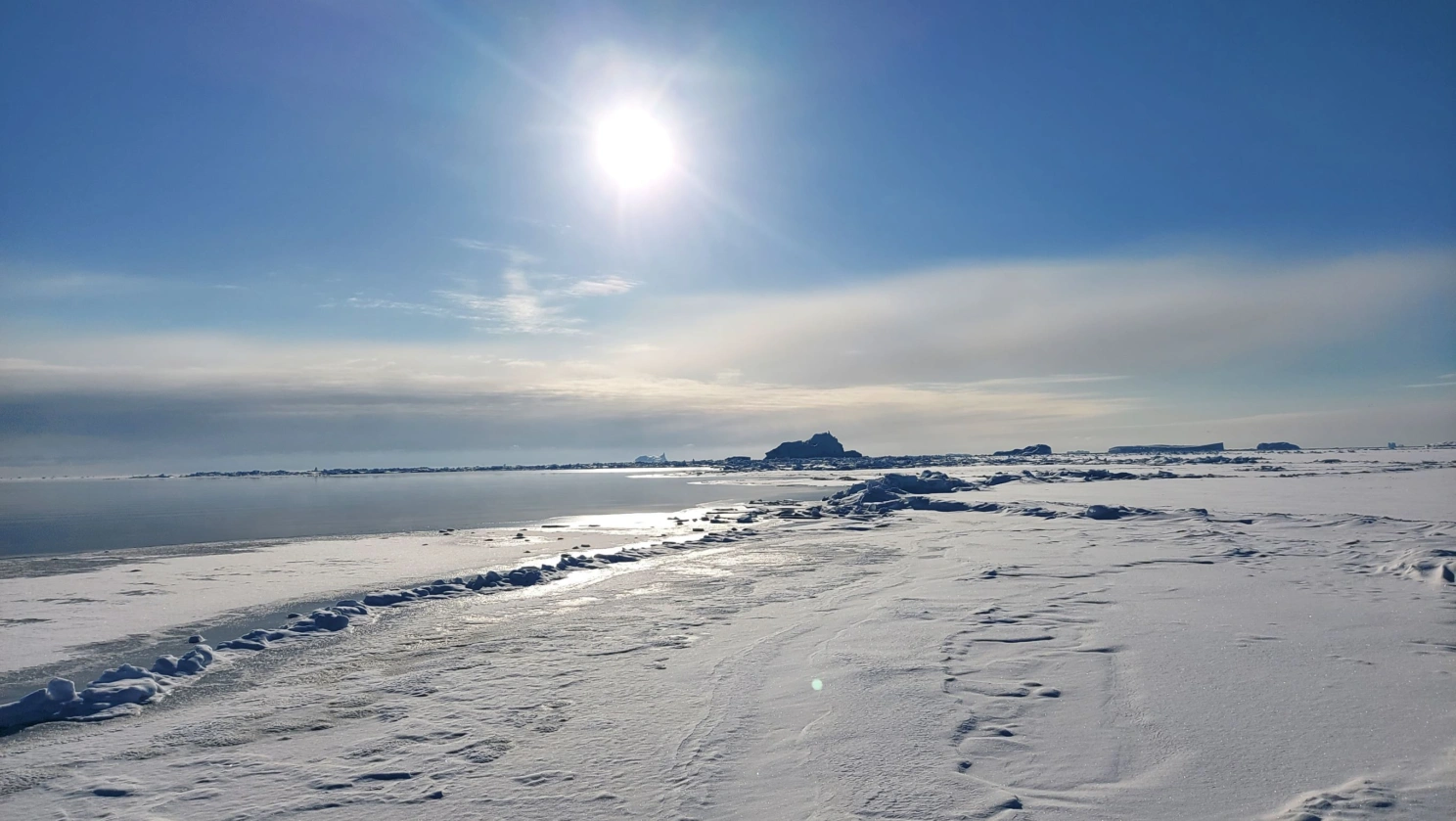
Diskobukta, Grønland, 2023. Foto: Lars Henrik Smedsrud
References
Faktaside: Sjøis - et hvitt teppe i Arktis