A rough field trip to Antarctica
A research trip to Antarctica is planned a long way ahead, often years. Still, there are many things you do not control. Elin Darelius experienced this on her seventh trip to the Southern Ocean.
Publisert 08. April 2026
Written by Tori Pedersen
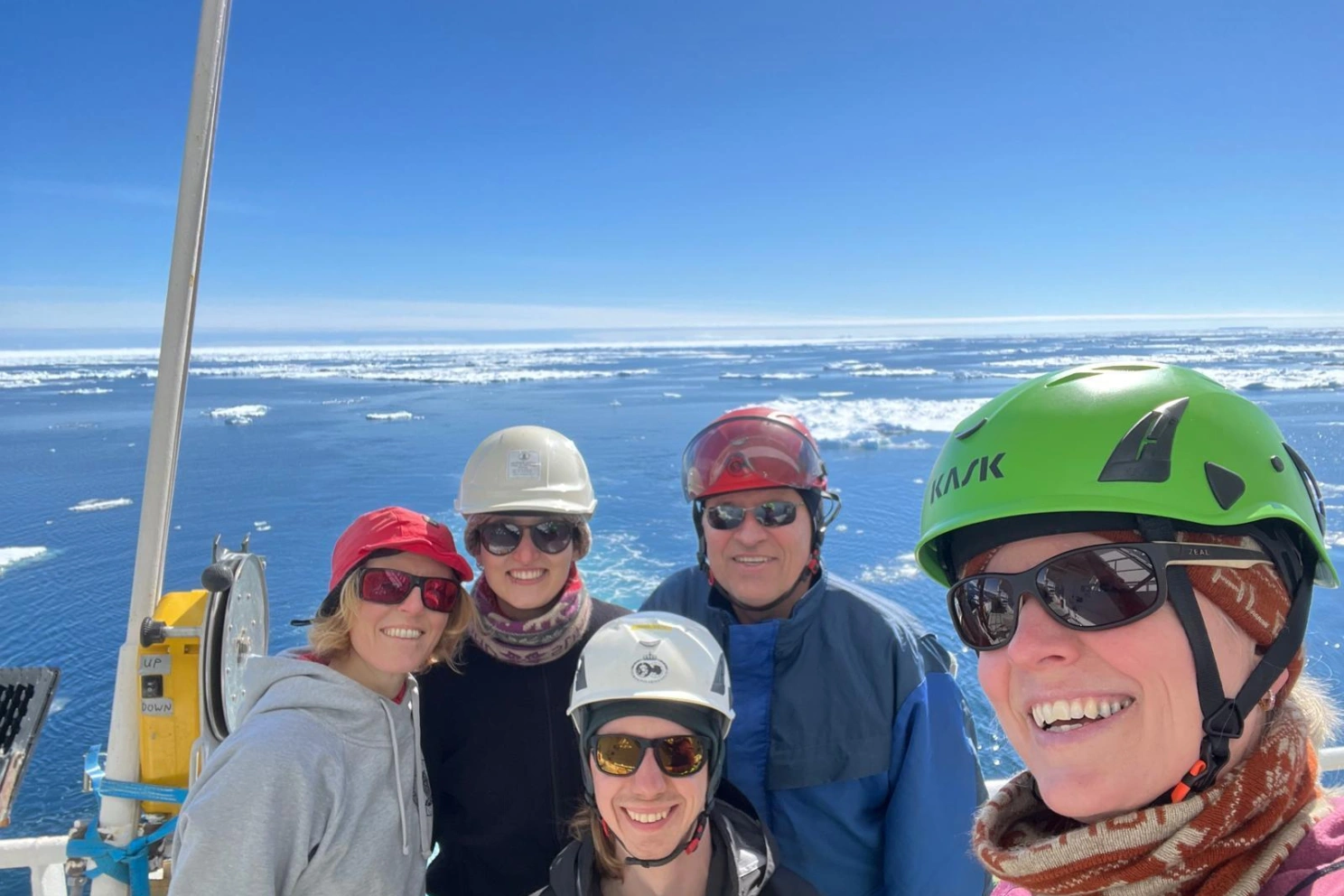
From left: Elin Darelius (University of Bergen and the Bjerknes Centre), Lilli Weninger (University of Bergen), Hans Erik Alterskjær (Norwegian Polar Institute), Kristen Fossan (Norwegian Polar Institute) and Ragnheid Skogseth (The University Centre in Svalbard). Foto: privat
The research trip was organized by the Norwegian Polar Institute. It wasn’t a traditional research cruise, but rather a container ship transporting supplies to the Norwegian research station Troll.
“We set up a research deck inside a container when we got on board. We install laboratories, winches, and all the equipment we need, so we effectively bring the research station with us,” says Elin Darelius, professor at the University of Bergen and the Bjerknes Centre.
The purpose of the cruise was to retrieve the moorings (instruments placed in the ocean to measure physical, chemical, and biological conditions over time), carry out necessary maintenance on them, collect the data, and deploy them again.
Challenges
One of the moorings, belongs to Elin. It was originally supposed to be recovered a year ago, but the attempt failed.
“The release mechanism failed when we tried to recover it last year. This time, we had to try dragging it up by essentially fishing for it with hooks and weights. We could see it on the echo sounder, but we still weren’t able to catch hold of it.”
After several attempts they had to give up.
“It was incredibly frustrating. When I realized it wasn’t going to work, I needed a few hours to myself”, Darelius says.
The next chance is in two years. Then, a research vessel will travel to Antarctica. But the mooring has been in the sea for so long that it might be damaged.
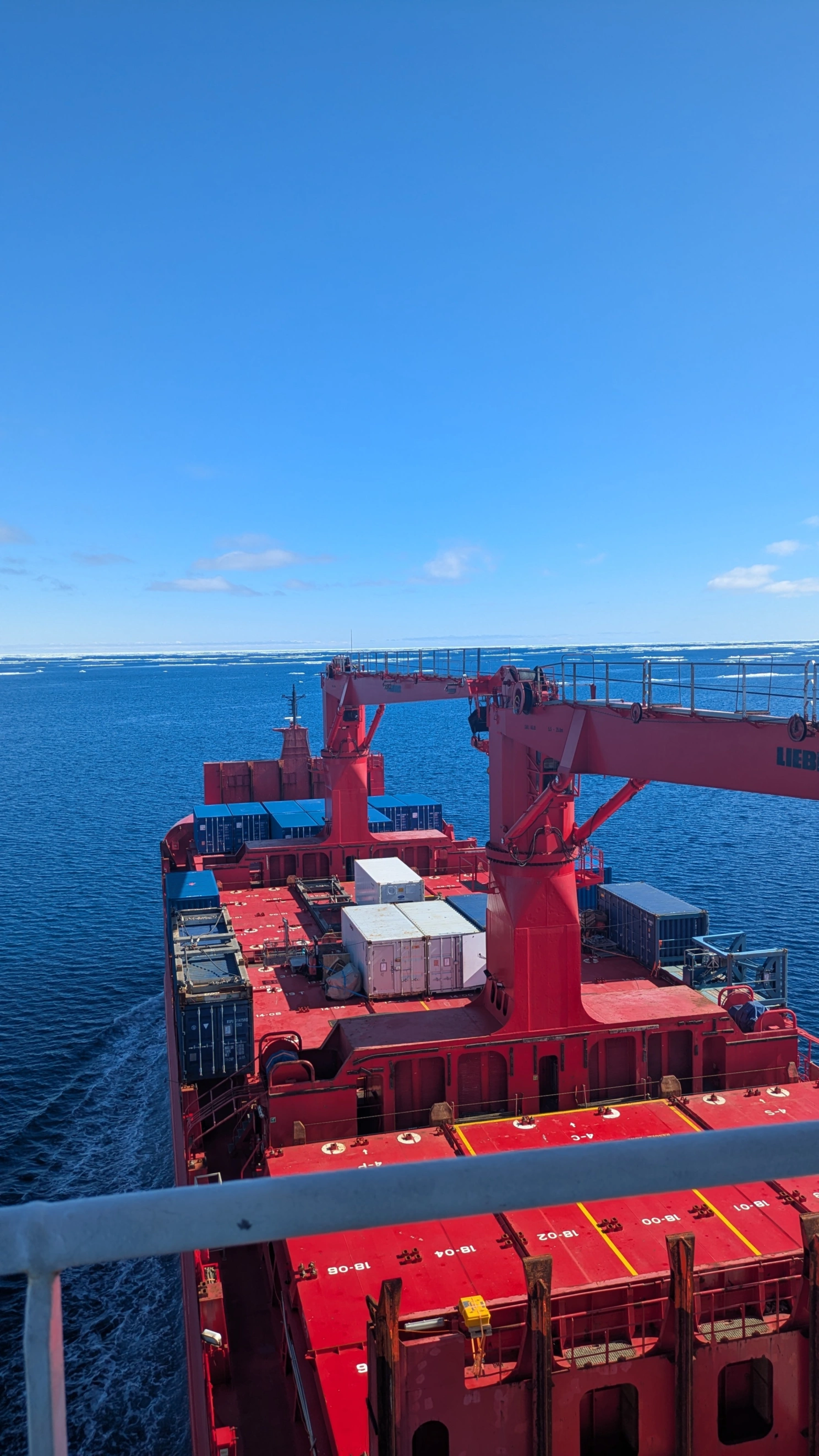
The researchers travelled on this ship. Photo: Lilli Weninger
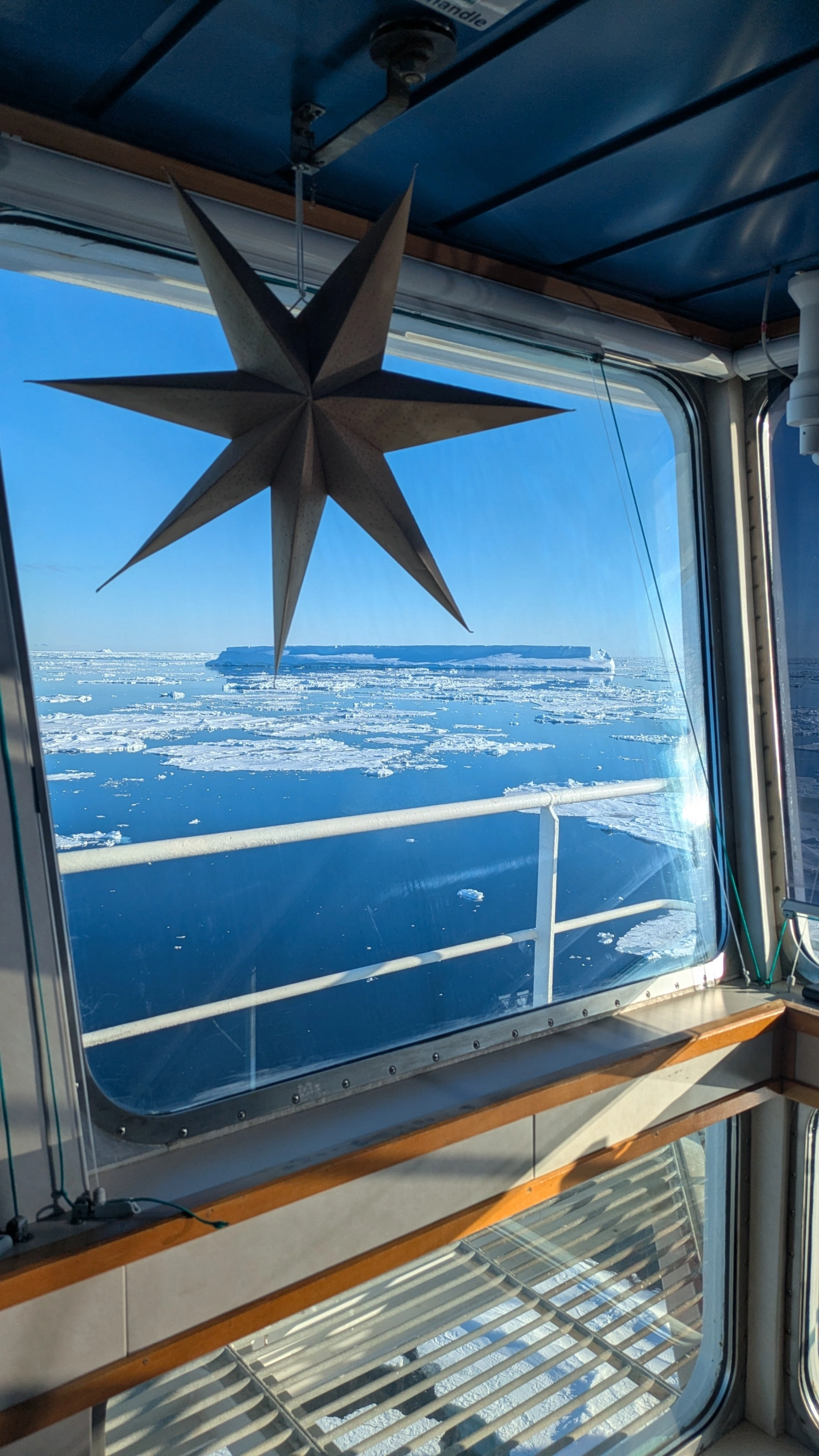
Christmas was celebrated onboard. Photo Lilli Weninger
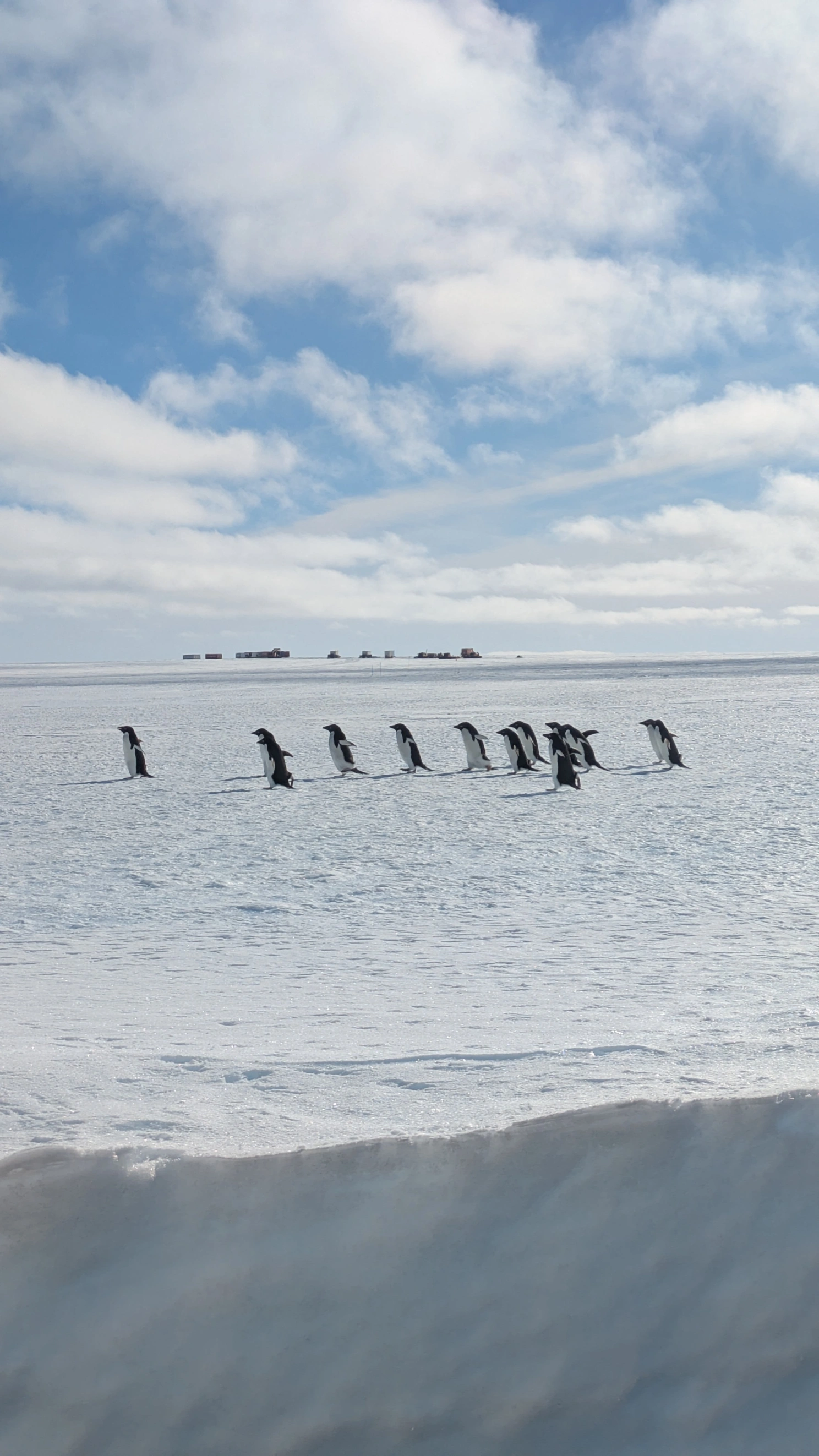
Penguins out an about. Photo: Lilli Weninger
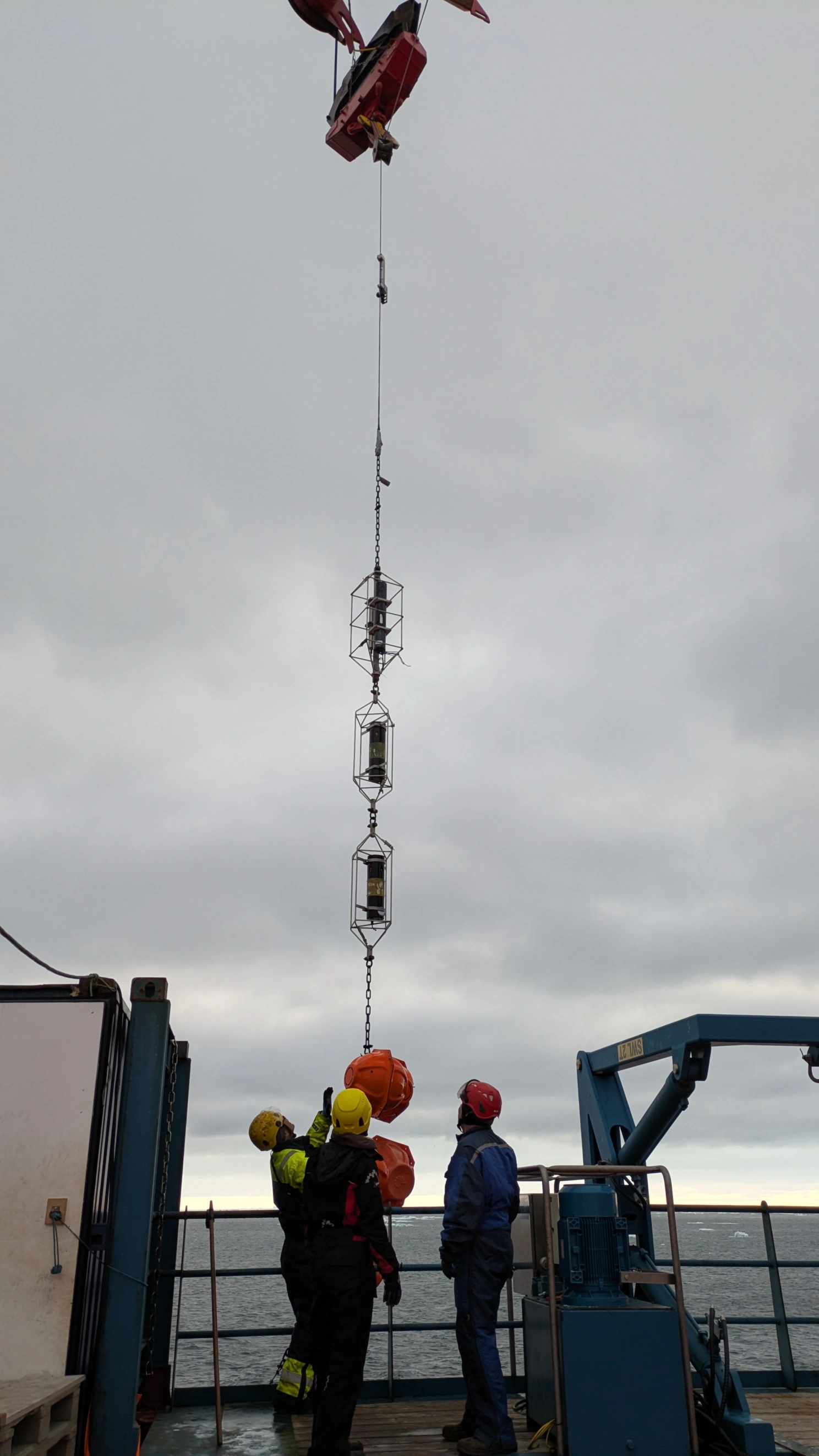
The researchers are working on a mooring. Photo: Lilli Weninger
The ice decides
During the cruise, research was also planned while the ship was unloading supplies at the Troll Station. However, large amounts of drifting ice made it impossible to deploy instruments into the water.
Later, by the British research station Halley, the ice edge was too high for the ship to dock.
A third attempt was made, by the German research station Neumayer, but the conditions were too demanding also here. Powerful swells, combined with the fact that an iceberg had just broken off and created a new, higher edge, made the situation difficult.
“It can change at any moment; it is a system in constant motion. The ice decides what we can and cannot do”, Darelius says.
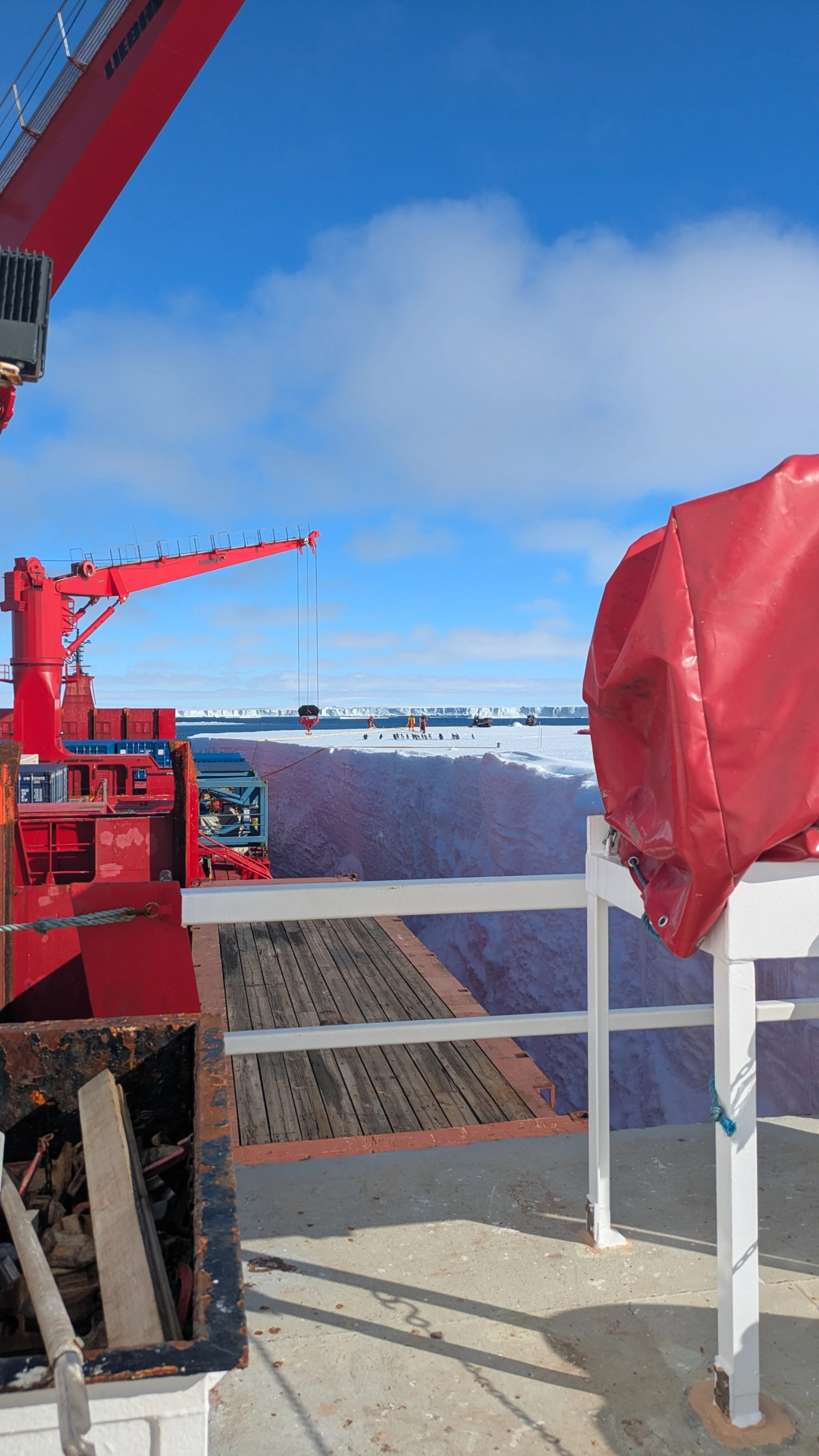
Loading supplies at the ice edge. Photo: Lilli Weninger
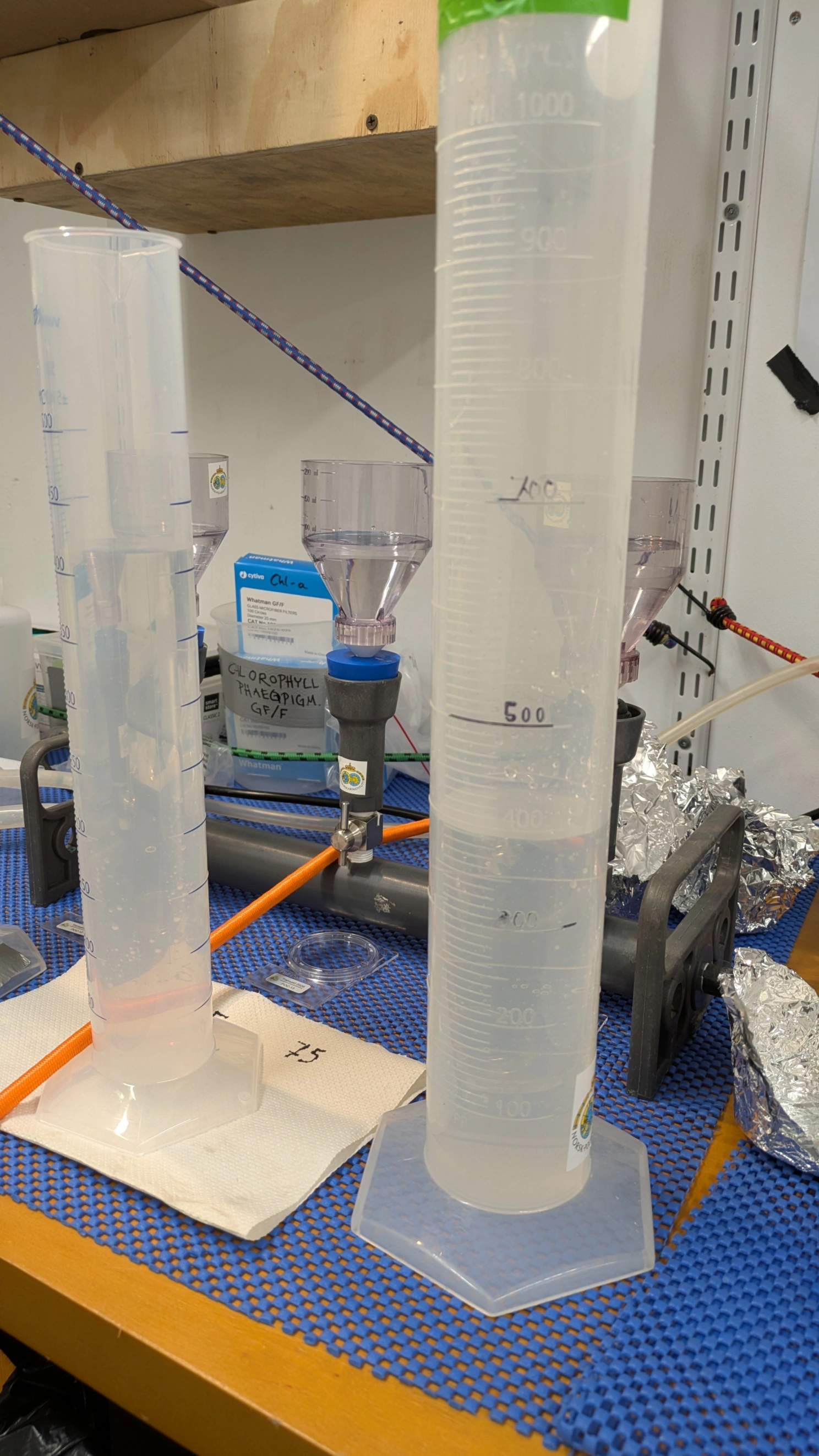
Part of the self‑built laboratory. Photo: Lilli Weninger
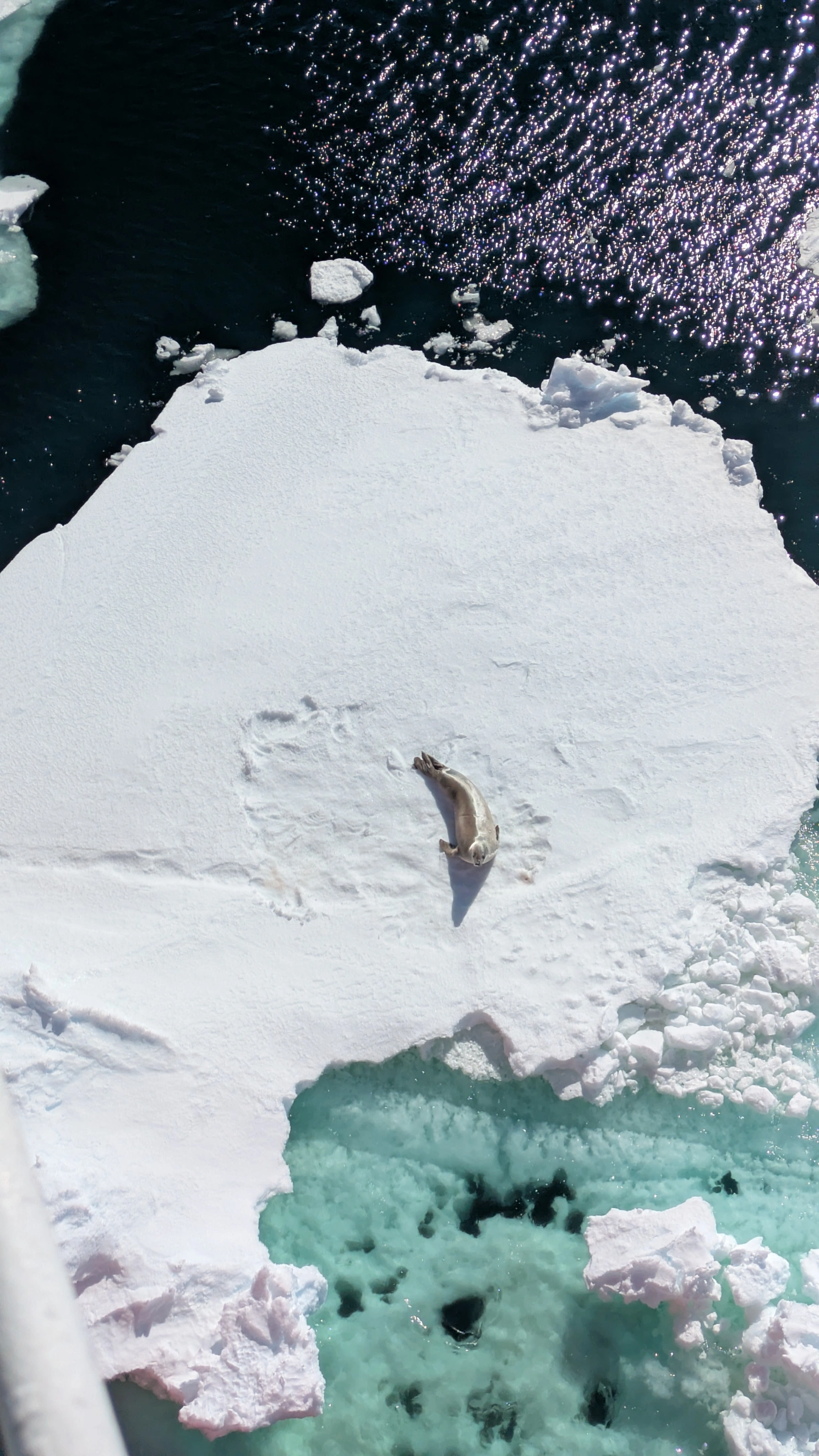
A rest in the sun. Photo: Lilli Weninger
Teamwork
To top it all off, the research team (and the ship’s crew) got sick with salmonella as they left Cape Town and headed toward the Southern Ocean. It meant several days of sickness, but the spirit in the group of five remained good despite it all.
“Despite everything, it was a good trip thanks to the strong teamwork on board. At the same time, with all the setbacks along the way, it was probably the most demanding cruise I’ve ever been on”.
One of the moorings that was recovered belongs to the University of Bergen, and Darelius will continue working with it.
“We can see that there was an episode in December where unusually warm water appeared high up in the water column. We also see from instruments under the ice shelf farther south that the same thing is happening there. It will be exciting to look into this more closely,” she says.
Stunned by nature
Student at the University of Bergen, Lilli Weninger, was on her first trip to Antarctica. They were a small research team, so they had to take on much of the work themselves.
“On the one hand, that was great because I learned so much, but on the other hand it was exhausting and full of demanding tasks,” Weninger says.
Weninger was also deeply impressed by the landscape.
“I was truly struck by how majestic everything was — the vast ocean, the icebergs, the sea ice, the strong winds, and the long ice edge. Even though we were on a large ship, it felt tiny compared to everything around us,” she says.