Have you seen these fish?
Out in the open ocean and in the deep fjords here in Norway, a very special type of fish is hiding. It’s a group of fish that there are extremely many of, yet very few people have actually seen. That’s because they are masters of hiding.
Publisert 27. April 2026
Written by Thea Svensson
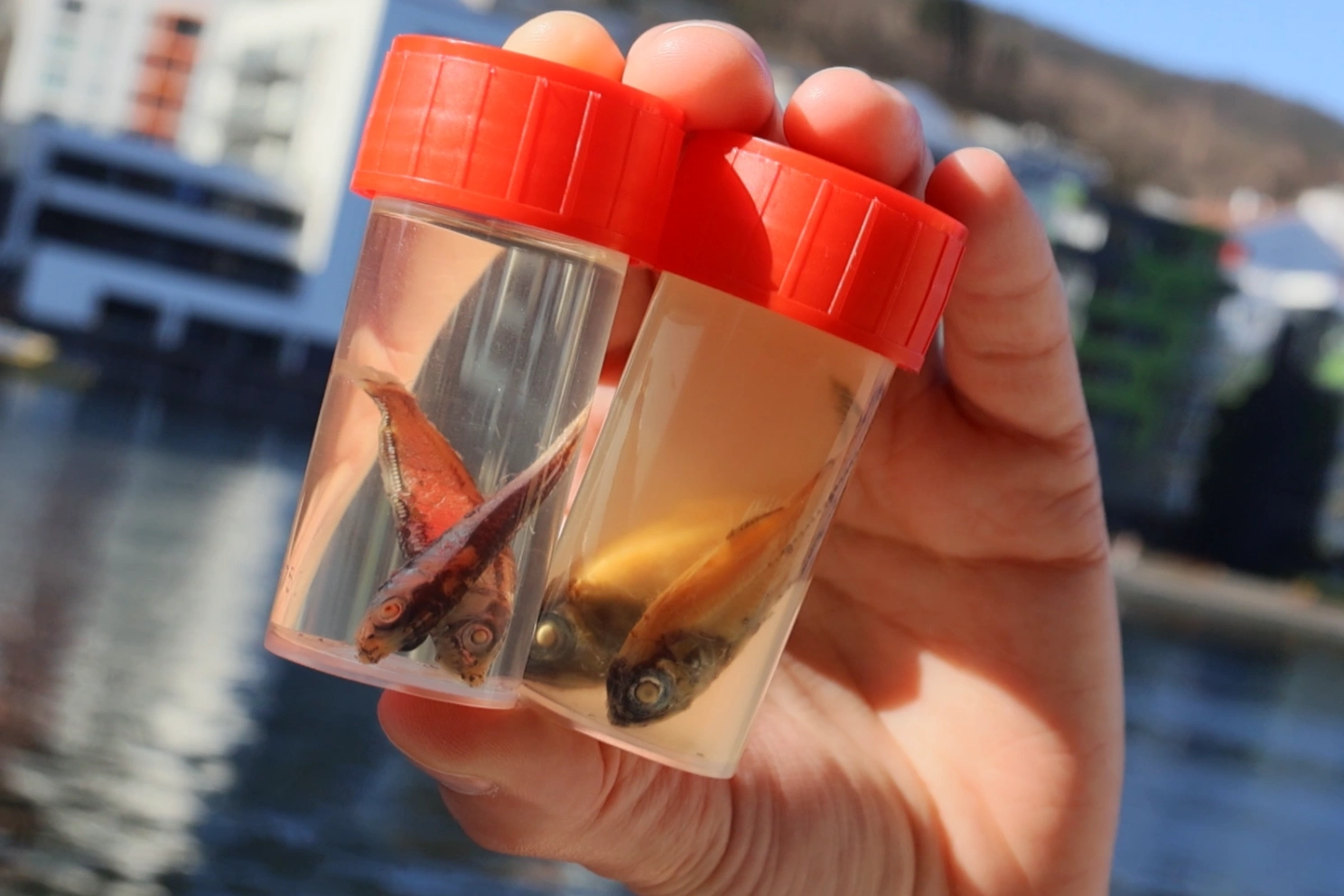
Mesopelagic fish. Photo: Thea Svensson
The fish that make their own light
Researcher Martine Røysted Solås at the University of Bergen and the Bjerknes Centre is an expert on mesopelagic fish. She’s so enthusiastic about these fish that she keeps several specimens of glacier lanternfish and Mueller’s pearlside—the two most common types of mesopelagic fish in Norway—in jars in her office. She’s happy to bring them along, like when she’s giving talks to students during the climate festival Warmer Wetter Wilder.

Martine Røysted Solås shows two specimens of mesopelagic fish - salmon herring and light spot fish.
Photo: Thea Svensson
It’s no surprise Solås is so passionate about mesopelagic fish—these fish have a pretty cool ability: they make their own light.
“In the open water where they live, it’s all about seeing without being seen,” Solås explains.
But if the goal is not to be seen—why on earth would they have lights on their bodies?
“Well,” Solås explains, “these lights can actually function as camouflage! Lanternfish and pearlsides live in a world where both prey and predators exist above them, beside them—but also below them!”
Without light on their bodies, these fish would appear as dark shadows to predators beneath them. The light-producing dots on their bellies mimic the faint light coming from the surface. In this way, they camouflage themselves from predators looking up from below. The other lights on their bodies likely serve different purposes, such as communication.
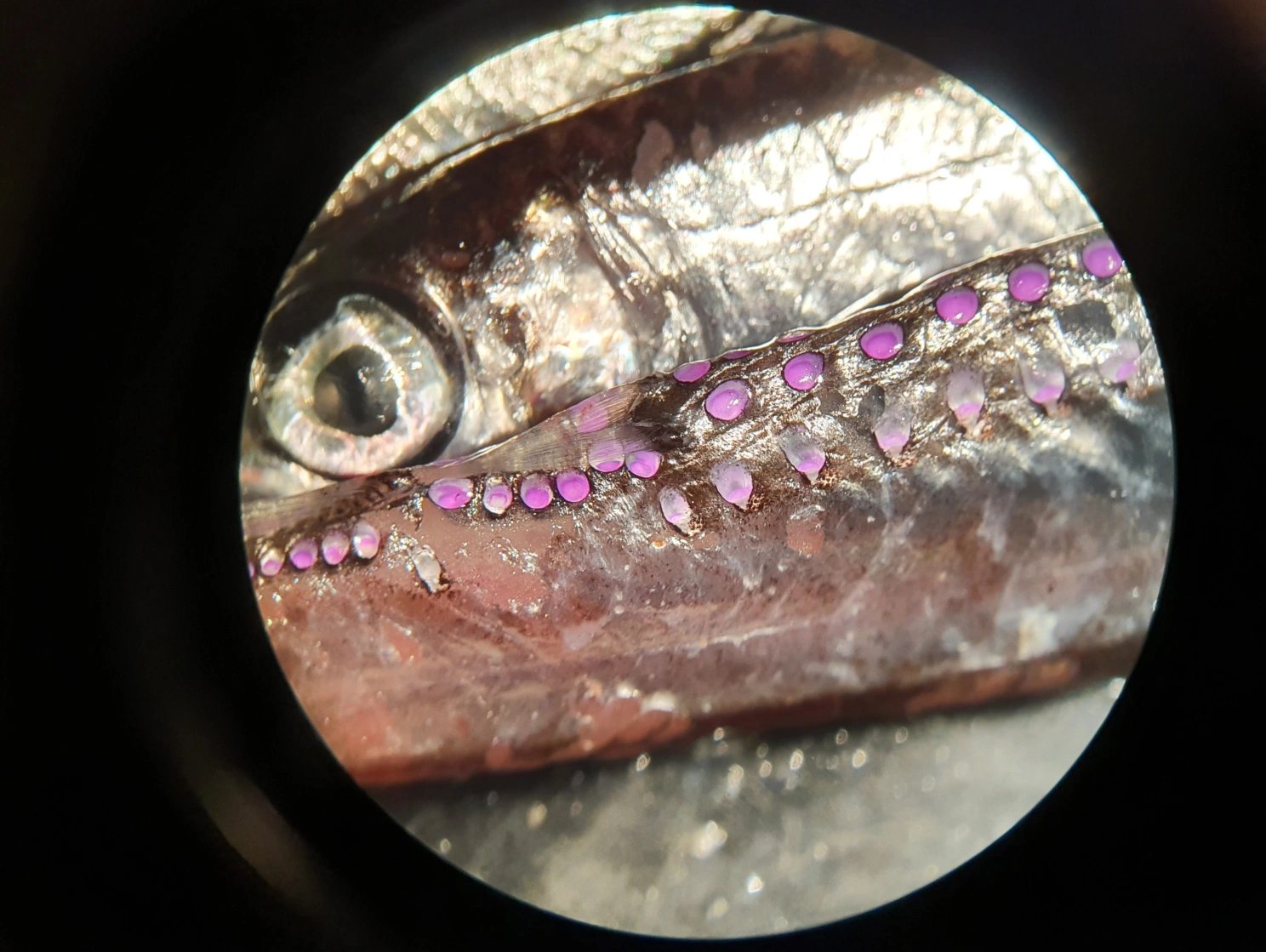
Light organs in Mueller's pearlfish. Photo: Martine Røysted Solås
The world’s largest migration
Lanternfish and pearlsides have specialized in living in a part of the ocean where only a tiny bit of light from the surface reaches. This is called the mesopelagic zone and is often defined as open water between 200 and 1000 meters below the ocean surface.
These two fish are sensitive to changes in light and move up and down in the water column in large numbers depending on the light. Their preferred depth is where it’s bright enough to find food, but still dark enough to avoid being eaten themselves.
“During the day, when most of us are up and about, these fish stay down in the depths. But when the sun sets, many of them begin a migration toward the surface so they can feed under the cover of darkness in productive waters,” Solås explains. “And when the sun rises again, they migrate back down to the depths.”
This daily migration happens all over the world. Mesopelagic fish are found in all the world’s oceans, and globally it’s estimated that there are between 1 billion and 10 billion tons of mesopelagic fish. There are likely more mesopelagic fish than all other fish species combined.
So, the next time you watch the sun set over the ocean or fjord, think about the great mass migration of fish that takes place beneath the surface.
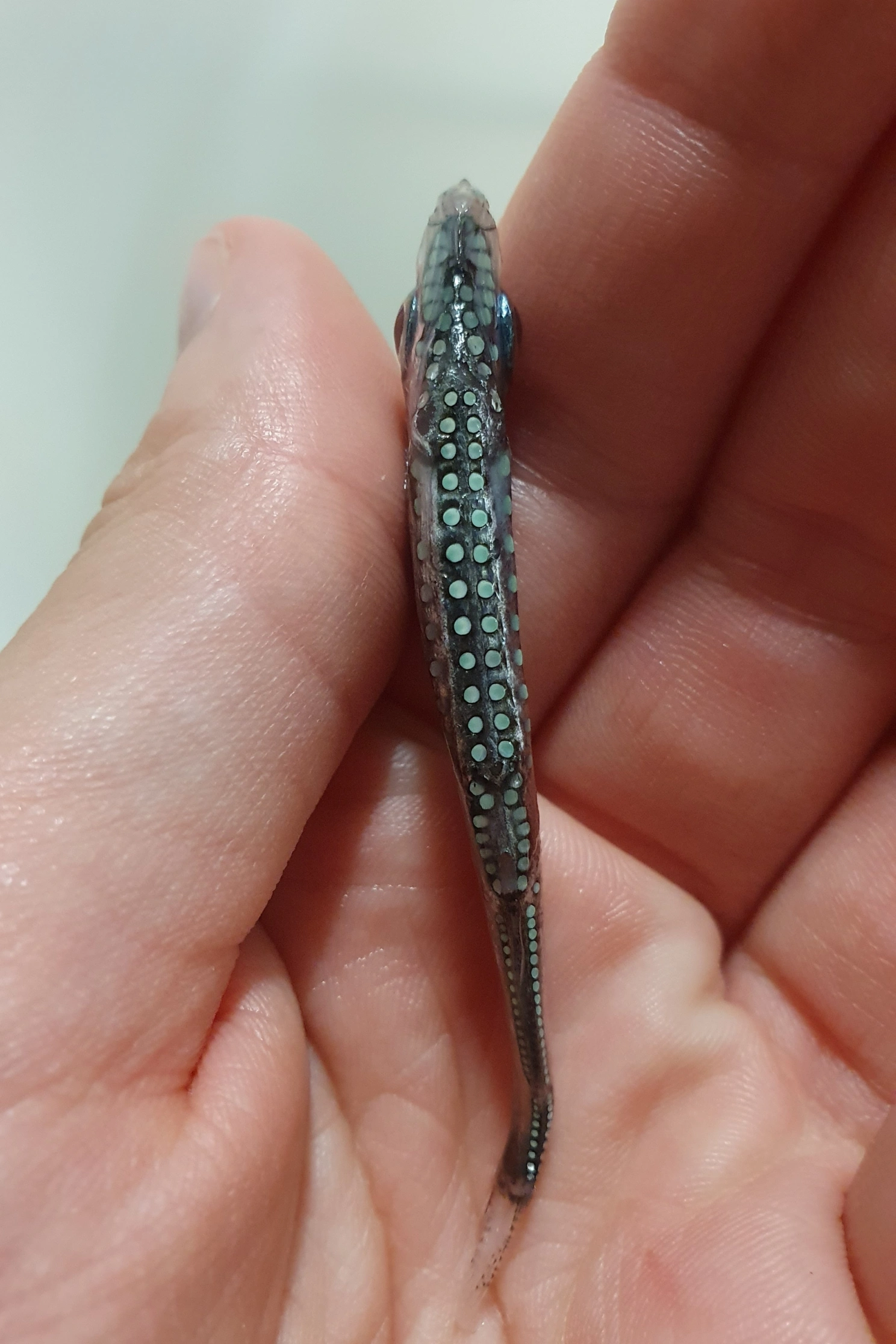
Mueller's pearlfish. Photo: Martine Røysted Solås
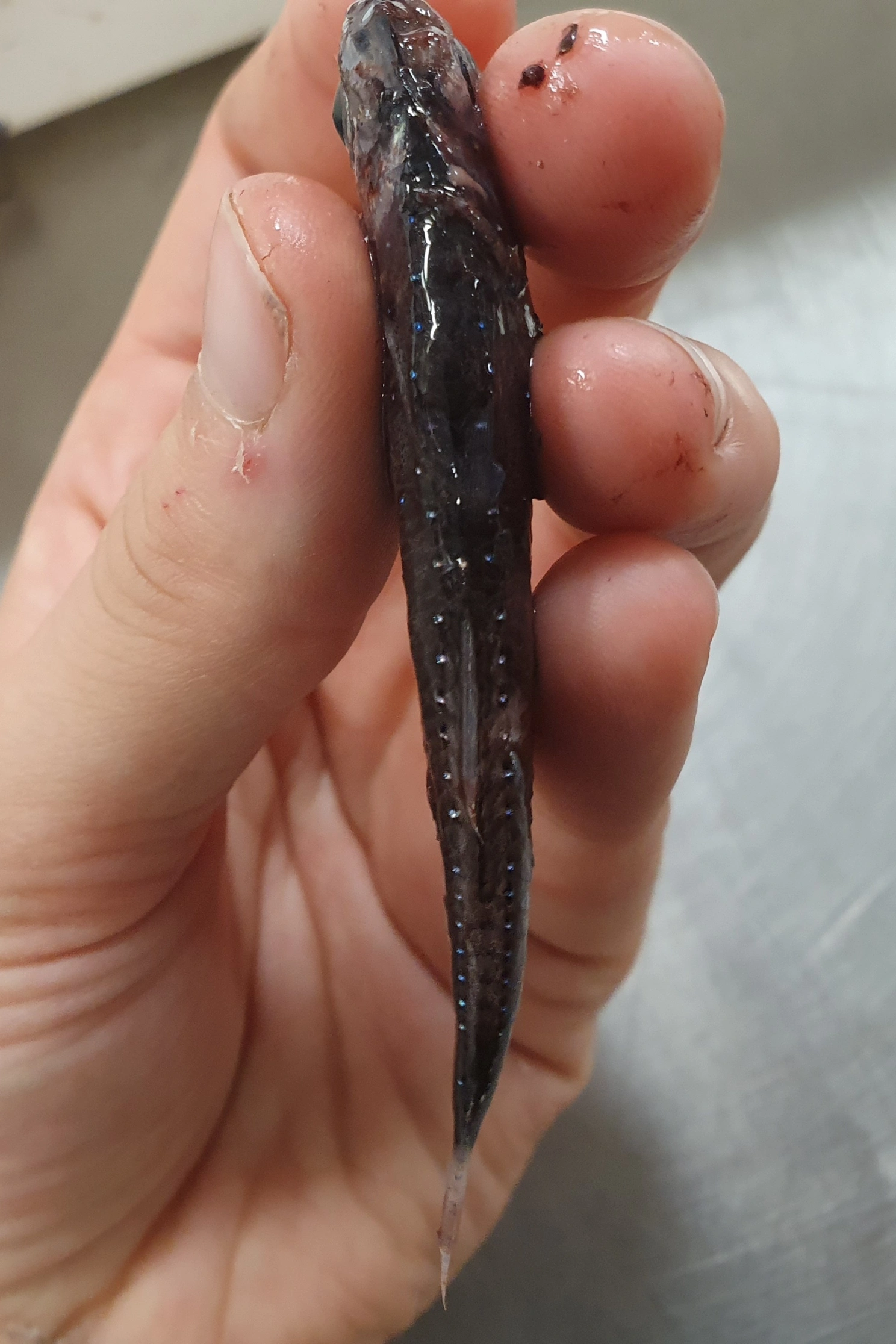
Glacier lanternfish. Photo: Martine Røysted Solås
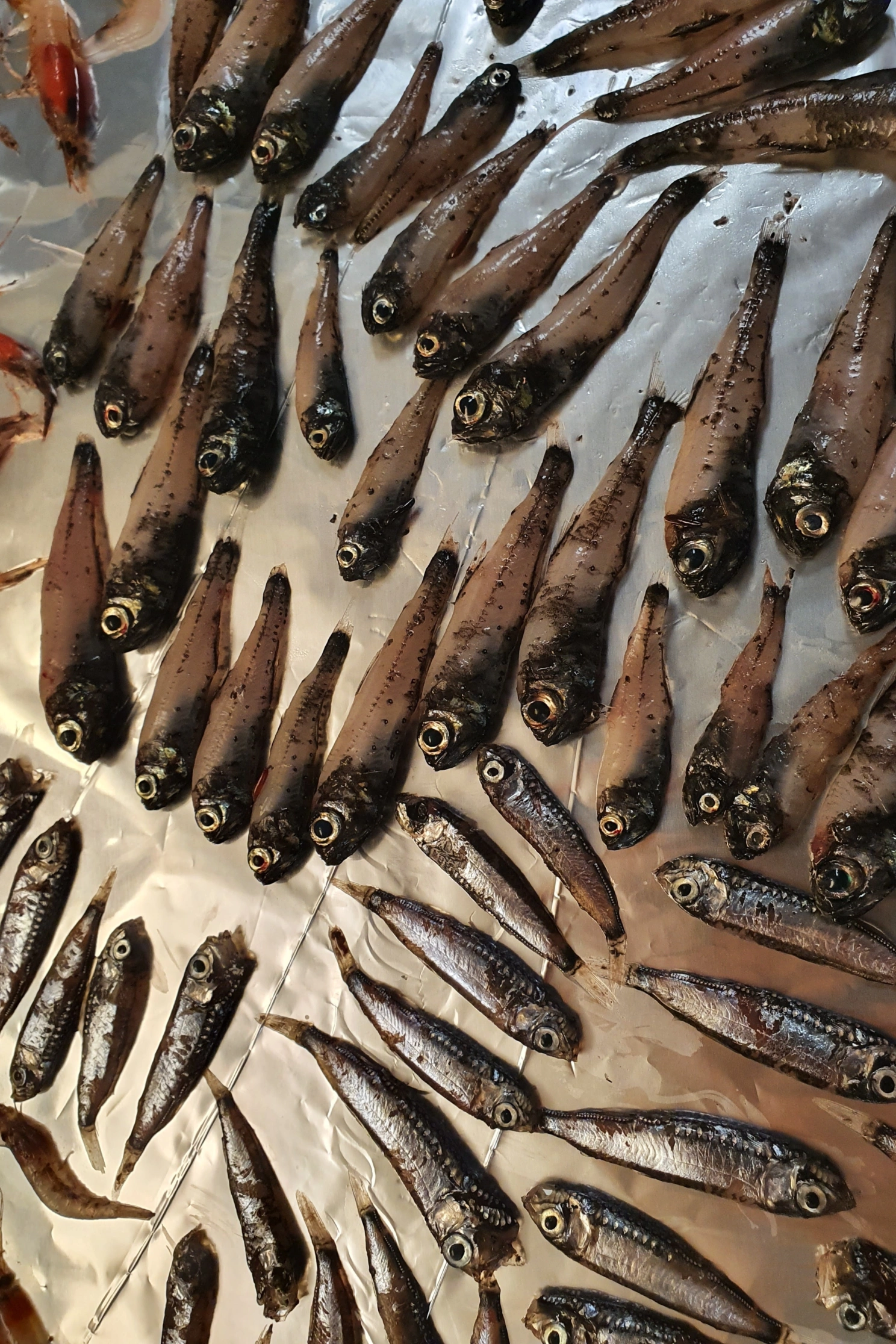
Mesopelagic fish. Photo: Martine Røysted Solås