Cities are essential for climate
The majority of the world's population lives in cities. Providing cities with solutions to handle climate change improves both the global environment and local living conditions.
Publisert 13. January 2026
Written by Ellen Viste
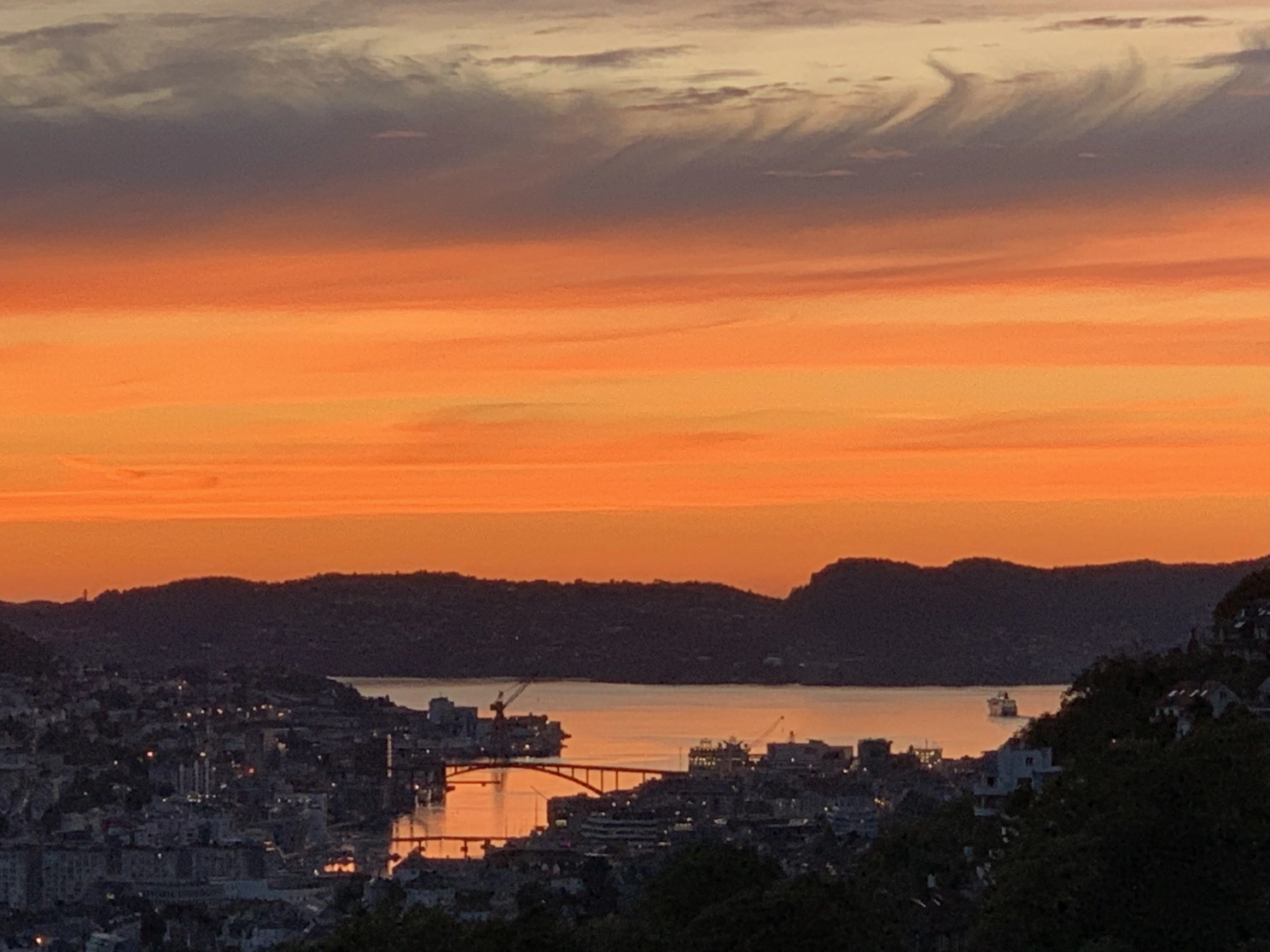
Concrete and buildings give cities a climate that differs from the surrounding countryside. Having many people gathered in one place creates both challenges and opportunities. Photo: Petra Langebroek
Cities differ from their surroundings both by how they are affected by climate change and in their possibilities of adapting to changes and reduce emissions.
"We need to illustrate that there are actions that can be taken and outline options that are not undoable," says Stefan Sobolowski.
Sobolowski, research leader at the Bjerknes Centre and professor at the Geophysical Institute at the University of Bergen, is one of the 87 lead authors of the IPCC's upcoming special report on climate change and cities.

Stefan Sobolowski works on the IPCC's coming report on climate and cities. Photo: Ellen Viste
This week all the authors are gathered in Oslo to work on the report, to be launched in 2027. The report will show how cities can reduce their climate gas emissions while at the same time preparing to handle inevitable changes in the climate.
While it is essential to identify existing barriers against action, Stefan Sobolowski wants to avoid focusing exclusively on the worst case scenarios.
"It's important also to show the best case scenarios, so that we can see that if we take action, this is the potential result," the climate researcher says.
Cities are not all the same
The majority of the world's population lives in cities, large or small. While many cities grow, there are also those that shrink. That cities increase their population, does not mean they grow in the same manner.
"You can have rapid urbanization with informal neighborhoods with cord-wood or massive structures like skyscrapers," says Stefan Sobolowski.
Working on the report, the researchers analyze trends, not just in climate, but in urbanization – in where changes occur, what they imply and why they happen.
Cities would develop also without changes in the their climate, and the effect of climate change can lie below or add a layer on top of other changes.
Oslo has led the way
In 2016, as the first city in the world, Oslo introduced a climate budget, providing an overview of emission sources as well as the actions needed to be implemented in order to reduce emissions. The ten year anniversary for this budget is also celebrated this week.
Since 2009 Oslo has reduced its emissions by at least thirty percent, and the climate budget has become an important management tool.
Cities as diverse as London, New York and Mumbai have introduced climate budgets based on Oslo's model, and last year the world's leading climate network for large cities, C40, decided that all their 94 member cities should have such budgets.
The emission reductions in Oslo have, among other things, occurred in connection with a transition from gasoline to electric cars and to demands for net-zero emissions from building sites.
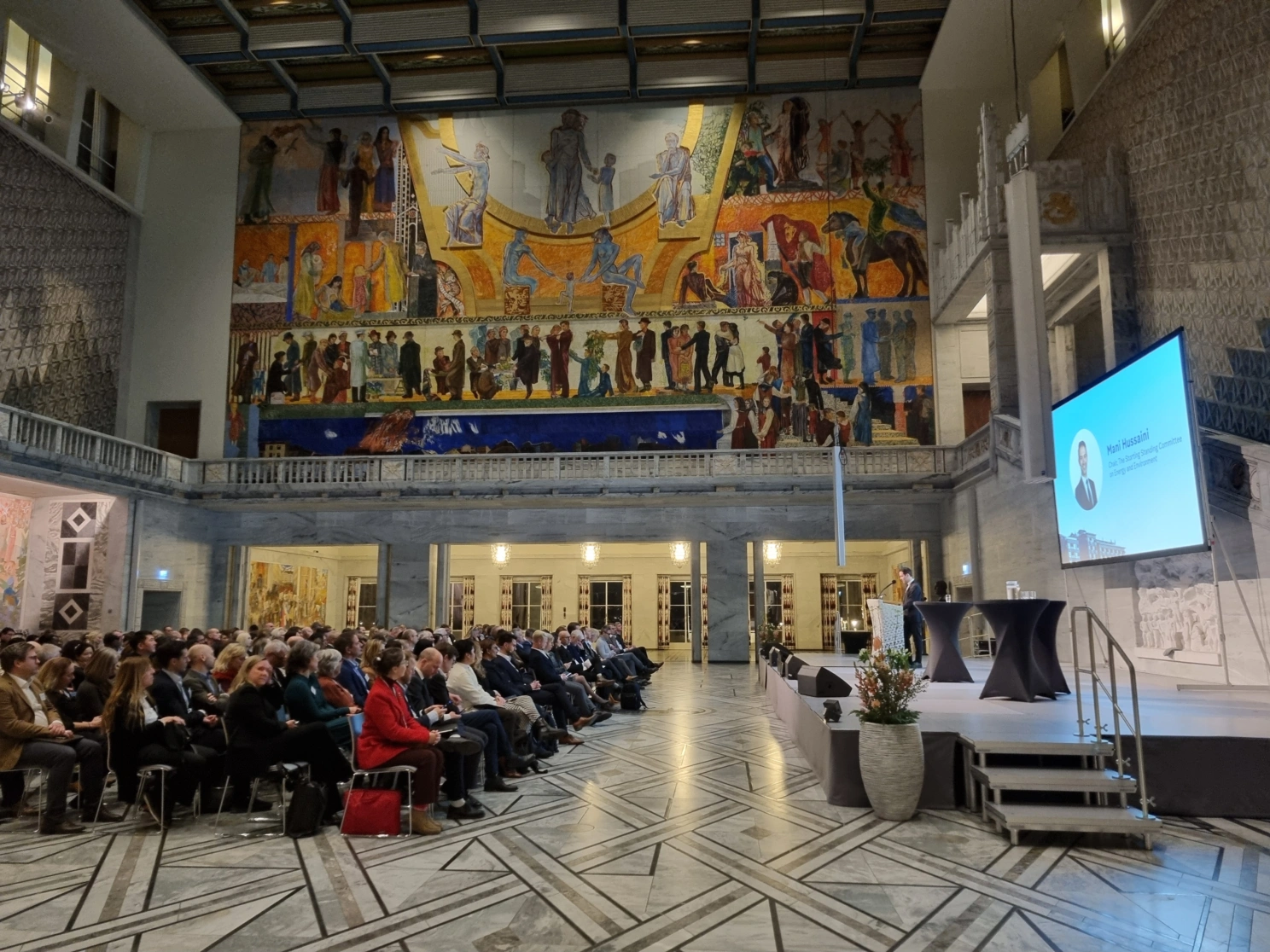
Monday afternoon the city of Oslo, the Norwegian Environment Agency and the IPCC invited report authors and others to an open seminar in the town hall. Photo: Ellen Viste
Both big and small actions matter
Emissions from cities can also be regulated through land-use and nature conservation measures. Stefan Sobolowski mentions Mindemyren in Bergen as an example of the importance of planning the structure of a city. In this area, public transportation as well as systems for stormwater management and plans for green infrastructure are in place before starting the major house building activity.
In Mumbai, implementing its first climate budget in 2024, there has been a focus on green neighborhoods and nature-based solutions. Land has been restored, and a handbook developed to promote everything from plants on balconies to the development of large parks.
Mumbai's target is zero emissions by 2050. The plan to achieve this includes preparing the city and its inhabitants for increasing risks of extreme events like floodings, heat waves, landslides and air pollution.
Seeks solutions benefitting everyone
"We also need to discuss financing," says Stefan Sobolowski.
He warns against solutions allowing rich regions, carrying the greatest responsibility for historical emissions, to be those that can most easily reduce emissions and reach their targets. He compares the suggestions the report will bring, to your choices at a restaurant.
"It should not be so expensive that they say, we can't afford that, we'll go for the kiddy menu."
The aim for the report is to present solutions that are realistic, portable and accessible to all.
"There is a potential," Sobolowski says. "If you don’t show that, people will not see the possibility of taking action."

Stefan Sobolowski and the Bjerknes Centre's director, Kikki Kleiven, both emphasize how important it is that cities choose wise climate solutions.