10,000 years of avalanches
At the bottom of a small lake in Hardanger, lies 10,000 years of avalanche history buried. Now, scientists at the Bjerknes Centre and the University of Bergen, has uncovered one of the longest, coherent avalanche records in the world.
Publisert 18. March 2026
Written by Tori Pedersen

Johannes Hardeng has reconstructed avalanches. Photo:
How does the climate change affect avalanche activity?
The answer lies 541 metres above the Hardanger fjord, not far from the glacier of Folgefonna. A lake called Vatnasetvatnet. At one side, the mountain goes steep up towards the mountain Vasslifjellet. For 10,000 years, avalanches from the mountain side have transported loose particles as sand, clay and gravel out in the lake.
“By driving long plastic tubes into the bottom of the lake, researchers can extract layer upon layer of what at first glance looks like mud. But these meters of sediment tell a rich story about what has happened far back in time,” says Johannes Hardeng, former researcher at the University of Bergen and now at the University of Oslo.
These sediment cores were the start of the project.
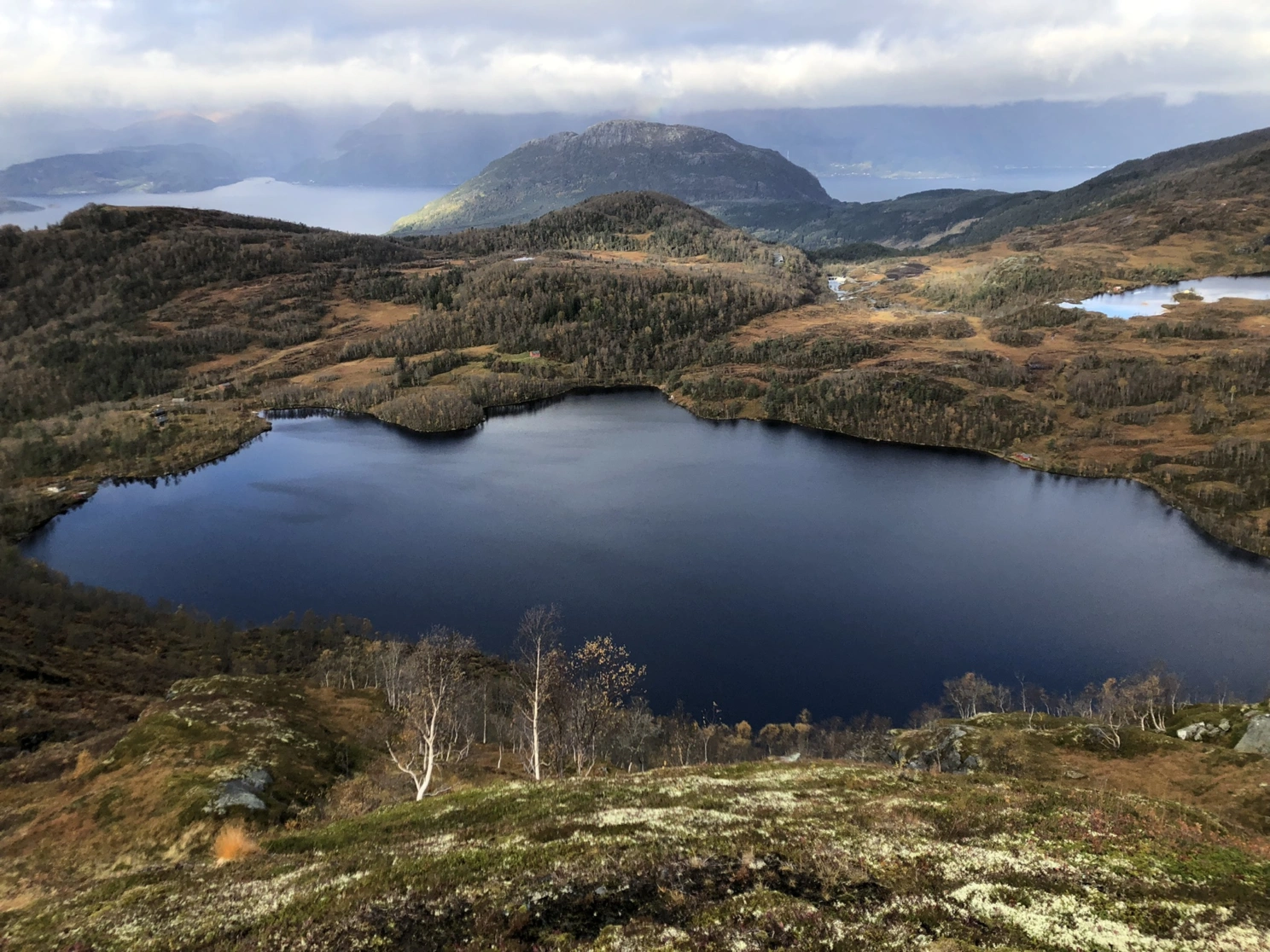
Vatnasetvatnet in Hardanger. The photo was taken during field mapping around the lake in autumn 2022. Photo: Johannes Hardeng
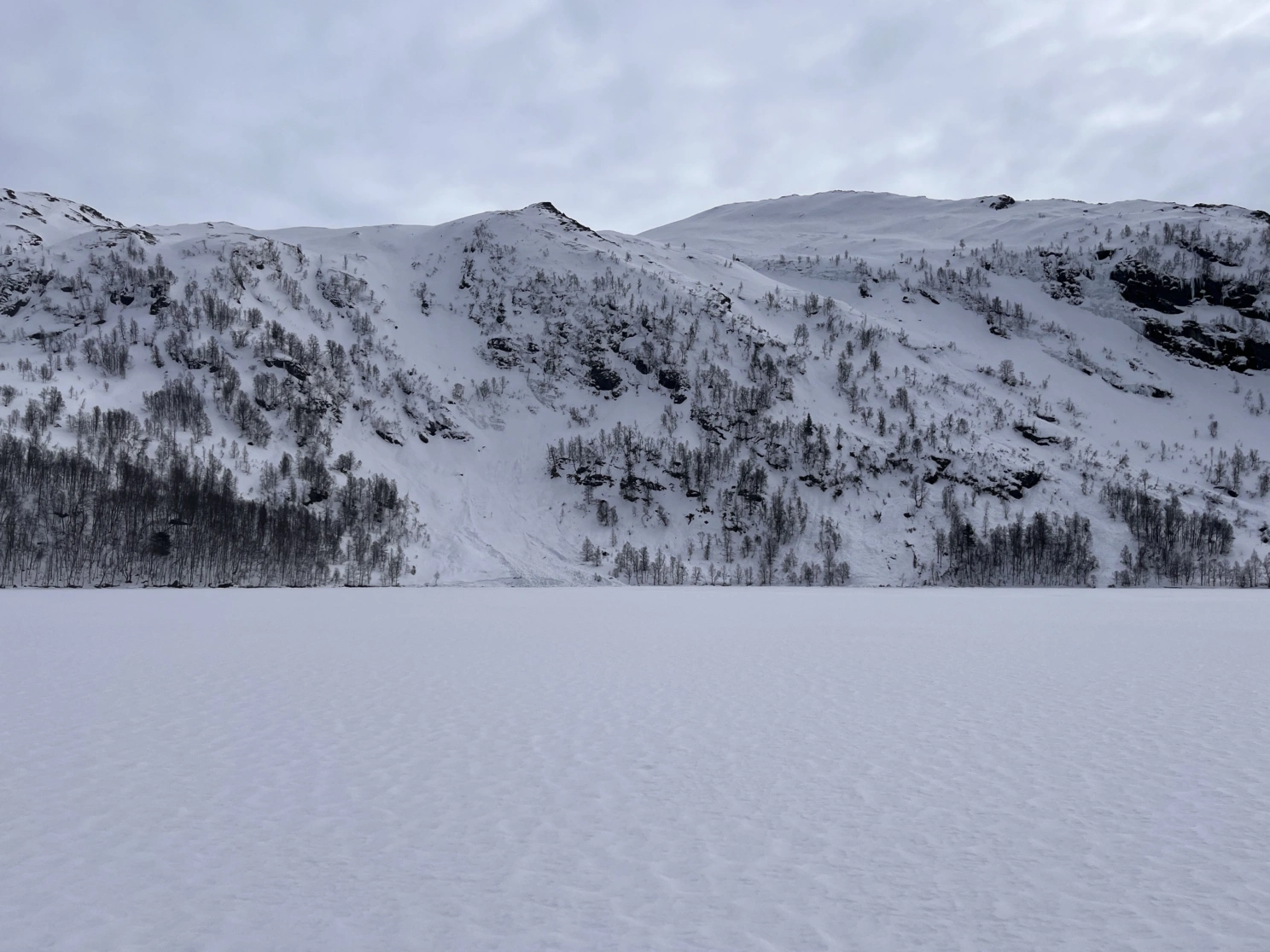
Here we see an avalanche that ran out into Vatnasetvatnet during winter. Photo: Jostein Bakke
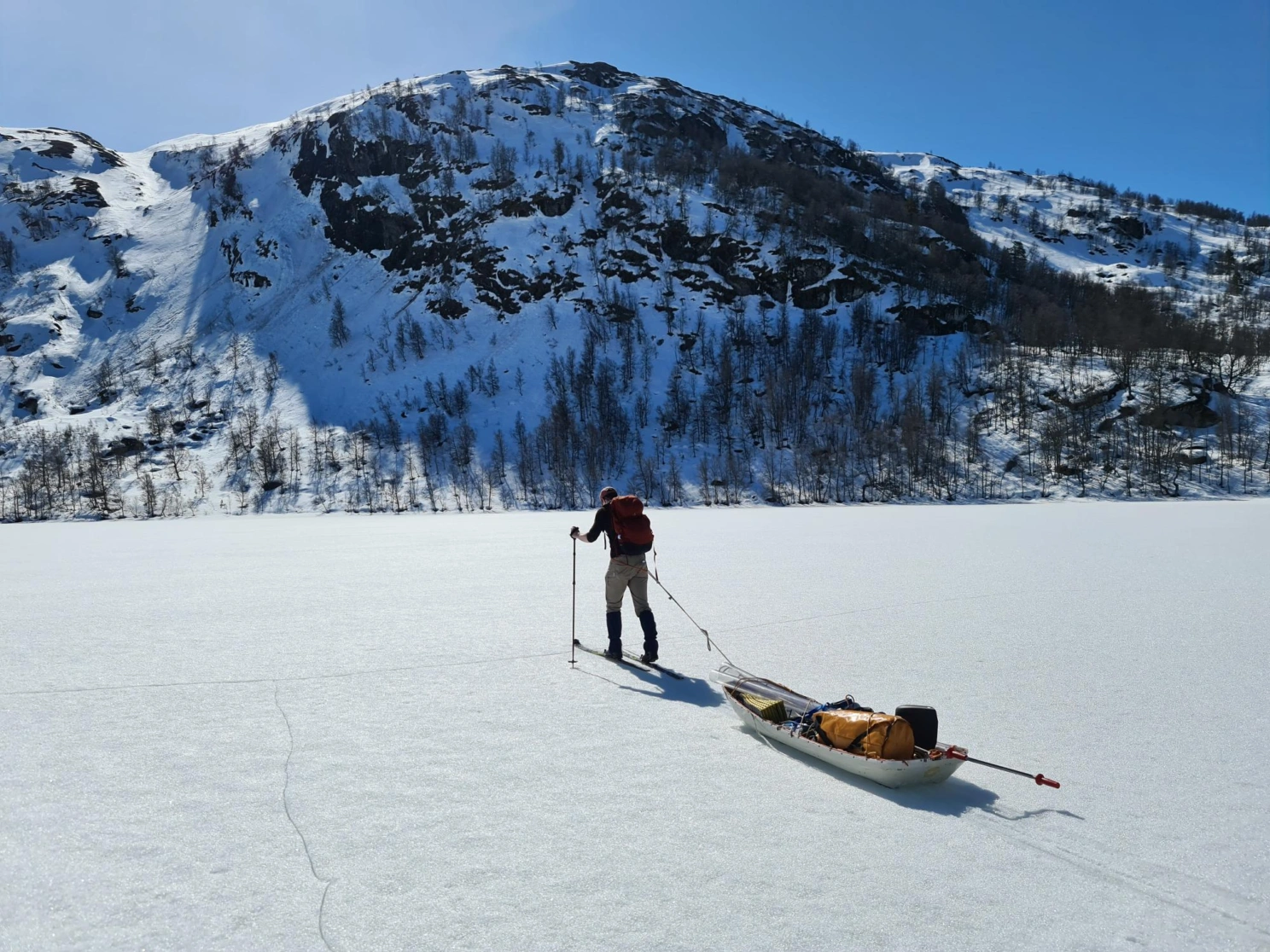
On the way to Vatnasetvatnet in 2022 to retrieve sediment cores. Photo: Jan Magne Cederstrøm
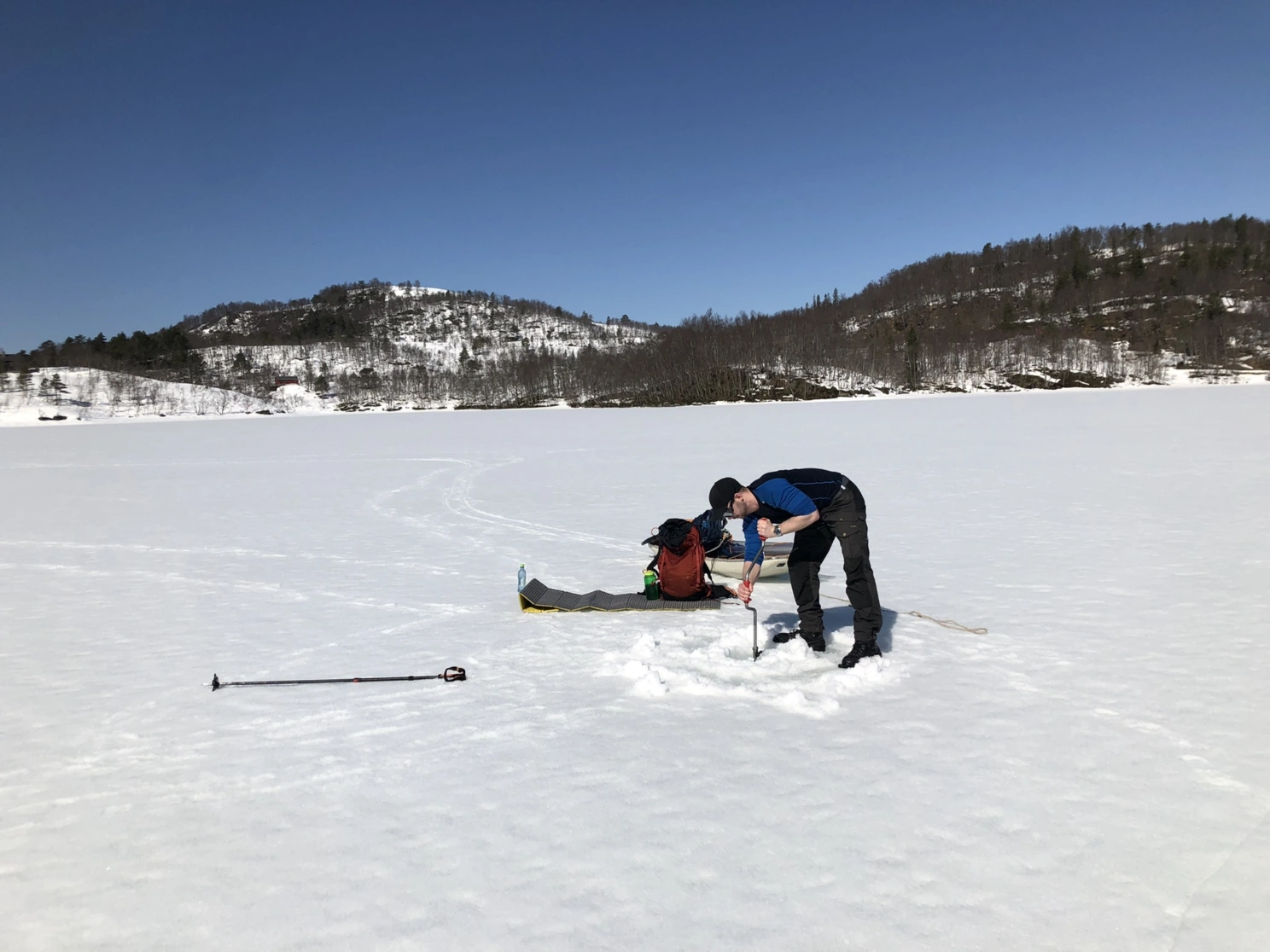
Drilling at Vatnasetvatnet in 2022. Photo: Johannes Hardeng
Mapping the area
The work is built upon a master's thesis from 2009, when the first sediment cores were brought up. In 2022, the researchers collected new sediment cores and took into use new methods to analyse the sediments.
“The processes active around a lake shape the sediments that accumulate on the bottom. In this way, lakes function as natural archives where information about the past is preserved. Vatnasetvatnet is well suited for reconstructing past snow avalanches because the lake is isolated. It is not part of a large, complex river system and is therefore barely influenced by other processes than avalanches,” says Hardeng.
To be certain that the lake has not been influenced by other processes, Hardeng mapped the area around the lake. He stayed by the lake for a week, to do necessary checks to ensure that there have not been other processes that has influenced the sediments on the bottom of the lake.
A complete record
By using dating methods, the researchers could determine that the the lowest layers in the sediment core were 10,000 years old. The lake formed when the ice retreated from the area after the last ice age, exactly 10,000 years ago. This gave the researchers confidence that the sediment cores captured the lake’s entire history.
“We then have a continually story going 10,000 years back”, Hardeng says.
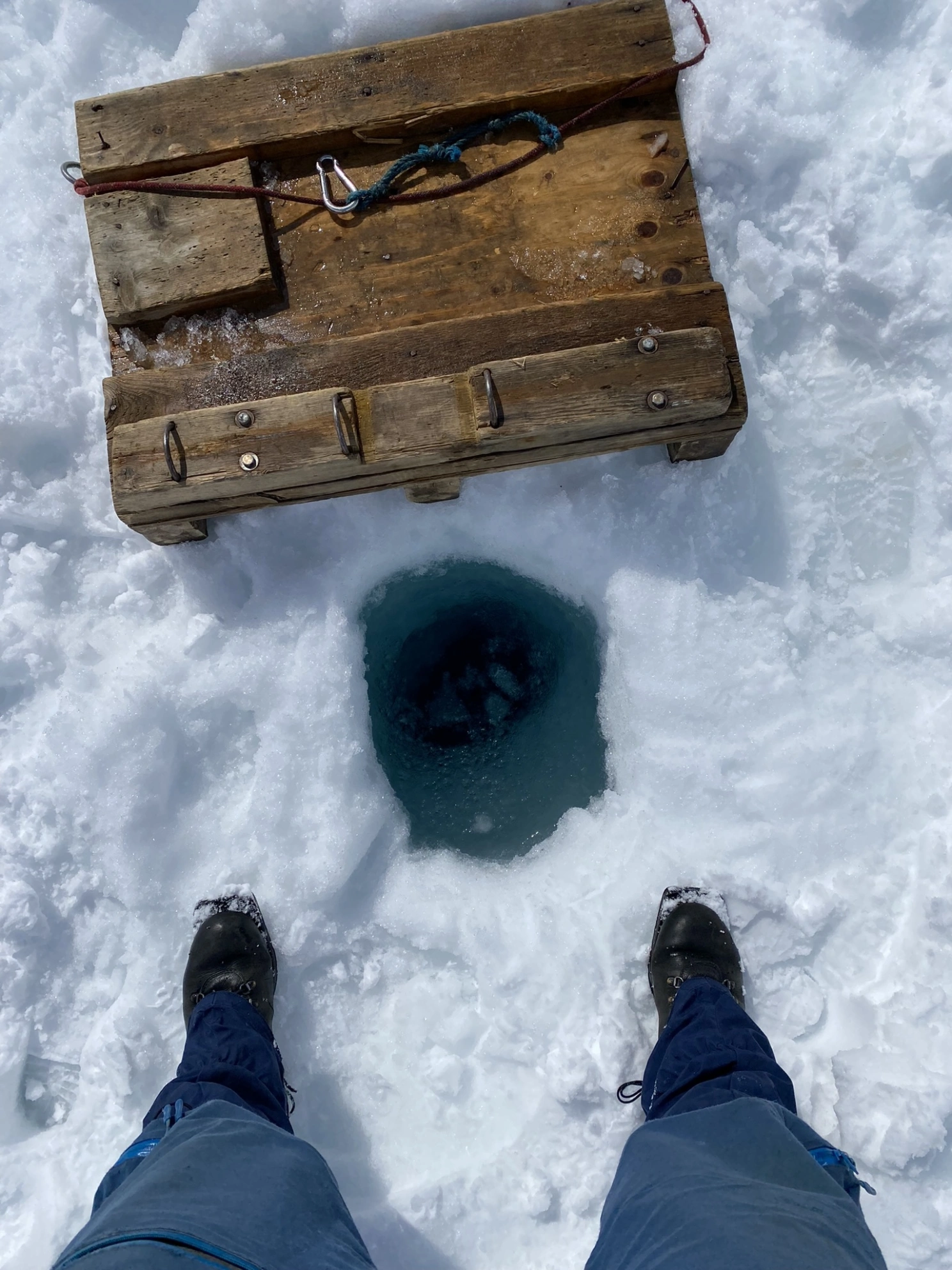
Drilling at Vatnasetvatnet in 2022. Photo: Johannes Hardeng
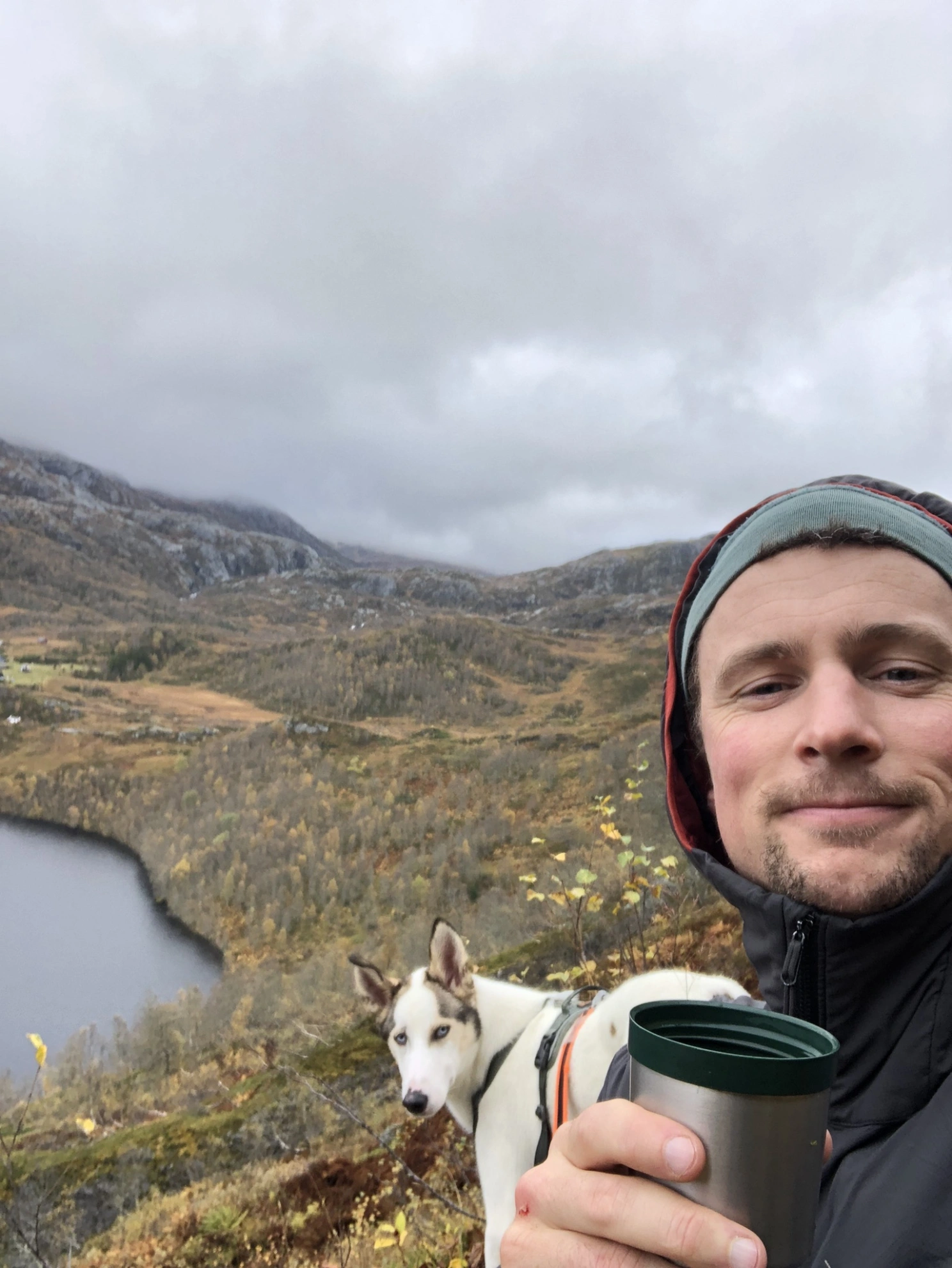
A small coffee break during a mapping trip. The Alaska husky Rago is enjoying the view. Photo: Johannes Hardeng

This is how terrain mapping is carried out. The photo was taken on a different trip. Photo: Carl Regnéll
Various techniques
With the naked eye the researchers could see that the otherwise dark, muddy material in the sediment core was interrupted by thin, lighter-coloured layers. The lighter colours are made of silt, sand and gravel that has been transported into the lake by an avalanche.
After carrying out a series of sediment analyses, including high‑resolution CT imaging and XRF scanning, the researchers discovered many more layers that were not visible to the naked eye. In total, they counted 187 such avalanche deposits.
“It has probably been a lot more avalanches than 187, but they must be big enough to reach the lake and leave remains”.
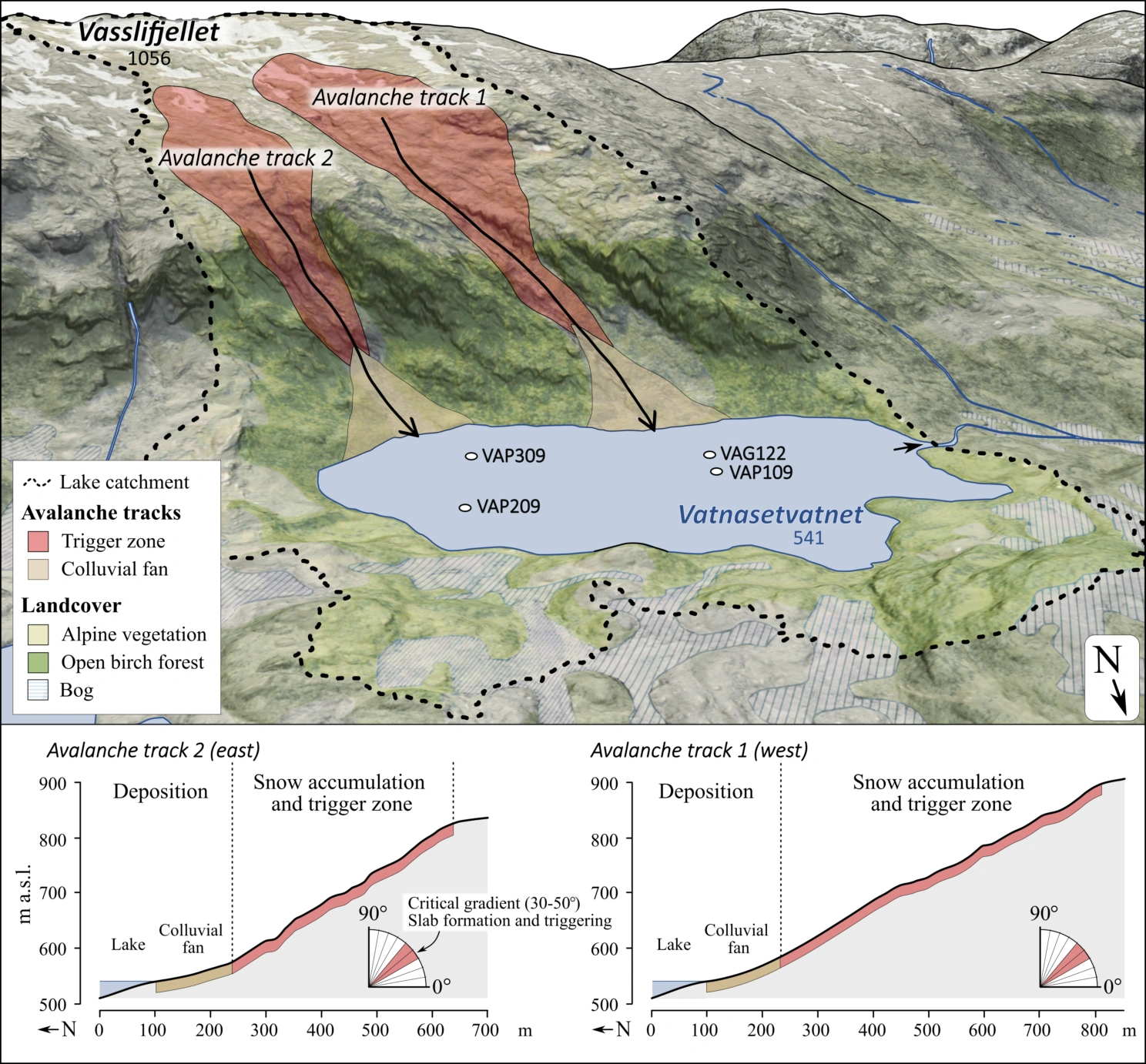
3D terrain model of the Vatnasetvatnet catchment (south-facing perspective), showing mapped avalanche tracks (1 and 2) and coring locations. The avalanche tracks are divided into accumulation and trigger zones (red) and colluvial fans in the runout zones. Elevation data from https://www.hoydedata.no imagery overlay from https://www.norgeibilder.no.
Relevant research
The methods used makes it possible to create a unique avalanche archive for the western part of Norway.
“It is the longest and most detailed record of its kind from the region. The work clearly shows how climate, storm activity, and winter conditions have varied throughout the entire Holocene, and how such changes have influenced the frequency of avalanches in steep mountain terrain,” says Jostein Bakke, professor at the University of Bergen and the Bjerknes Centre for Climate Research.
Bakke is running a research centre at UiB that is working on understanding of how the Scandinavian mountain environments respond to and interact with accelerated global climate change and increased human impacts.
“The publication demonstrates how natural archives in our mountain regions can provide knowledge directly relevant to todays and future societal challenges - particularly those related to climate change and natural hazards in mountainous landscapes. Johannes’ work shows how crucial it is to understand the long-term development of mountain environments, and how these systems evolve and respond to climate over thousands of years,” says Bakke.

This is what the sediment core looks like when opened. You can see the layers as distinct bands. Photo: Johannes Hardeng
The reason behind
The result from the study shows that the avalanche frequency is first and foremost controlled by winter temperature at the ground and atmospheric circulation over the North Atlantic. Especially the North Atlantic Oscillation (NAO), which is a weather phenomenon over the North Atlantic Ocean of fluctuations in the difference of atmospheric pressure at sea level between the Icelandic Low and the Azores High.
The researchers found that in the early Holocene, from 10,000 to 6,500 years ago, there were only two to three avalanche events. This was a period characterized by warm summers and cold, dry winters. In the mid‑Holocene, from 6,500 to 4,200 years ago, increasing winter precipitation and stronger westerly winds led to a marked rise in the number of snow avalanches.
Increasing
However, the highest avalanche activity occurred in the late Holocene, from 4,200 years ago to the present, with as many as 45 avalanches per 500 years. This coincides with the period when Norwegian glaciers expanded due to relatively cool summers and mild, precipitation‑rich winters.
"By understanding how climate change has affected the avalanche activity through thousands of years, we become better equipped to make good decisions in a changing climate", says Hardeng.
References
10 000 years of snow avalanche activity in western Norway: a multiproxy lake sediment record from Lake Vatnasetvatnet, Hardanger